Augmented Reality Entertainment: How AR Is Quietly Redefining the Way We Play
Discover how AR is transforming entertainment, blending digital experiences with real-world play across games, concerts, museums, and more

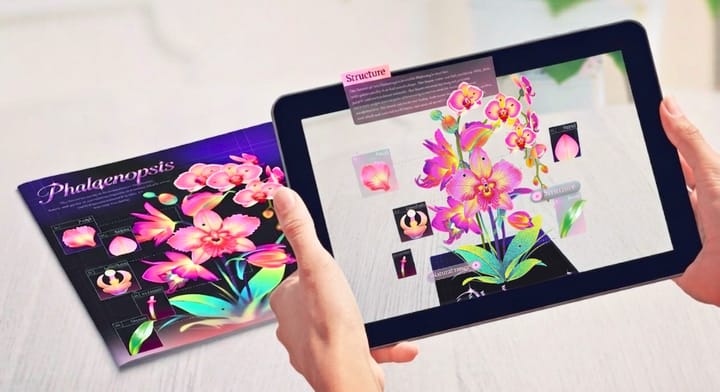
If you’ve been paying attention to the entertainment world over the past couple of years, you might have noticed something interesting happening. Suddenly, movies, concerts, toys, museums—pretty much every corner of entertainment—have started blending the digital with the physical. And it’s not VR headsets doing it. It’s augmented reality.
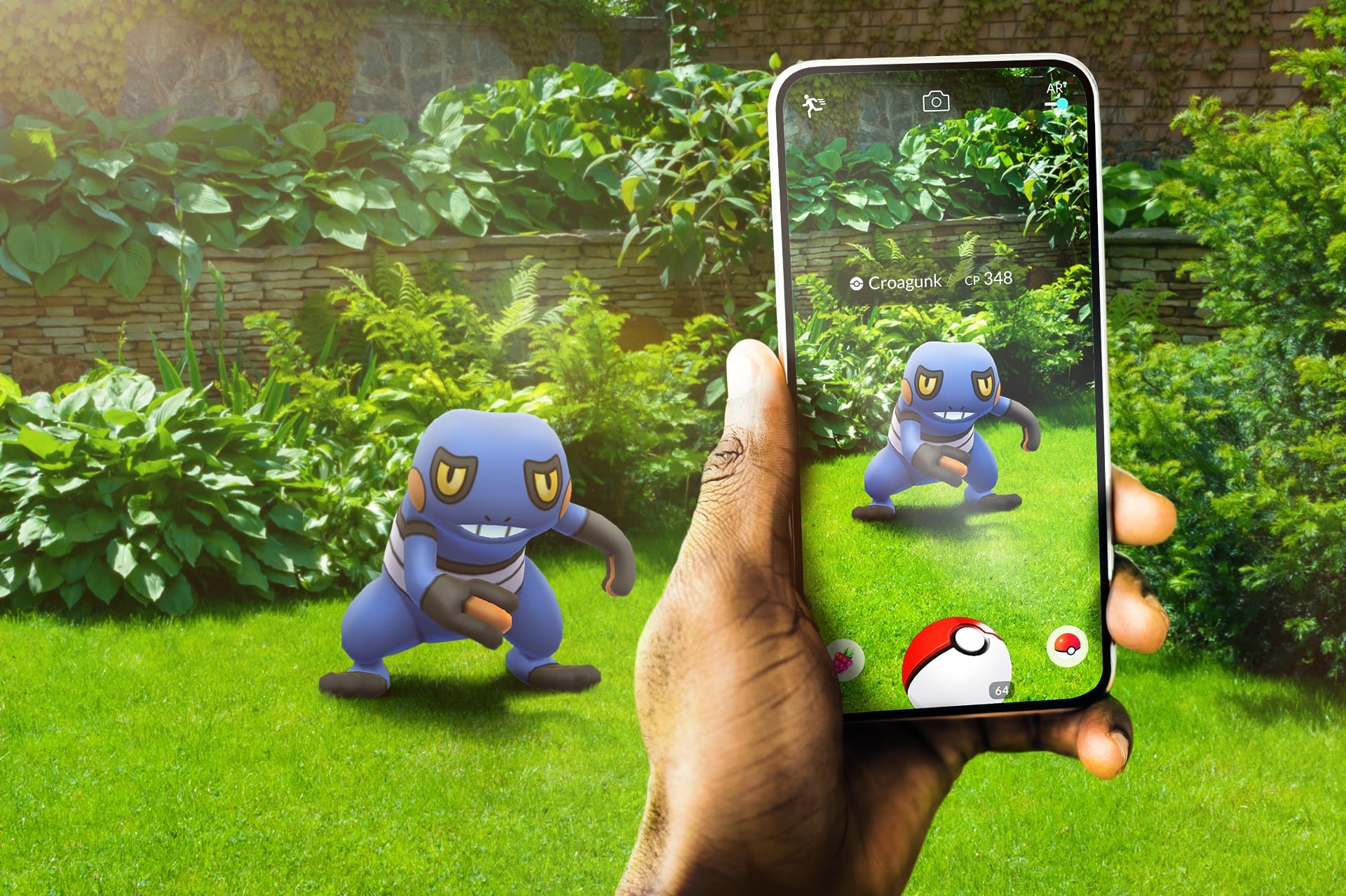
AR has gone from being that “Pokémon Go thing” to becoming one of the most versatile storytelling tools around. What makes it even more fascinating is how seamlessly it blends into daily life. You don’t (usually) need expensive hardware or special gear; most of the time, all you need is the device you already use every day.
This article takes a closer look at AR entertainment—what it actually is, how it works, and why everyone from game studios to museums to global brands keeps jumping on it.
So… What Exactly Is Augmented Reality Entertainment?
Let’s keep it simple. AR entertainment is any sort of interactive experience where digital content is layered onto the real world. That could be a 3D creature sitting on your coffee table, an animated character popping out of a movie poster, or a virtual concert stage that appears right in front of you.
It’s not VR—you’re not stepping into another world. AR is more like bringing a bit of magic into the world you’re already in.
And that “lightness” makes it much easier for everyday entertainment. You can dip in and out of AR without dedicating your whole evening to it, the way you might with VR.
How AR Entertainment Works (Don’t Worry, No Heavy Tech Talk)
Under the hood, AR uses your phone or tablet camera to understand the world around you—surfaces, faces, objects, motion—and then layers 3D content onto it. There are apps that handle this, but increasingly, a lot of AR runs in your browser (WebAR), which is partly why it’s spreading so fast. No downloads, no friction.
Behind the scenes, a mix of technologies does the heavy lifting: world tracking, face tracking, real-time rendering, and, increasingly, AI to help generate content. But users never think about any of that; they just tap a link or scan a QR code and get an interactive moment.
This simplicity—tap → see something cool—is the secret behind AR’s rise in entertainment.
Where You’re Actually Seeing AR Entertainment in Real Life
Even if you’re not actively looking for AR, chances are you’ve already run into it.
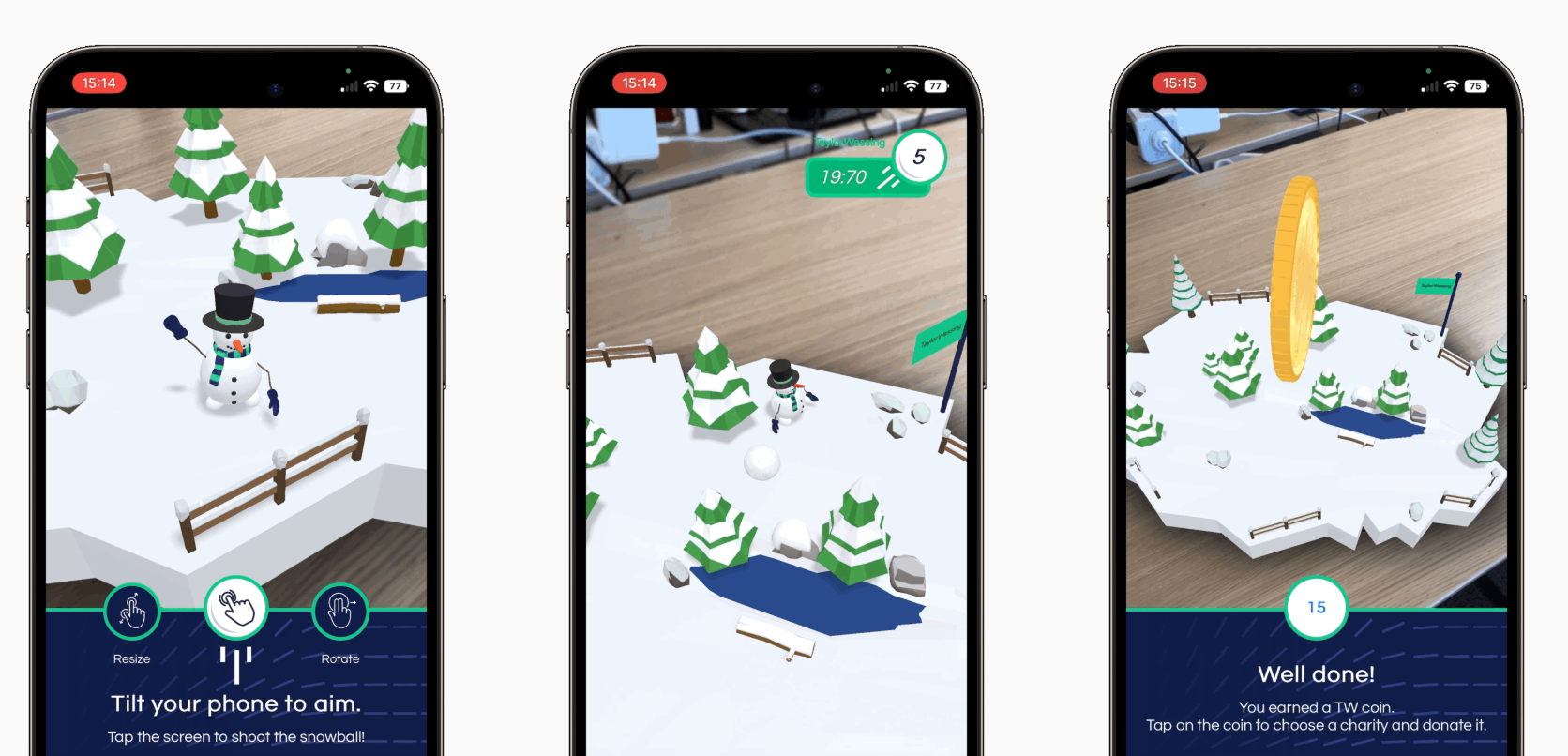
AR gaming was the first big wave, and yes, Pokémon Go is still around, but that’s only a tiny corner of the picture now. These days you have AR mini-games that open in your browser, scavenger hunts in theme parks, and location-based story quests in cities.
Movies and TV shows use AR for extra scenes, character interactions, or behind-the-scenes moments you can unlock right from a poster or a package.
Concerts and festivals are leaning heavily into AR too—from virtual stages to interactive lighting effects that sync with music. Sports events have been experimenting with AR overlays that show stats, player paths, or even virtual mascots running across the field.
Museums and exhibitions have quietly become some of the biggest adopters. Instead of just staring at an artifact, you can bring it to life, view it in 3D, or watch a scene unfold around it.
And for kids? Toys and trading cards now come with AR layers that turn simple collectibles into tiny worlds you can play with.
It’s entertainment that’s woven into everyday things—not a separate “tech moment” you have to prepare for.
Why AR Is Winning in Entertainment Right Now
You might think AR is growing because it’s flashy and futuristic, but honestly, the biggest driver is something much simpler: it’s extremely sticky. People stay longer, interact more, and share more when digital content meets real-world context.
Another big factor is that AR doesn’t demand much from users. Unlike VR headsets—which are fun but still niche—AR rides on devices people already have. And with WebAR becoming mainstream, the bar to entry has dropped even further.
It also creates a sense of “this happened to me,” which is something traditional content can’t match. A butterfly in your bedroom is more memorable than watching a butterfly on a screen.
What’s Powering All These AR Experiences
We could get very technical here, but let’s not. Here’s the short and human version: AR today is powered by a combination of tracking technologies (for faces, hands, objects, environments), real-time 3D rendering, and some surprisingly clever audio tricks that make sound feel like it belongs in the space you’re in.
WebAR is another huge part of the story. The fact that people can just click a link to launch AR lowered the barrier for creators dramatically.
And we can’t ignore the impact of AI. Generative models are now helping teams create 3D assets, animations, voiceovers, and even interactive characters with much less effort. AI essentially turbocharges AR production, making it more scalable.
Then you have emerging devices—lightweight headsets, AR glasses—that aren’t mainstream yet but are getting closer. As they improve, AR entertainment will only get more immersive.
The Many Shapes AR Entertainment Takes
The fun thing about AR is that there’s no one “format” to stick to. It can be playful, educational, epic, or just silly.
You’ve probably seen AR filters—those count too, and they’ve become a cultural phenomenon on their own. Beyond that, there are AR puzzles and escape-room-style games, AR-driven promotions that pop up when you scan packaging, and even branded characters that appear right on your desk and talk to you.
Some brands turn their posters into mini-movies. Others use AR to let fans unlock hidden content or rewards. And then there are those massive city-scale AR quests where people follow clues across different locations.
The variety is almost the point—AR isn’t one type of entertainment. It’s more like a layer that can enhance pretty much anything.
If You Want to Create AR Entertainment, The Tools Are Already There
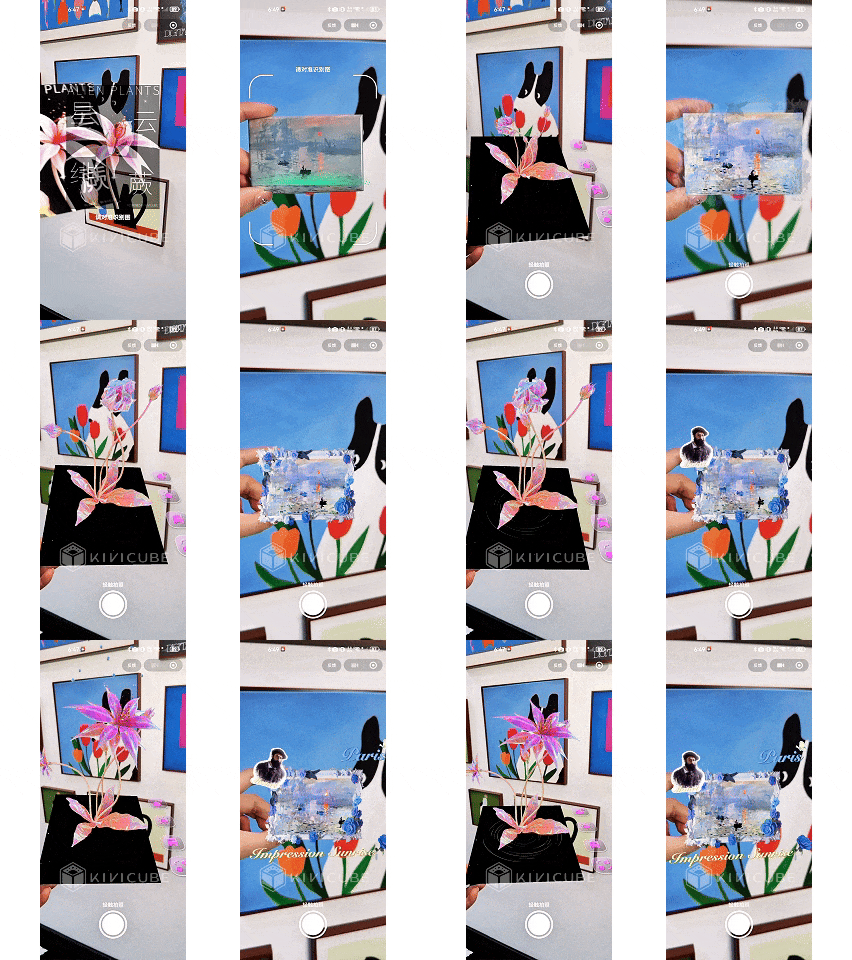
The good news is you don’t need to be a hardcore developer to make AR anymore. Tools like Kivicube and Snap Lens Studio let non-technical creators design AR effects or mini experiences with drag-and-drop interfaces.
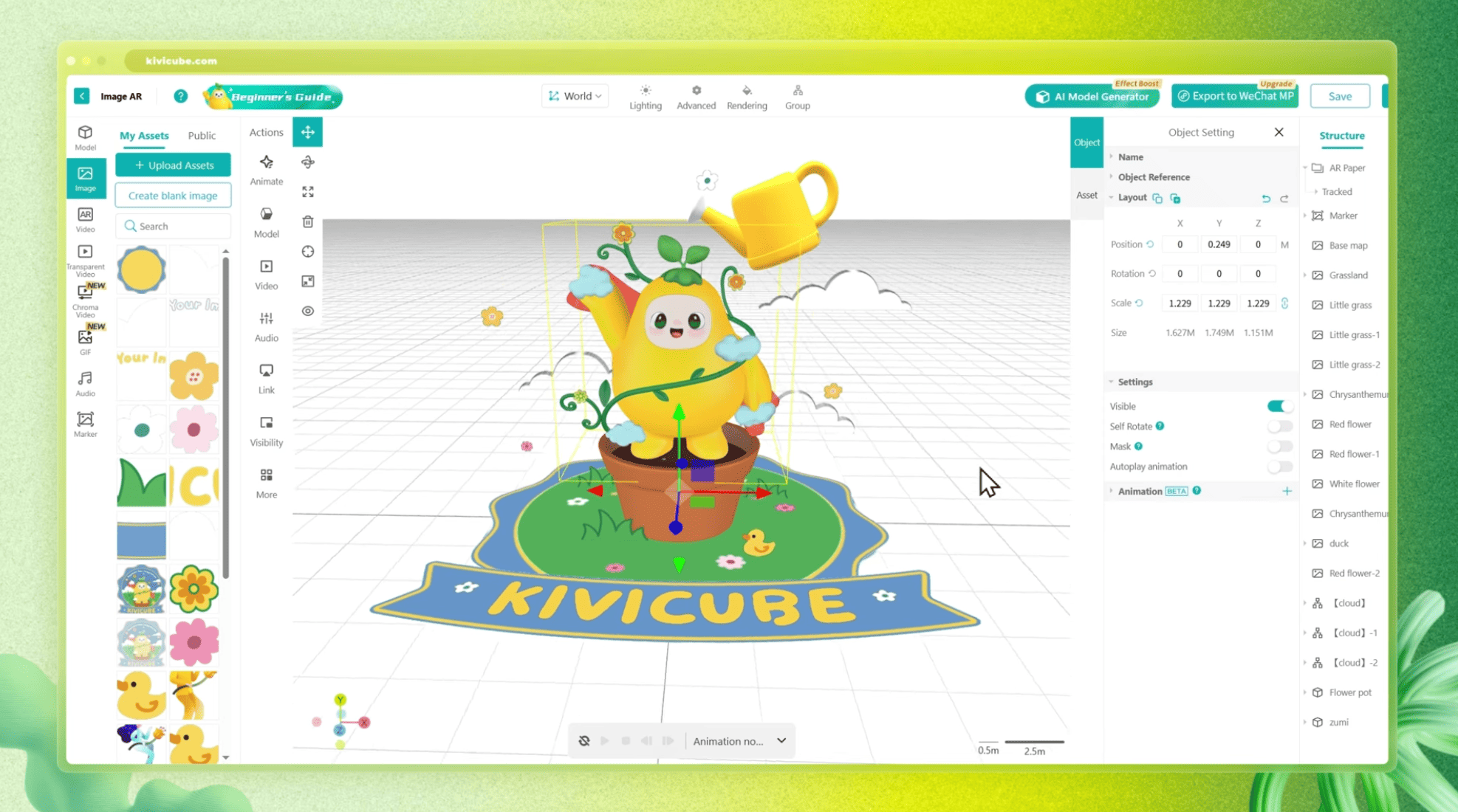
If you are technical or want higher-end capabilities, you’ve got platforms like Unity, and Unreal Engine—basically the same engines behind top mobile games.
The point is: there’s something for every skill level now. AR creation isn't gated behind engineering walls anymore.
A Few Real Examples Worth Mentioning
One of the more impressive AR entertainment campaigns recently involved a global beverage brand that turned its cans into interactive game levels—you scan the can, and you get a mini game right inside your browser. Engagement went through the roof.
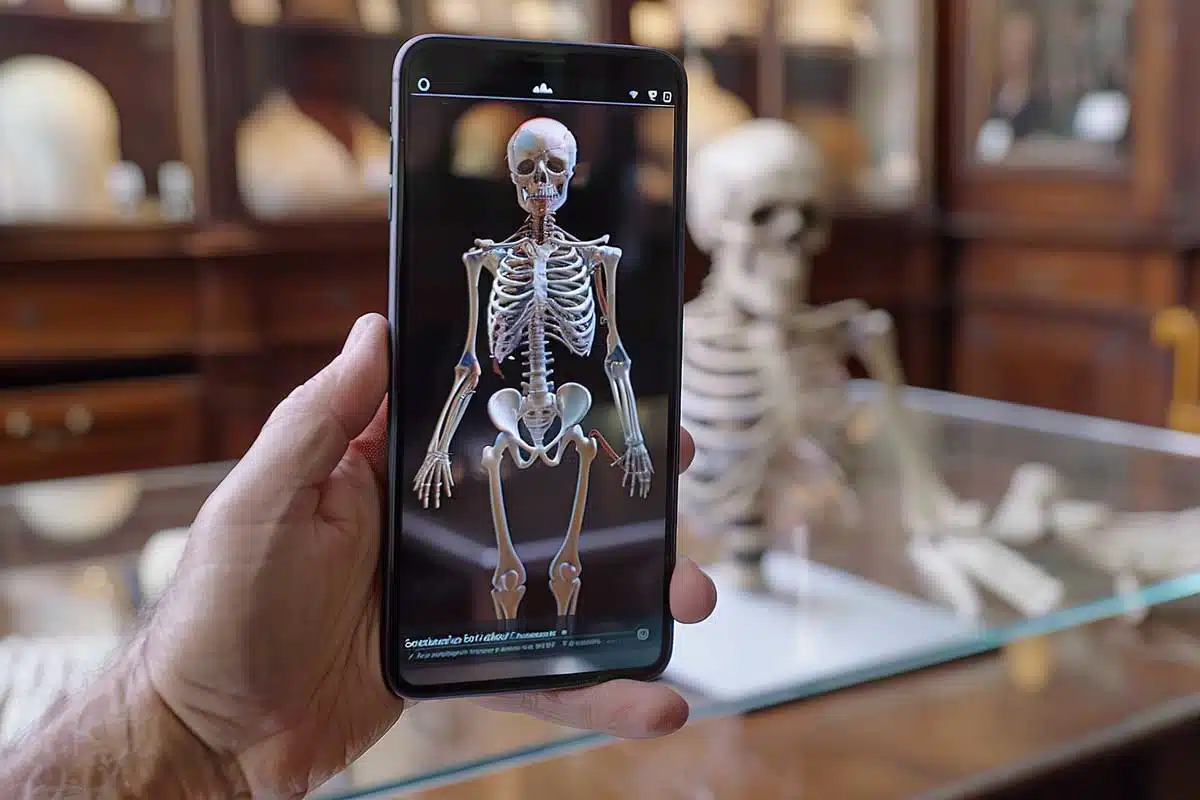
Museums have been creating AR layers that animate historical scenes right in front of visitors. Kids suddenly care about history again because the past literally unfolds on top of the exhibit.
And concerts? Some artists now drop AR effects during live shows that sync with the music, so fans can see extra visuals through their phones that aren’t visible to the naked eye.
AR is adding layers of experience on top of the experiences we already enjoy.
If You Want to Dive In Yourself, Here’s the Easiest Way
Start small. Pick an AR tool that matches your comfort level. Try recreating a simple idea first—like animating a character or making a poster interactive. You’ll learn fast what works, what feels natural, and what makes people smile.
Storytelling matters more than tech tricks. AR is at its best when it makes someone feel something—curiosity, surprise, nostalgia, delight.
Final Thoughts: Why Now Is a Great Time to Explore AR Entertainment
We’re at a point where AR is mainstream enough to reach huge audiences but still fresh enough that creative ideas stand out. It’s rare for a technology to be this accessible and this full of potential at the same time.
Whether you’re a creator, a brand, or just someone curious about what’s next in entertainment, AR is absolutely worth experimenting with. The barrier to entry is low. The tools are powerful. And the possibilities? Honestly, they’re only getting bigger.