
Augmented Reality Ecommerce: Redefine Shopping Experience with Virtual Try-On & WebAR
In 2025, the global e-commerce market continues to embrace fierce competition, with the fashion e-commerce sector even facing an average return rate of 30%-40% due to the gap between online product display and real experience. According to CINNO Research data, the domestic consumer-grade AI/AR market sales volume soared by 109% in 2025, and AR technology has become the core breakthrough for e-commerce brands to solve pain points such as low conversion rates and high return rates. Augmented reality ecommerce is no longer a futuristic concept, but a practical tool that empowers brand growth, optimizes consumer experience and reshapes the online shopping ecosystem.
What Can Augmented Reality Ecommerce Bring to Brands and Consumers?
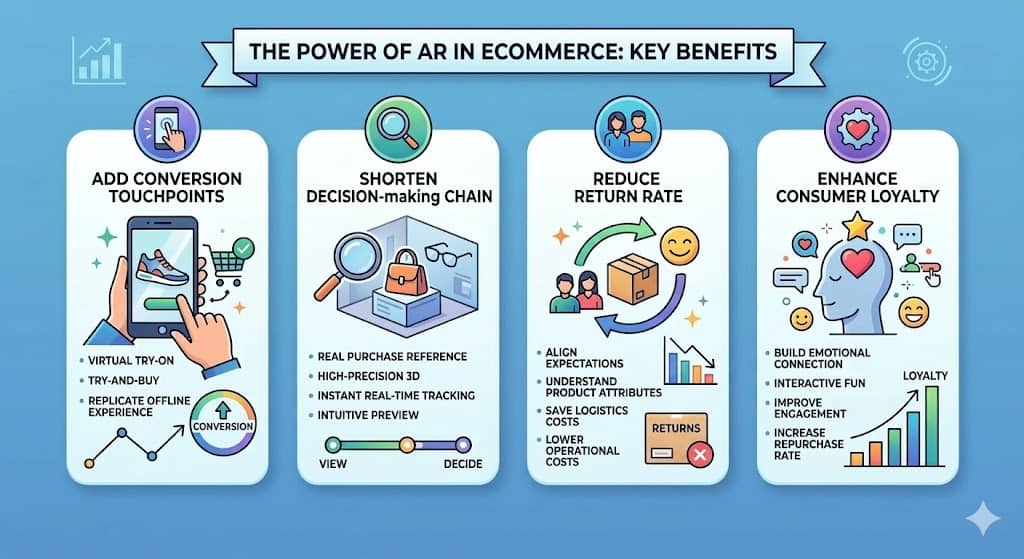
AR technology breaks the spatial and perceptual limitations of traditional online shopping, and its value is reflected in every link of the e-commerce consumption chain, from consumer decision-making to brand operation:
Add Conversion Touchpoints with Try-and-Buy Online
AR virtual try-on and product visualization realize the online replication of offline "trial experience", allowing consumers to complete product trial and purchase decisions in one stop on the platform. This seamless experience adds new conversion touchpoints for brands, turning casual browsing users into potential buyers.
Shorten Decision-Making Chain with Real Purchase Reference
Through high-precision 3D display and real-time tracking technology, AR restores the texture, size and usage effect of products in the real scene. Consumers no longer rely on static pictures and text descriptions to imagine product effects, and the clear and intuitive experience greatly shortens the shopping decision-making chain.
Reduce Return Rate and Lower Operational Costs
The core reason for high e-commerce return rates is the inconsistency between consumer expectations and actual products. AR enables consumers to fully understand product attributes before purchasing, effectively reducing the probability of return due to "unexpected effect", and helping brands save logistics, warehousing and after-sales costs caused by returns.
Enhance Consumer Loyalty and Build Emotional Connection
AR interactive experience enriches the fun of online shopping, improves user engagement and stay time on the platform. When consumers feel the brand's attention to experience and technological innovation, they will form a deeper emotional recognition, thus building a stable brand-consumer communication bridge and improving user loyalty and repurchase rate.
Top 7 Practical Applications of Augmented Reality Ecommerce
AR technology has been deeply applied in various e-commerce categories, and many international brands have created classic cases with virtual try-on and AR product visualization, covering eyewear, contact lenses, jewelry, furniture, fashion, cosmetics and footwear:
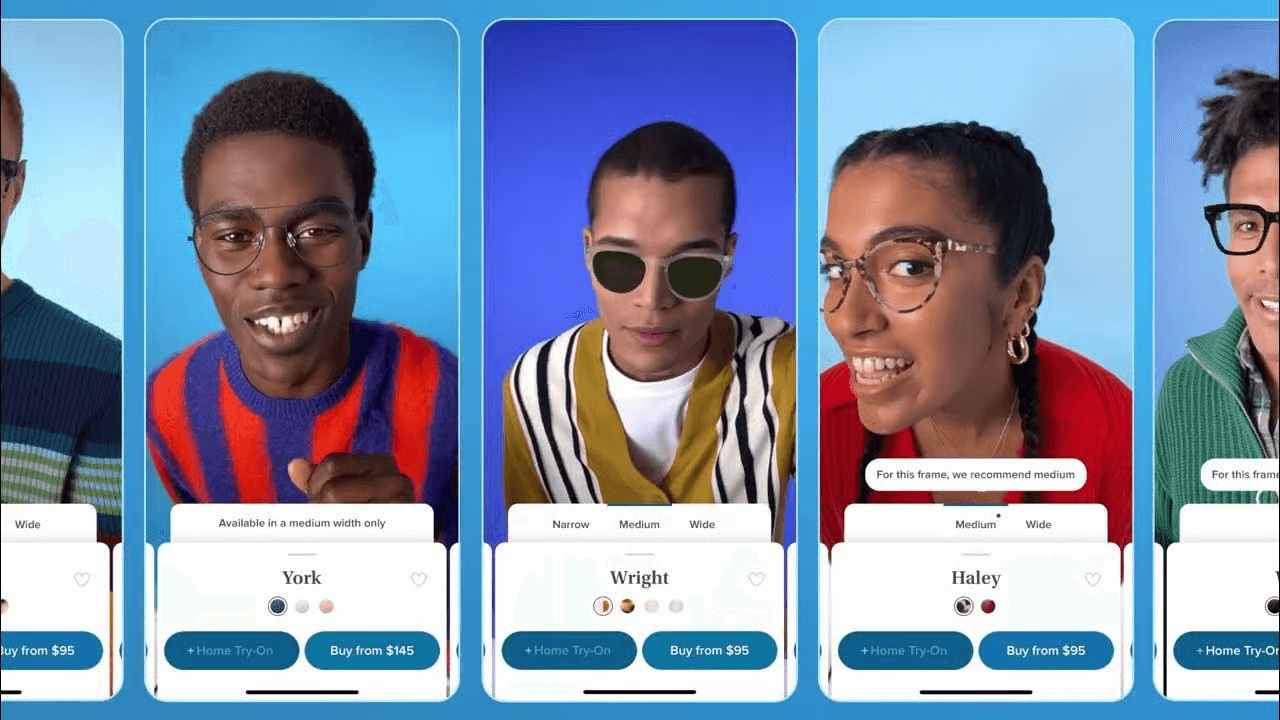
- Warby Parker AR Glasses Try-on: As a pioneer in the eyewear e-commerce industry, it uses AR facial tracking technology to realize real-time virtual try-on of glasses, allowing consumers to match glasses styles according to their facial features online, and the conversion rate of the official website has been significantly improved after the launch of the function.
If you want to build an AR glasses try‑on experience from scratch, check out this beginner tutorial
 Leonie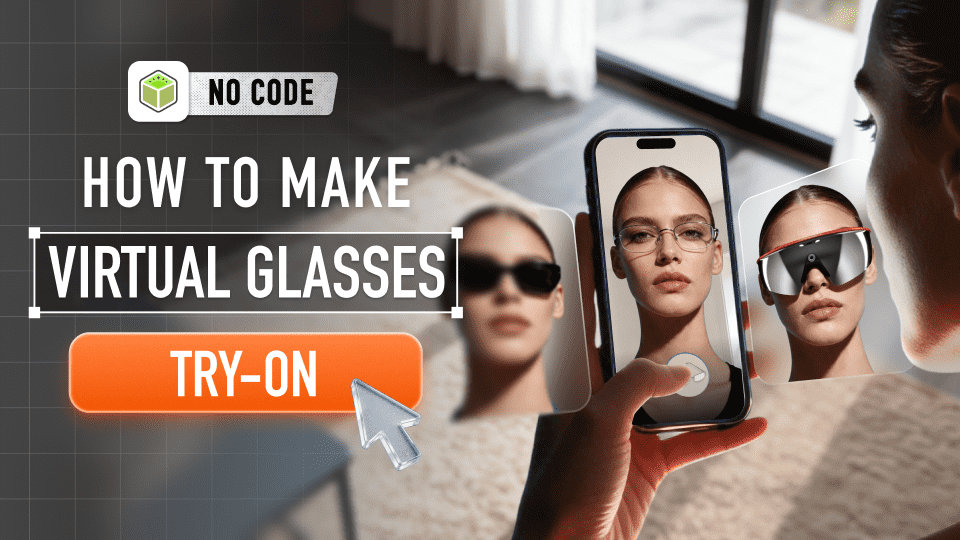
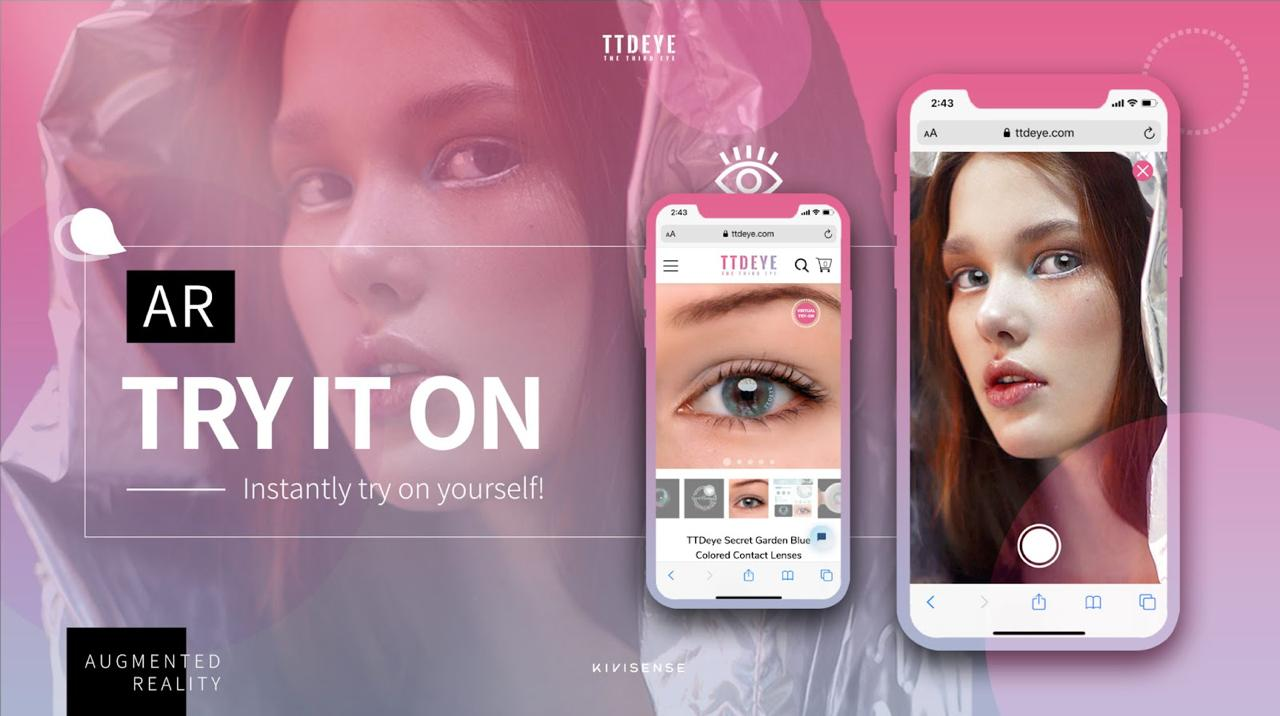
- TTDEYES AR Contact Lens Try-on: Targeting the pain point that contact lens color cannot be previewed online, it launches AR contact lens virtual try-on, which restores the wearing effect of different color contact lenses in real time through facial recognition, and becomes a benchmark case of AR application in the beauty contact lens track.
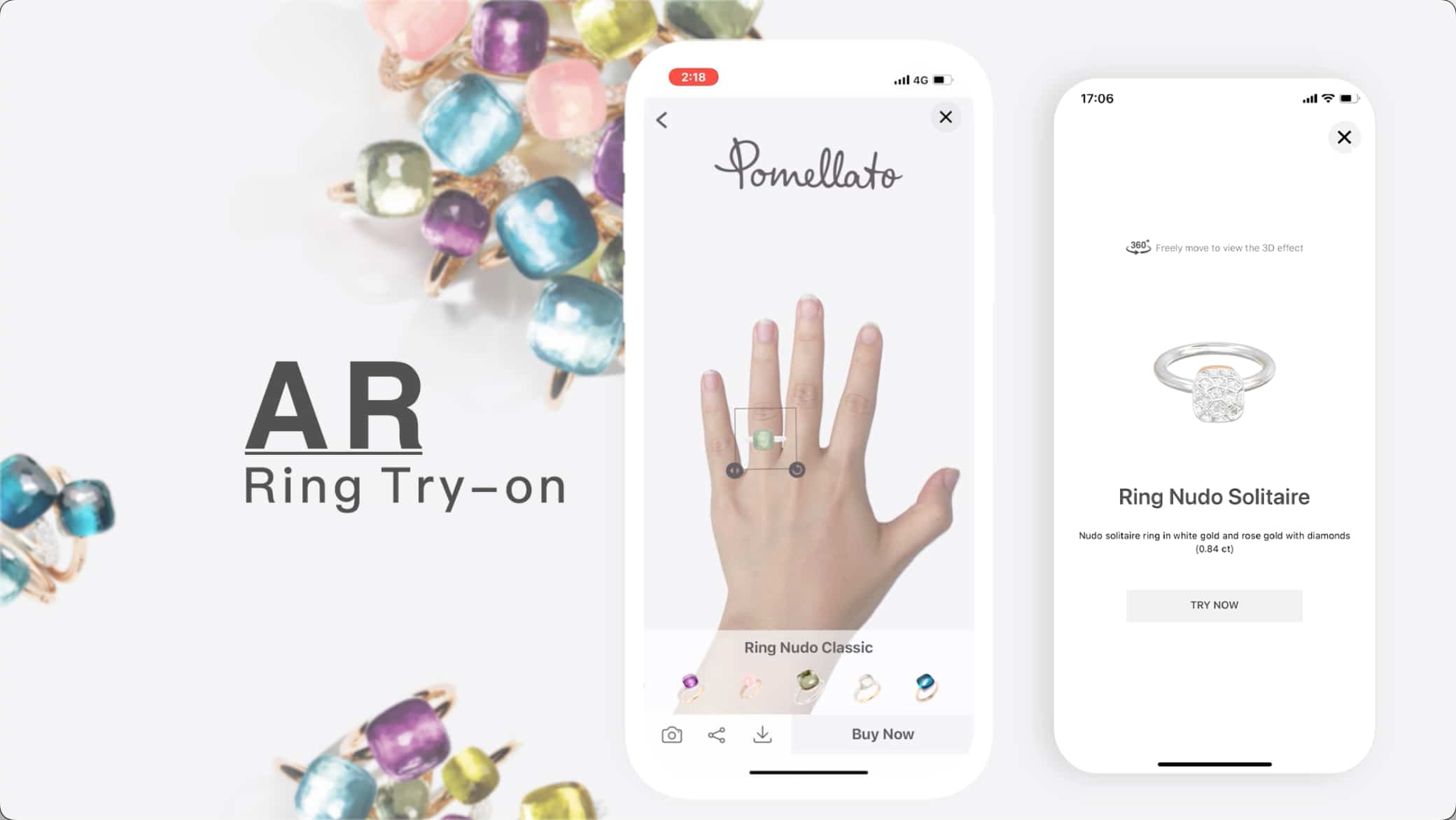
- Pomellato AR Jewelry Try-on: With the technical support of Kivicube, it realizes the whole-process AR experience of jewelry including 3D detail display, real-time virtual try-on and intelligent ring size measurement, perfectly restoring the luster and wearing effect of jewelry, and the customer trial experience and order conversion rate have been doubled.
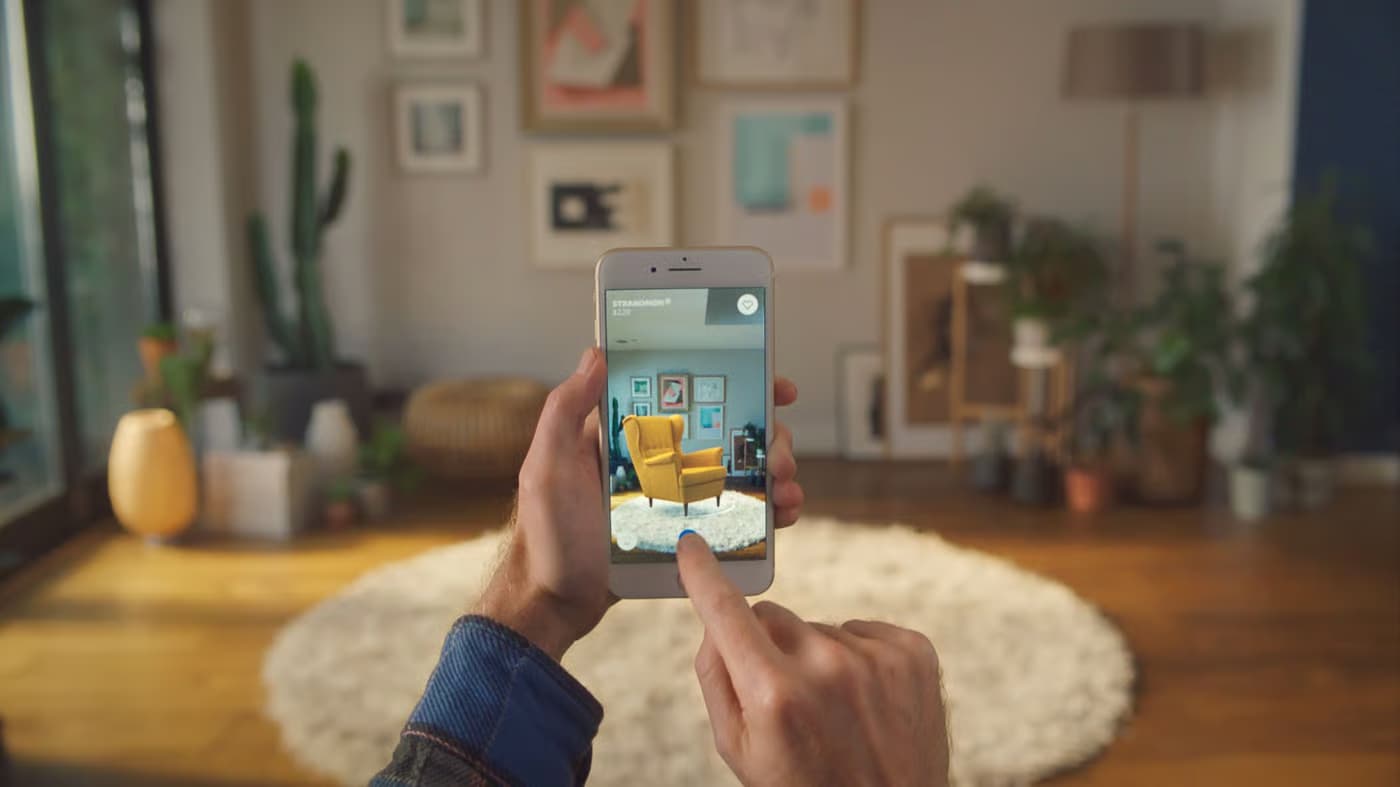
- Ikea AR Furniture Placement: The classic case of AR in the home furnishing industry, users can place virtual furniture models in their own space through mobile phones, intuitively view the size matching and style coordination of furniture and the home environment, and solve the pain point of "unsuitable size after purchase".
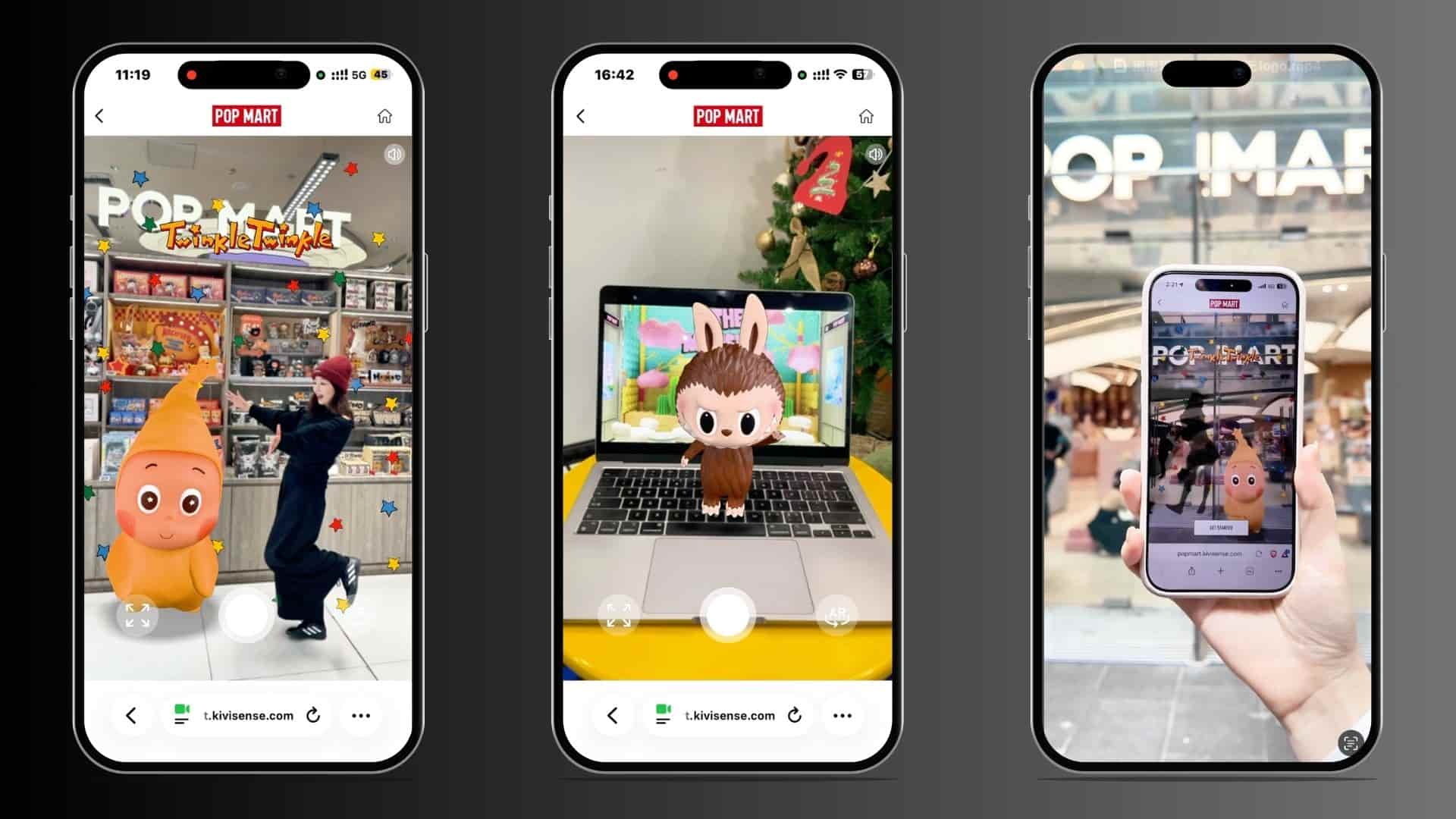
- POP MART AR Character Placement: Combining blind box IP with AR technology, users can place virtual Pop Mart characters in the real scene for shooting and interaction, which not only enriches the product experience, but also triggers a lot of social sharing, realizing the fission of brand communication.
If you want to learn to build similar AR placement experiences, check out this tutorial:
 Leonie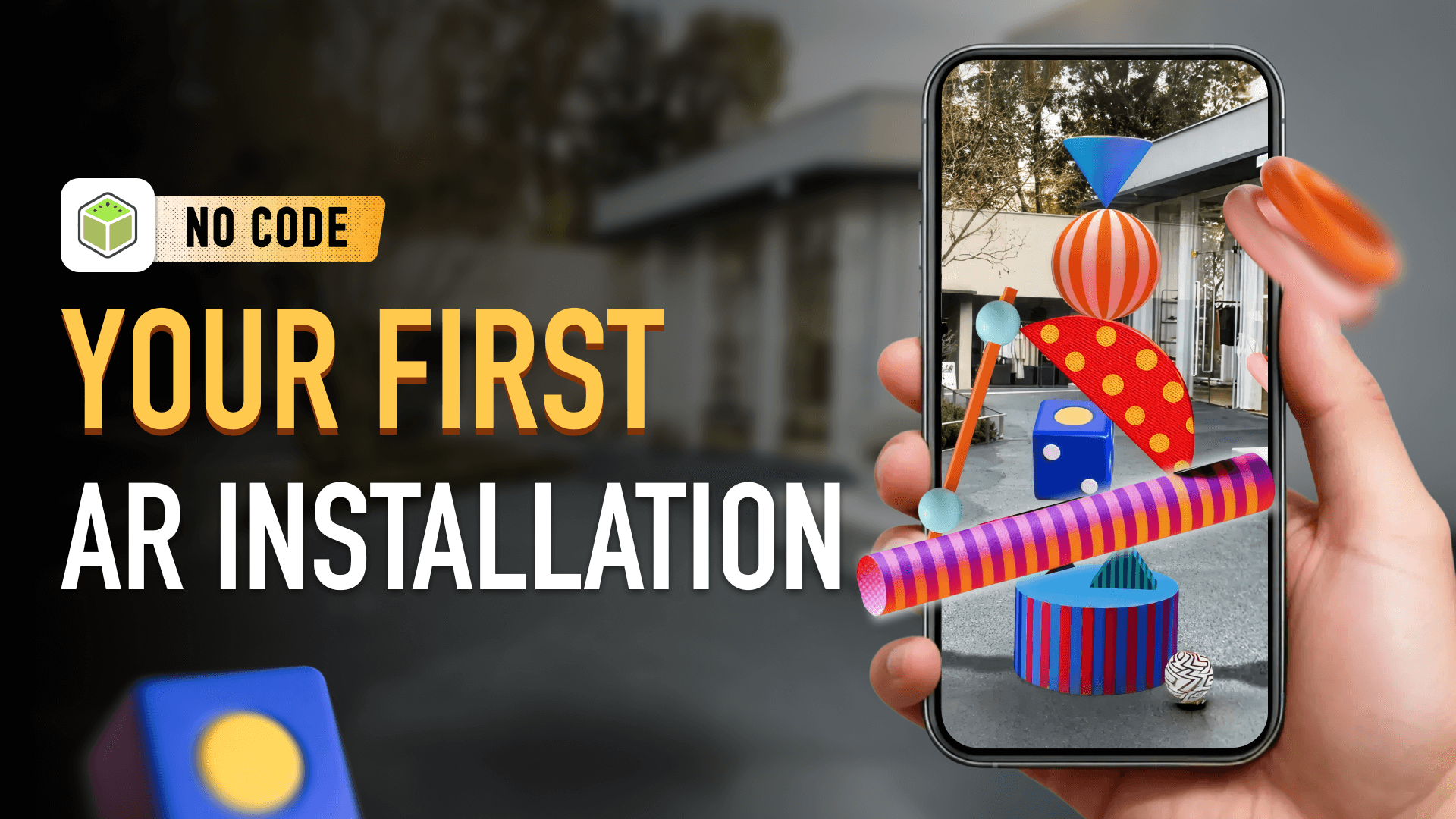
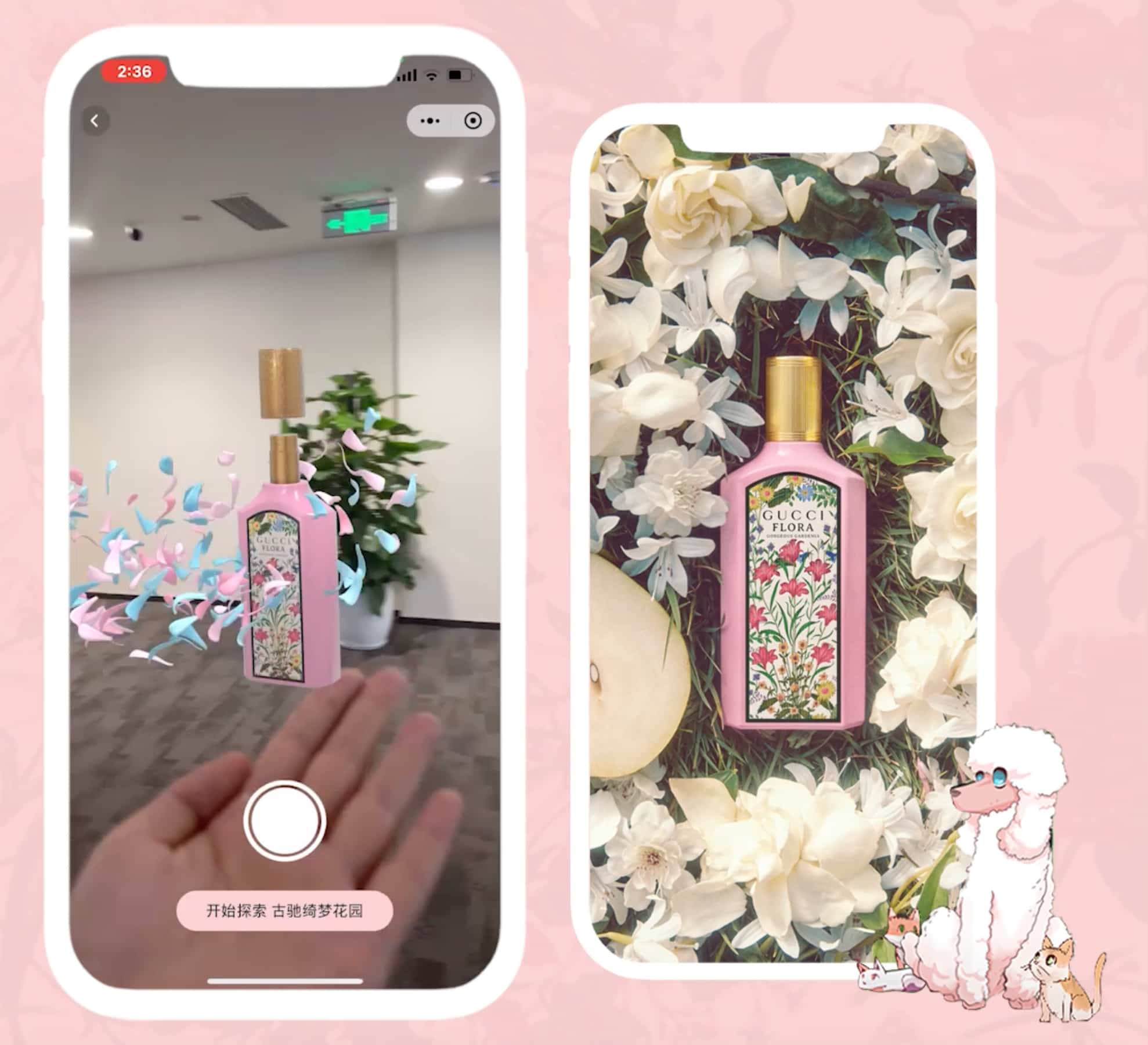
- Gucci AR Perfume Experience: Breaking the traditional perfume display mode, it uses AR technology to present the brand story, perfume notes and bottle design of Gucci perfume in an interactive way, turning the single product display into a sensory experience, and enhancing the brand premium and consumer perception.
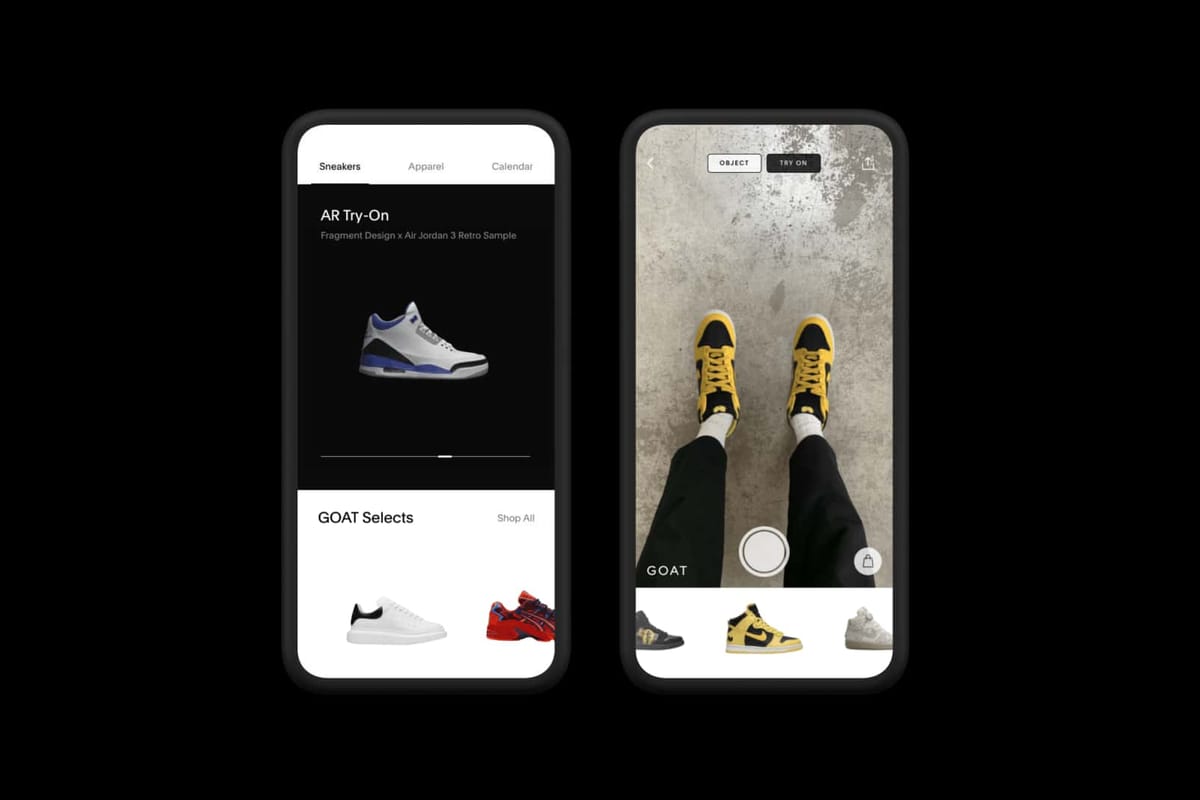
- GOAT AR Footwear Try-on: As a leading platform for authentic sneakers, GOAT Group has launched AR try-on service for rare sneakers for its global 60 million members in 170 countries. Users can experience the wearing effect of limited-edition sneakers online in real time, which greatly improves the shopping experience of sneaker lovers and becomes a classic case of AR application in the footwear e-commerce industry.
How to Empower Your E-commerce Platform with AR Technology? Choose Kivicube
To realize the landing of augmented reality ecommerce, a professional, easy-to-use and high-performance AR technical platform is the key. Kivicube, as a leading domestic online visual AR creation platform, has become the first choice for e-commerce brands to deploy AR technology with its all-round technical advantages and one-stop solution, and has been widely recognized in the industry.
Kivicube AR Studio Overview
5 Core Advantages of Kivicube for Ecommerce
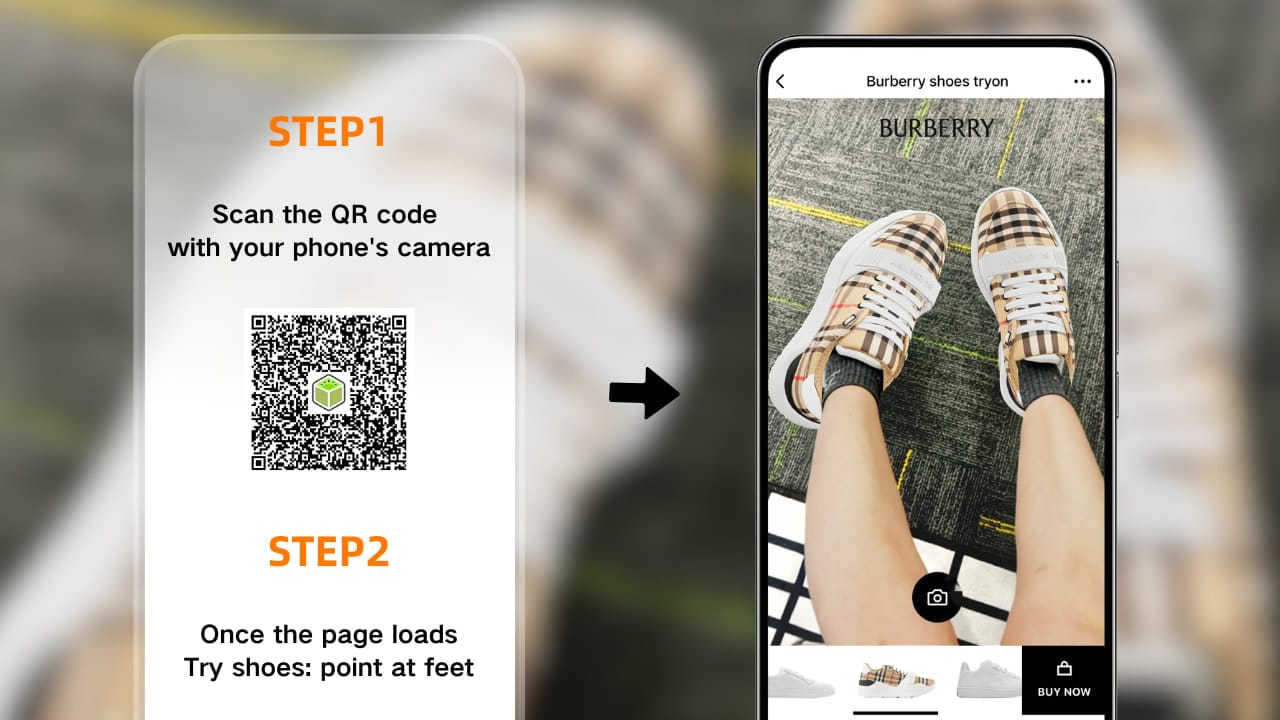
Multi-dimensional Tracking Algorithm, Covering All E-commerce Categories
Kivicube supports a variety of high-precision algorithms such as hand tracking, face tracking, foot tracking and plane recognition, which can meet the AR application needs of different e-commerce categories such as jewelry, eyewear, footwear, clothing, furniture and cosmetics. Whether it is the delicate try-on of small accessories or the spatial placement of large furniture, it can achieve stable and real interactive experience.
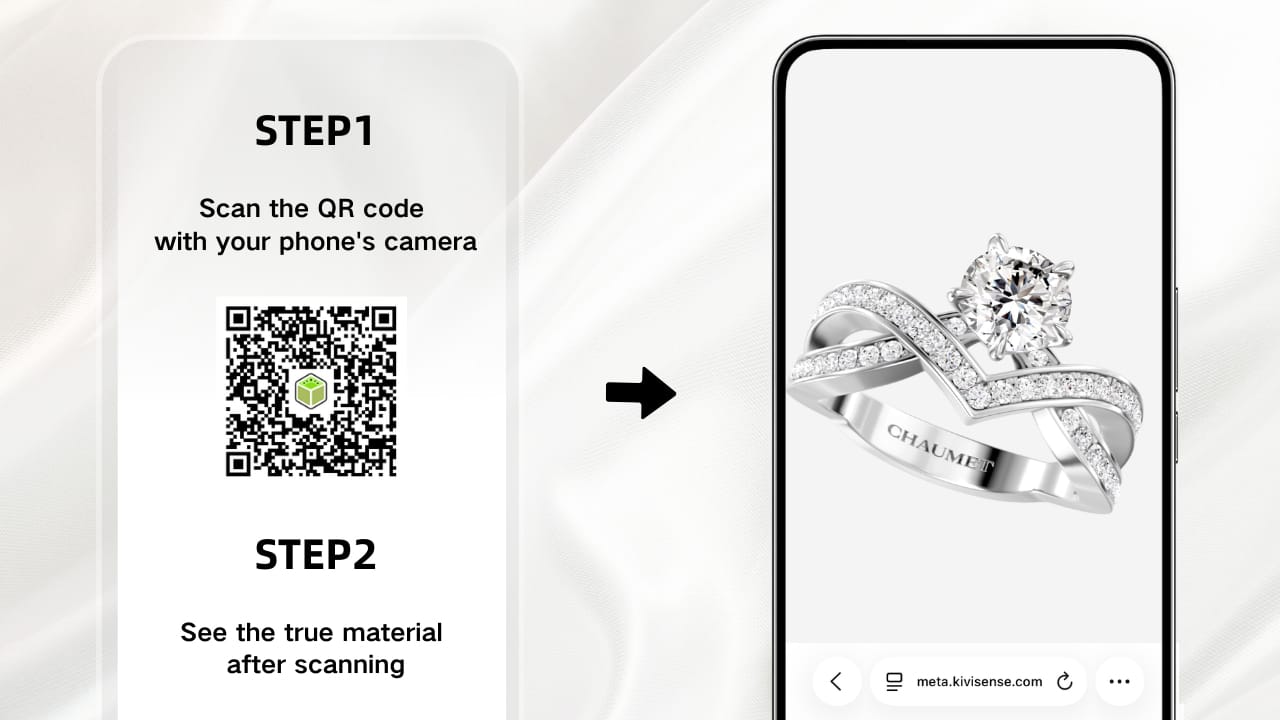
High-precision Rendering Engine, 90%+ Product Restoration Degree
Equipped with a professional-grade rendering engine, Kivicube can restore the texture, color, luster and even subtle details of real products with a reduction degree of more than 90%. It can perfectly present the fire of diamonds, the texture of fabric and the texture of furniture, making the virtual product consistent with the real one.
AI-generated Workflow, Reduce Digital Asset Construction Cost
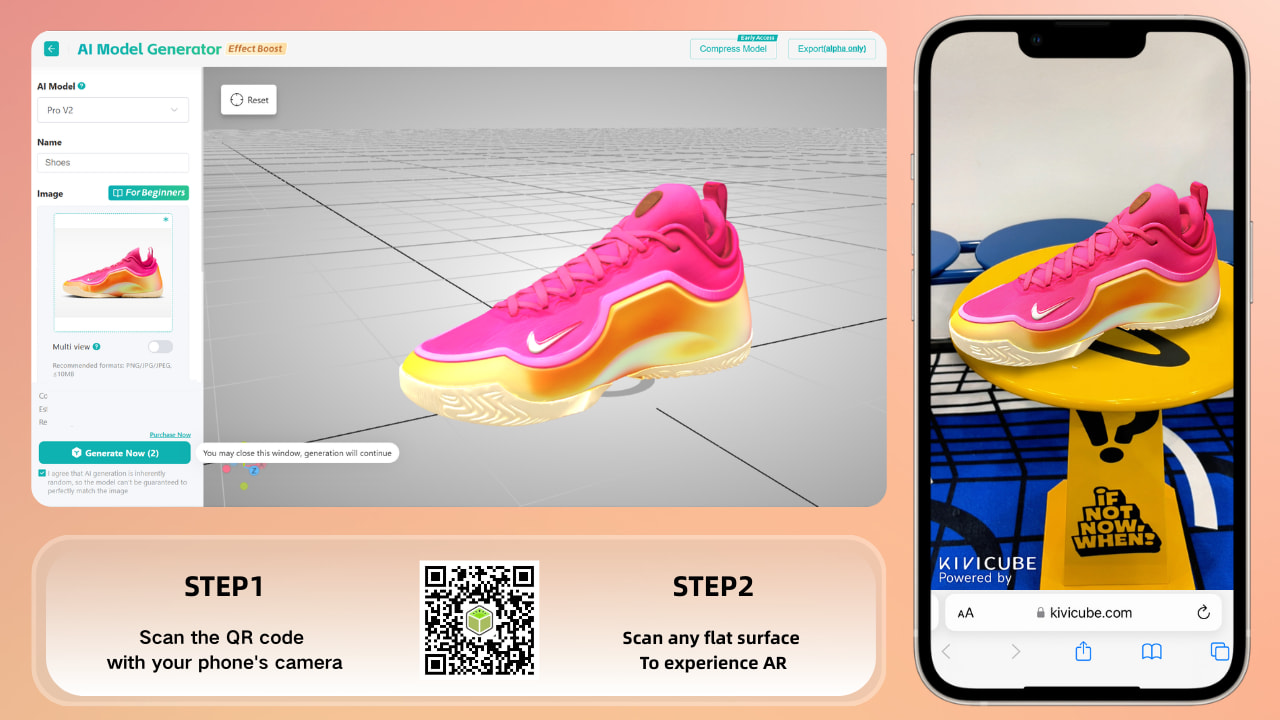
Kivicube innovatively launches an AI-generated digital asset workflow. Brands only need to upload product detail pictures, and the platform can automatically generate high-simulation 3D product models, which greatly shortens the production cycle of digital assets and reduces the professional production cost of 3D models by more than 80%, making AR technology accessible to small and medium-sized e-commerce brands.
Low-code Editing, Adapt to All Types of Operation Teams
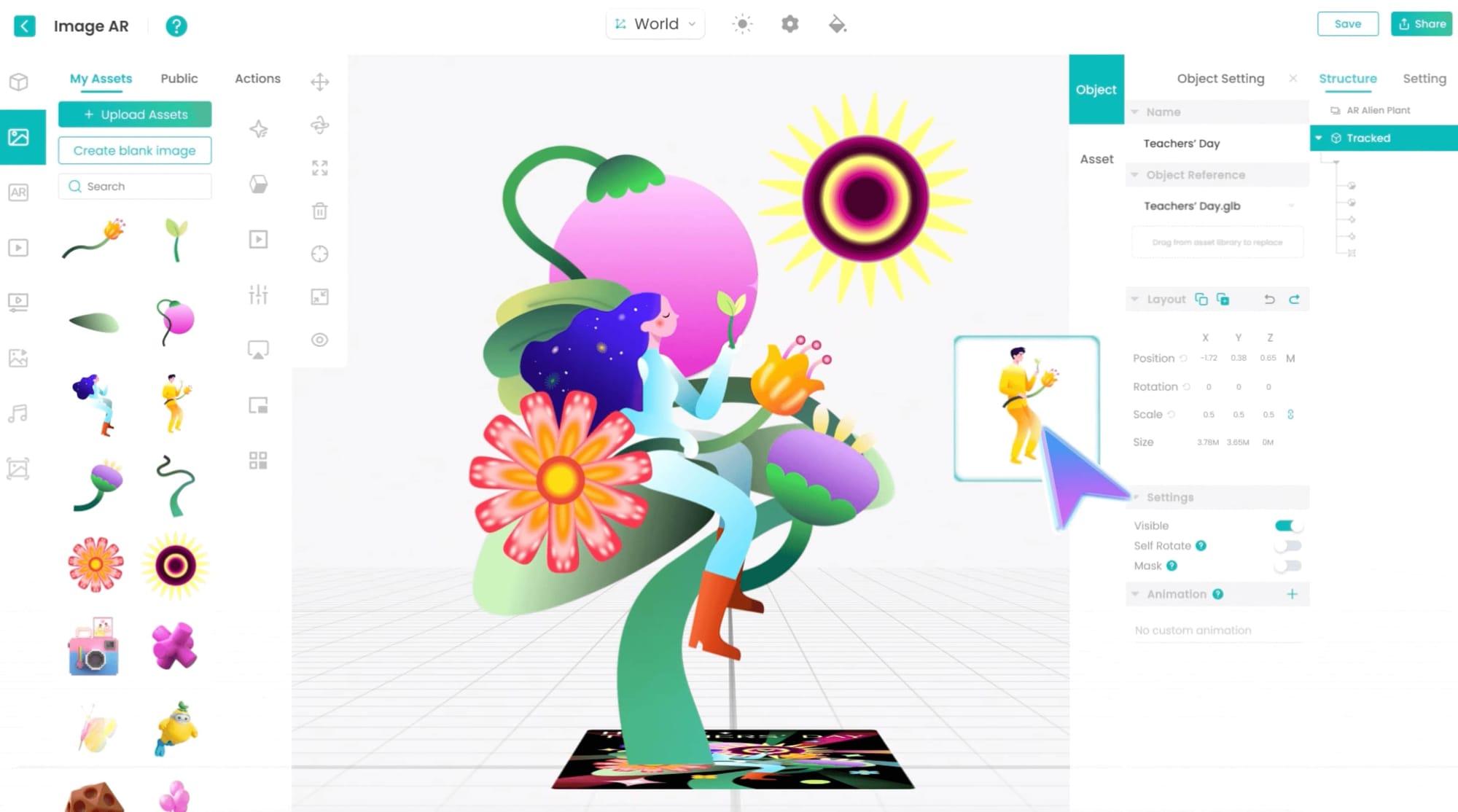
Kivicube provides two operation modes: API interface and visual editing. For teams with independent development capabilities, they can carry out secondary development through the API interface; for small and medium-sized brands without professional development teams, they can complete the creation of high-quality AR experiences through the drag-and-drop visual editing interface without writing a single line of code, realizing the low-threshold landing of AR technology.
WebAR-based, Realize Omnichannel Empowerment with One Production
All algorithms of Kivicube are based on WebAR technology, which means that the created AR experience can be seamlessly deployed on the brand's official website, Amazon, Shopify, APP and even shared on social media platforms. It truly realizes "one production, omnichannel operation", maximizes the coverage of AR experience and improves the efficiency of brand traffic conversion.
In addition, Kivicube has completed the adaptation of HarmonyOS NEXT, Apple Vision Pro and other mainstream systems and devices, and supports multiple AR scenes such as image AR, body AR, plane AR and AR face filter, building a full-scene AR application ecosystem for e-commerce brands.
Dive into this article to learn exactly how WebAR boosts sales conversions for businesses across all industries.5 Simple Steps to Create Your First AR Product Visualization Experience with Kivicube
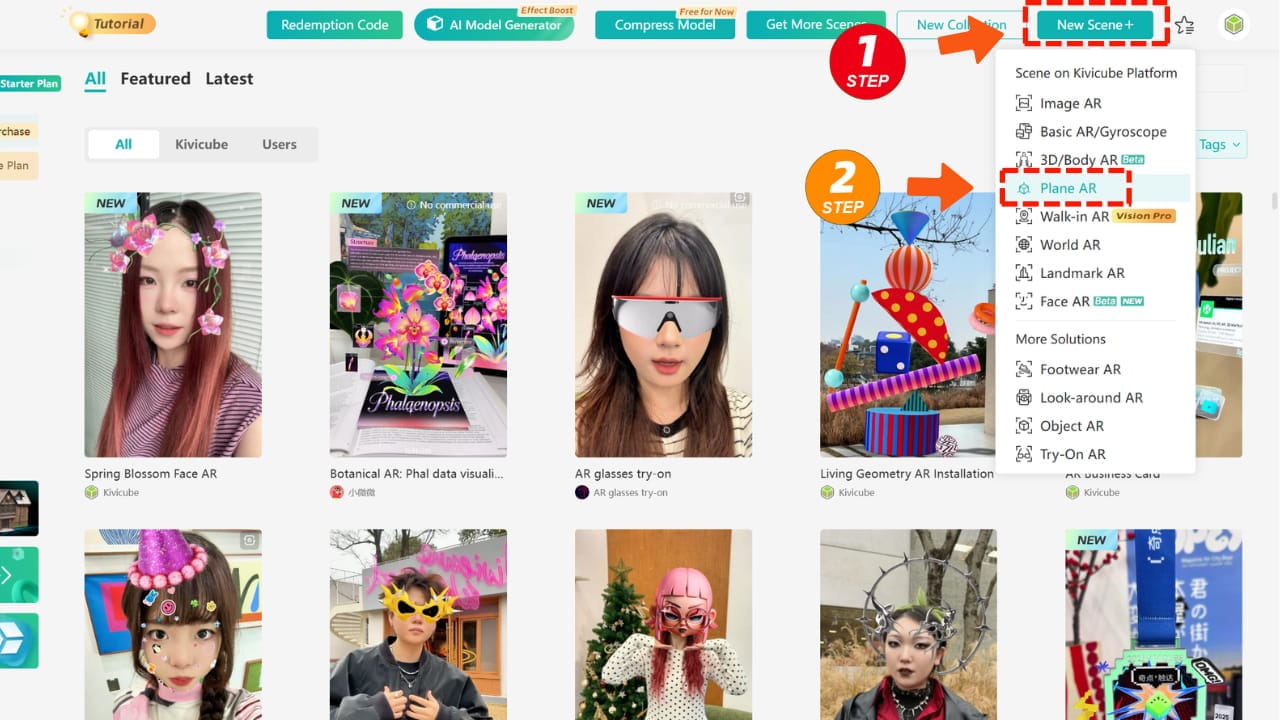
Kivicube simplifies the complex AR development process into 5 easy-to-operate steps, and you can complete the creation and online of AR experience in 10 minutes:
- Upload Product Detail Pictures: Log in to the Kivicube platform, upload high-definition product detail pictures with clear textures and complete shapes, and the AI system will automatically identify the product features
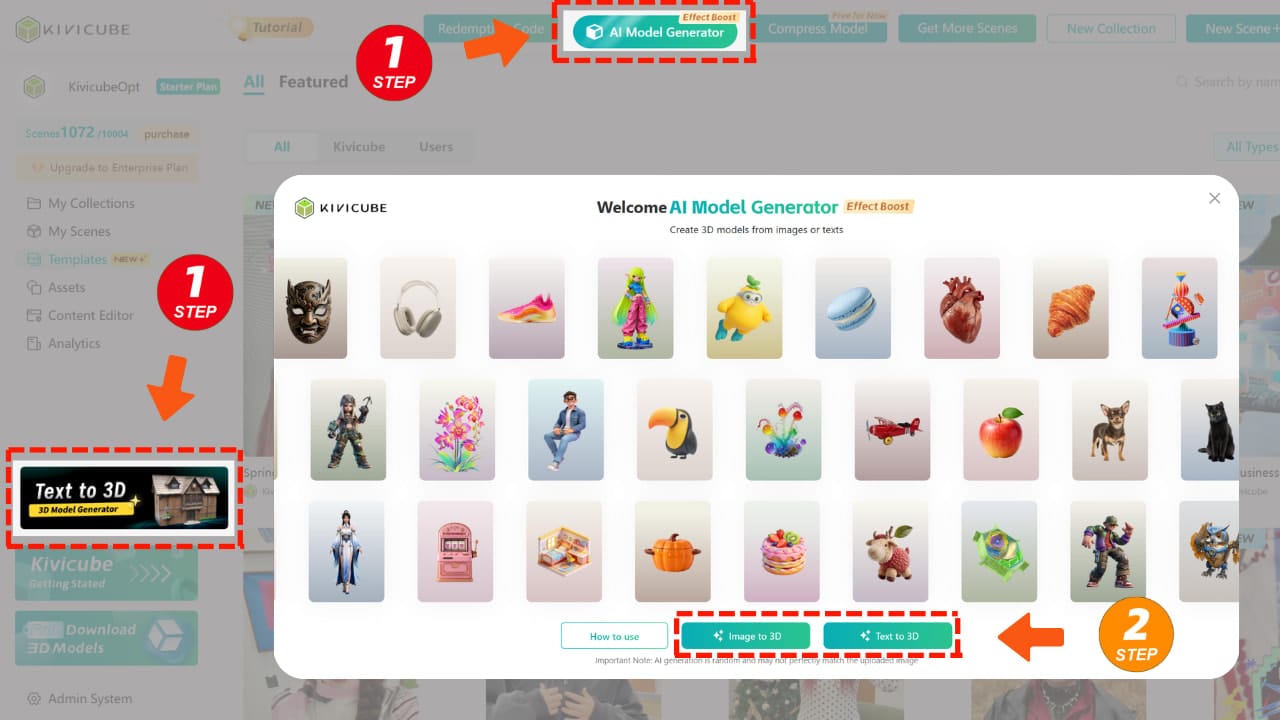
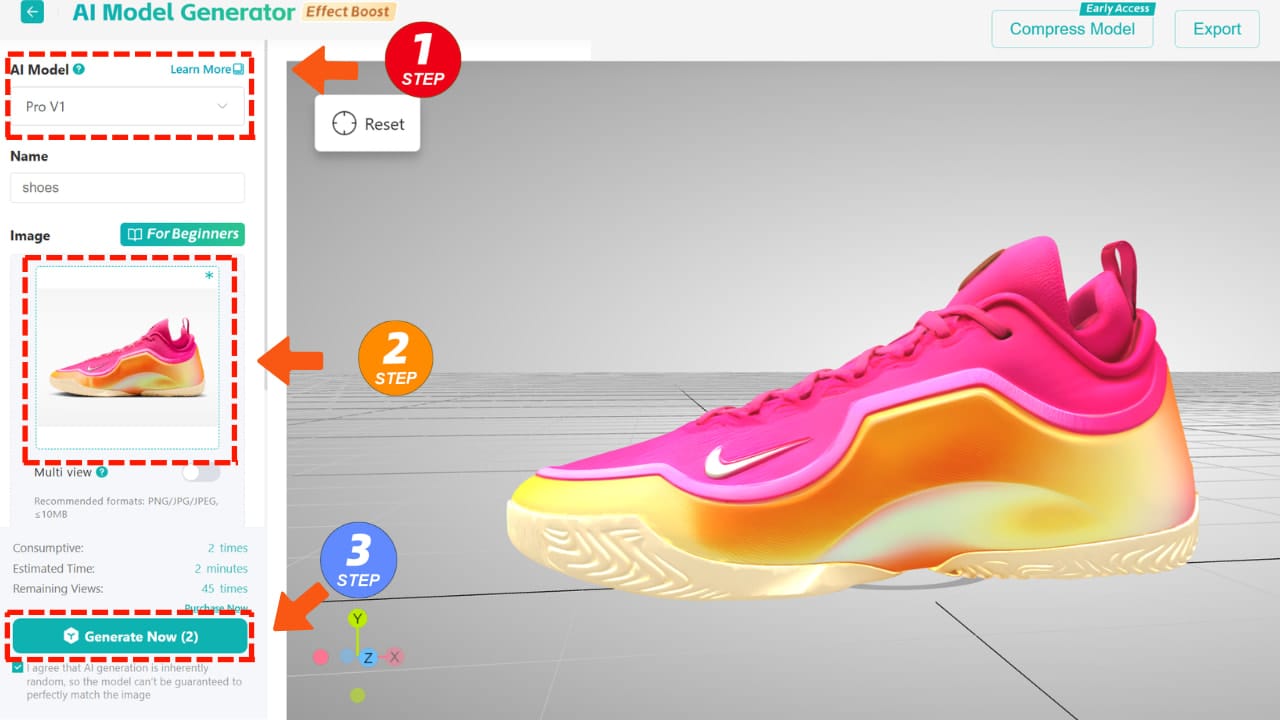
- AI Generates High-simulation Product Model: The platform's AI model generation engine automatically generates a 3D product model according to the uploaded pictures, and supports manual fine-tuning of model details, colors and textures to ensure the restoration degree.
- Create a PlaneAR Scene: Select the PlaneAR scene template, add the generated 3D model to the scene, and set interactive parameters such as model scaling, rotation and click response according to the product characteristics.
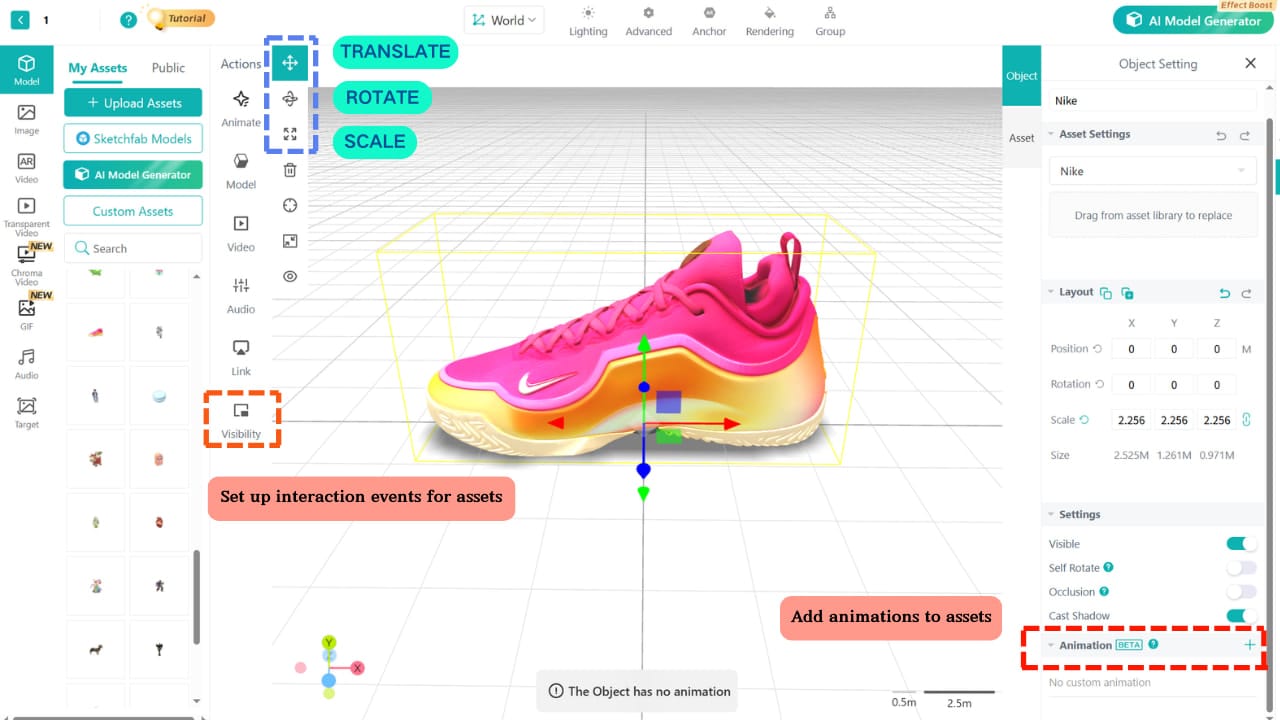
- Save and Preview the AR Experience: Save the created AR scene, and preview the real experience effect on mobile phones, computers and other devices in real time to adjust and optimize the details.
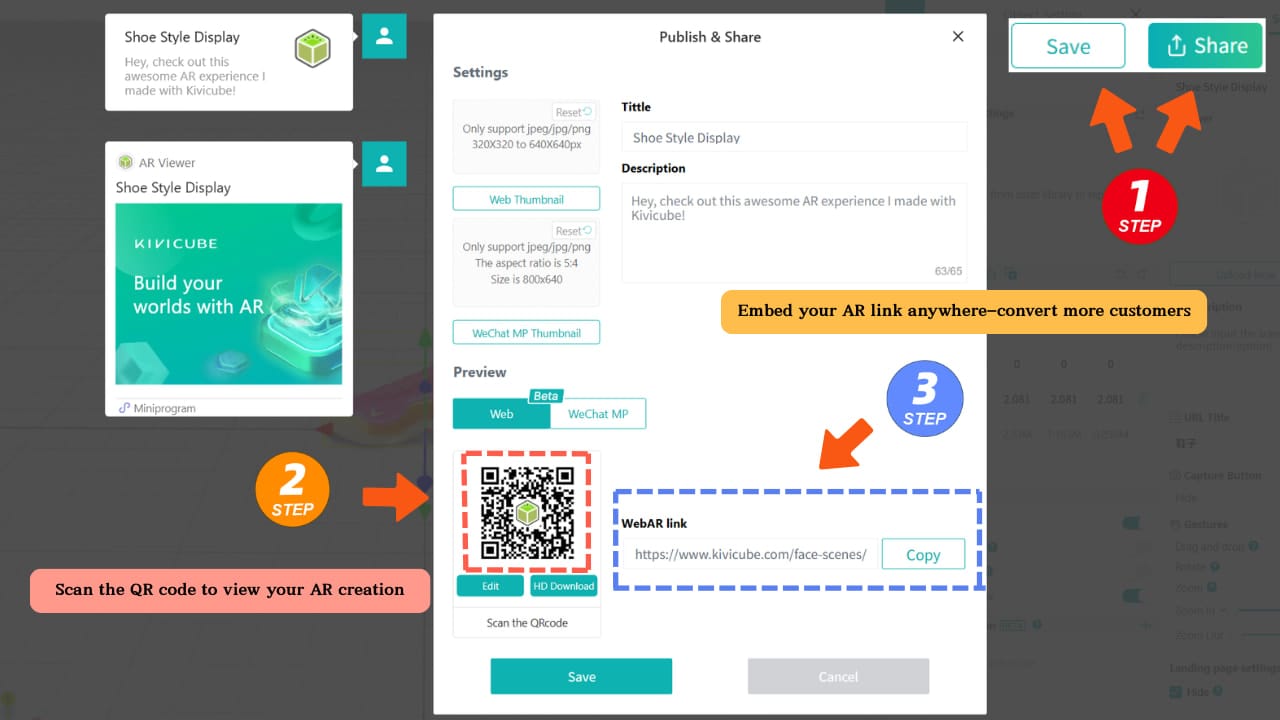
- Embed to the Official Website/Platform: The platform generates a unique embed code or QR code for the AR experience, which can be directly embedded into the brand's official website product page, e-commerce store or social media post, and consumers can experience it with one click without downloading additional APP.
FAQ About Kivicube & Augmented Reality Ecommerce
Q: Do I need professional 3D modeling skills to use Kivicube?
A: No, Kivicube's AI-generated workflow can realize 3D model production with only product detail pictures, and the visual editing interface is easy to operate, which is suitable for non-professional teams.
Q: Can the AR experience created by Kivicube be used on cross-border e-commerce platforms such as Amazon and Shopify?
A: Yes, Kivicube's WebAR technology supports all mainstream web platforms, and the generated embed code can be directly deployed on cross-border e-commerce platforms to realize global coverage of AR experience.
Q: How to solve technical problems encountered in the use process?
A: All Kivicube users can join the official Discord community, where there are professional technical support teams and other brand users to share experience and solve problems in real time.
Q: Does Kivicube provide customized AR solutions for large brand customers?
A: Yes, Kivicube has a professional customized service team, which can provide exclusive AR technical solutions according to the brand's industry characteristics, product attributes and operation needs, and support deep technical docking and secondary development.
Conclusion
Augmented reality ecommerce is the future of online shopping, solving brands’ pain points of high return rates and low conversions while offering consumers a more convenient, immersive shopping experience. As a leading AR platform, Kivicube breaks technical and cost barriers with its multi-dimensional tracking, high-precision rendering, AI-generated workflows and WebAR omnichannel deployment—making AR accessible to all e-commerce brands.
Join Kivicube today to redefine your online shopping experience and seize the new dividend of e-commerce tech upgrading.