Augmented Reality Marketing: Creative Campaign Examples & How to Launch Yours
What is Augmented Reality Marketing & Why It Matters
In recent years, a growing number of brands have turned to augmented reality to power their marketing campaigns, with the goal of elevating user experience, boosting business conversions, and fostering long-term customer loyalty.
According to Statista, more than 61% of shoppers say they prefer stores that offer AR experiences. These numbers show why AR has moved from a nice-to-have feature to a necessity of modern marketing strategy.
Top Augmented Reality Campaigns Examples in 2026
This year, many well-known brands have launched exciting augmented reality campaigns. They use AR to empower shopping experience, encourage social sharing, and guide customers toward action. Let’s look at some of the most creative and effective ideas you can adapt for your own projects.
AR Campaign in Retail: M&M's AR Game
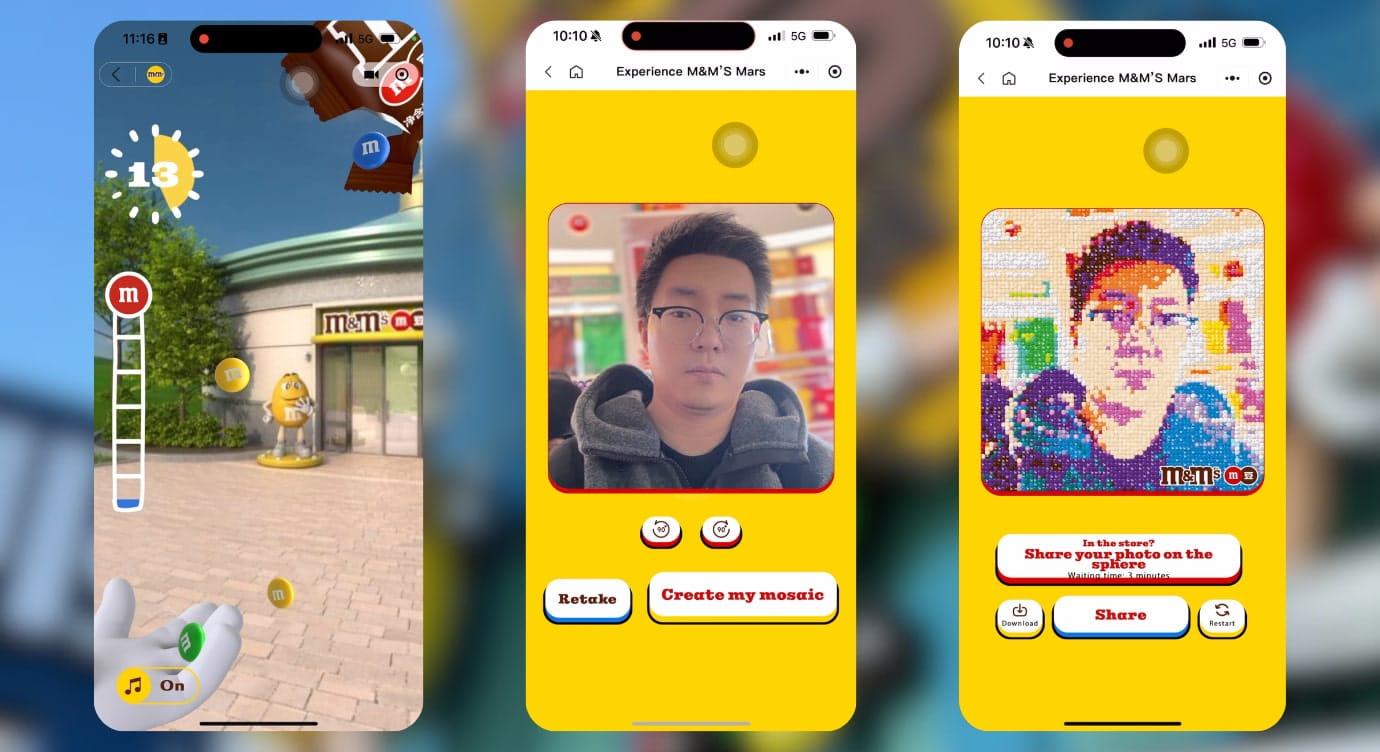
M&M’s used WebAR to celebrate its new Shanghai Disney flagship store opening. Visitors scanned a QR code to play a motion-controlled game—moving their bodies to catch falling M&M’s candies, with target-score players winning limited-edition gifts.
The campaign also included an AR pixel art effect: users could generate the filter after taking photos and project the filtered images onto in-store light balls with one click, boosting engagement and sharing.This kept visitors engaged longer, created shareable online moments, and drove more foot traffic to the store.
The campaign kept visitors engaged longer. It also created shareable moments that spread online and brought more people into the store.
AR Campaign in Retail: Livat Shopping Mall AR Interaction
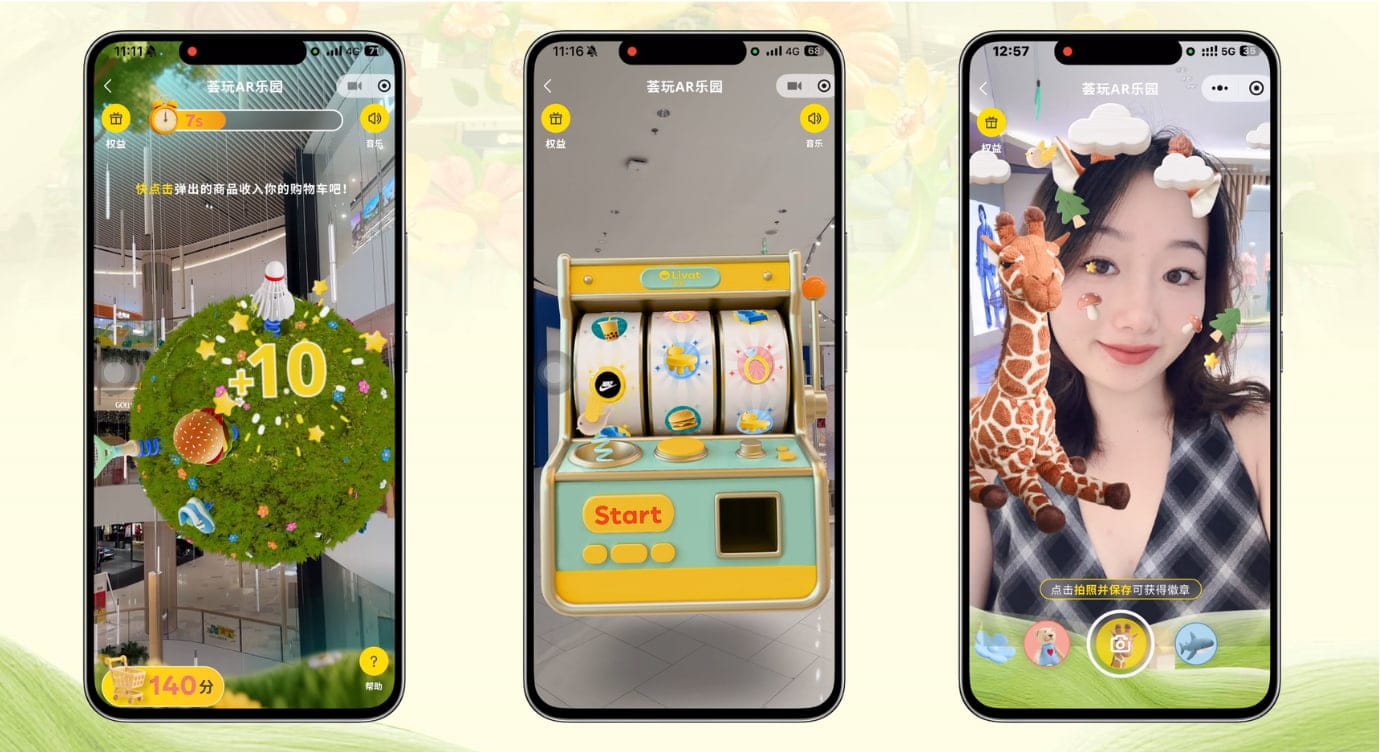
Livat, part of the Ingka Group, launched a set of AR games across its shopping centers. Visitors scanned codes to join AR treasure hunts, play AR Lucky Draw , and try branded AR filters.
As users played, they earned coupons for stores inside the mall. This strategy drove more traffic to individual shops and improved overall sales performance for the whole center.
AR Campaign in Luxury: Dior AR Packaging
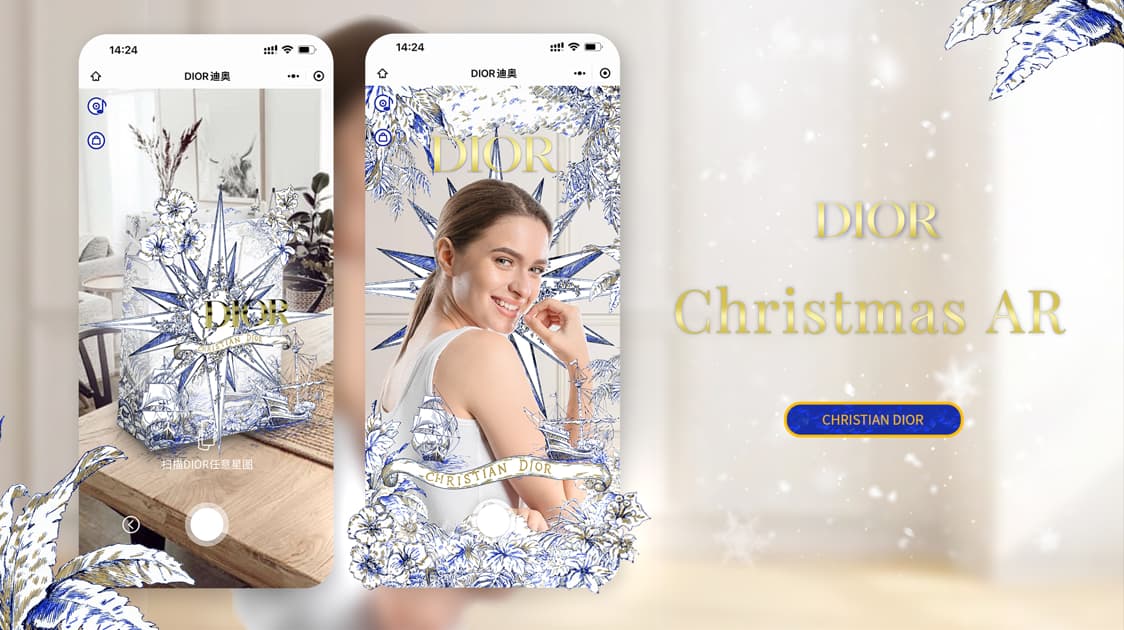
Dior’s Christmas limited-edition packaging is always highly anticipated. In recent years, the brand has upgraded these packages with augmented reality. Customers scan the package at home to trigger animated AR effects. The experience delights loyal buyers, strengthens brand image, and encourages unboxing content on social media.
For more AR packaging cases and a practical creation guide, explore this article: AR Packaging: Real-World Cases & Practical Guide
AR Campaign in Luxury: Loewe CVD AR Effect
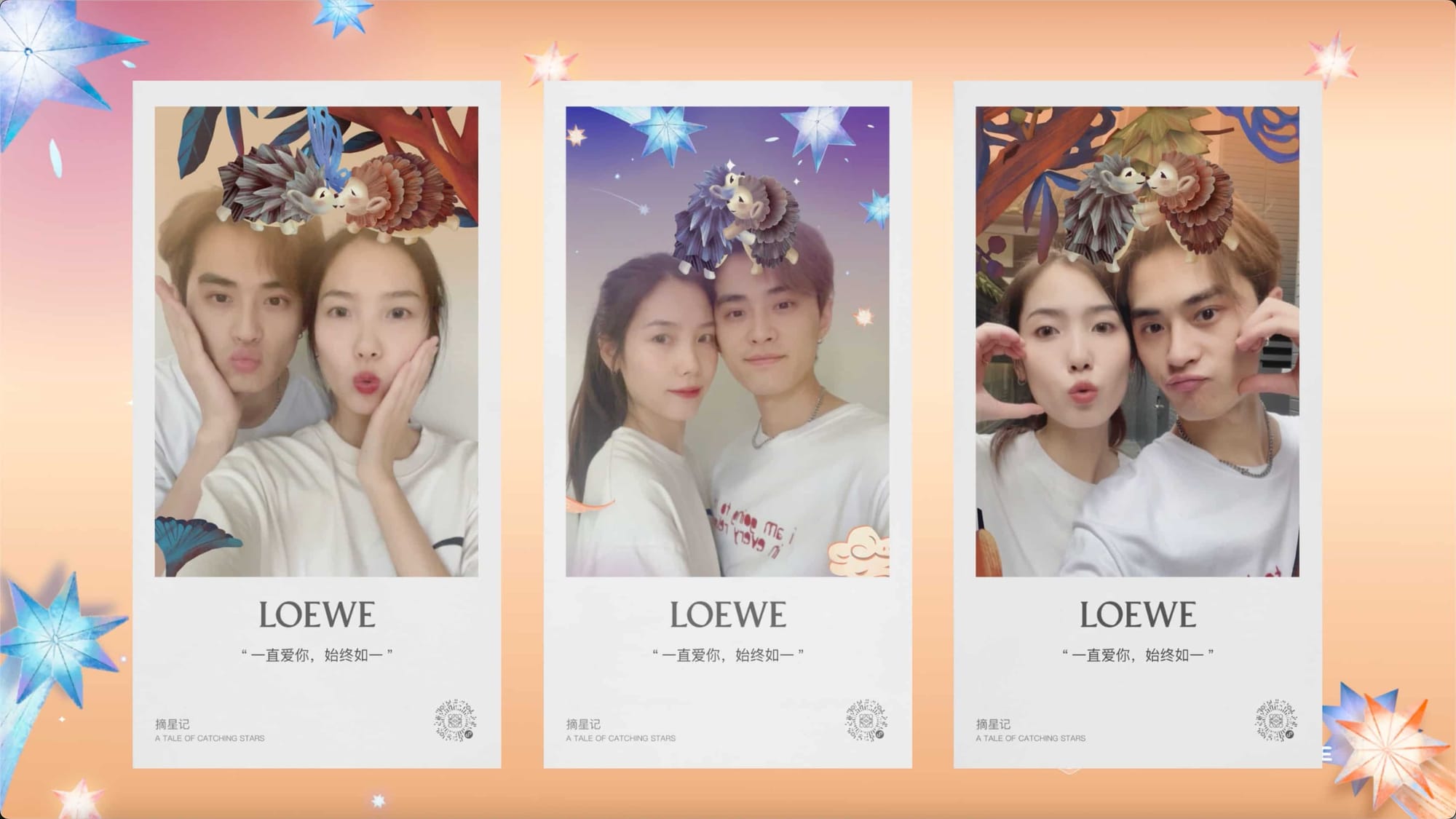
Loewe launched a hedgehog-themed collection for Chinese Valentine’s Day. Alongside the products, brand released a special AR effect.When two people moved close to each other while using the filter, the hedgehogs “hugged” and triggered a unique effect. The cute design and playful interaction drove organic sharing. It raised awareness for the collection and supported sales.
AR Campaign in FMCG: Luckin Coffee AR Merchandise
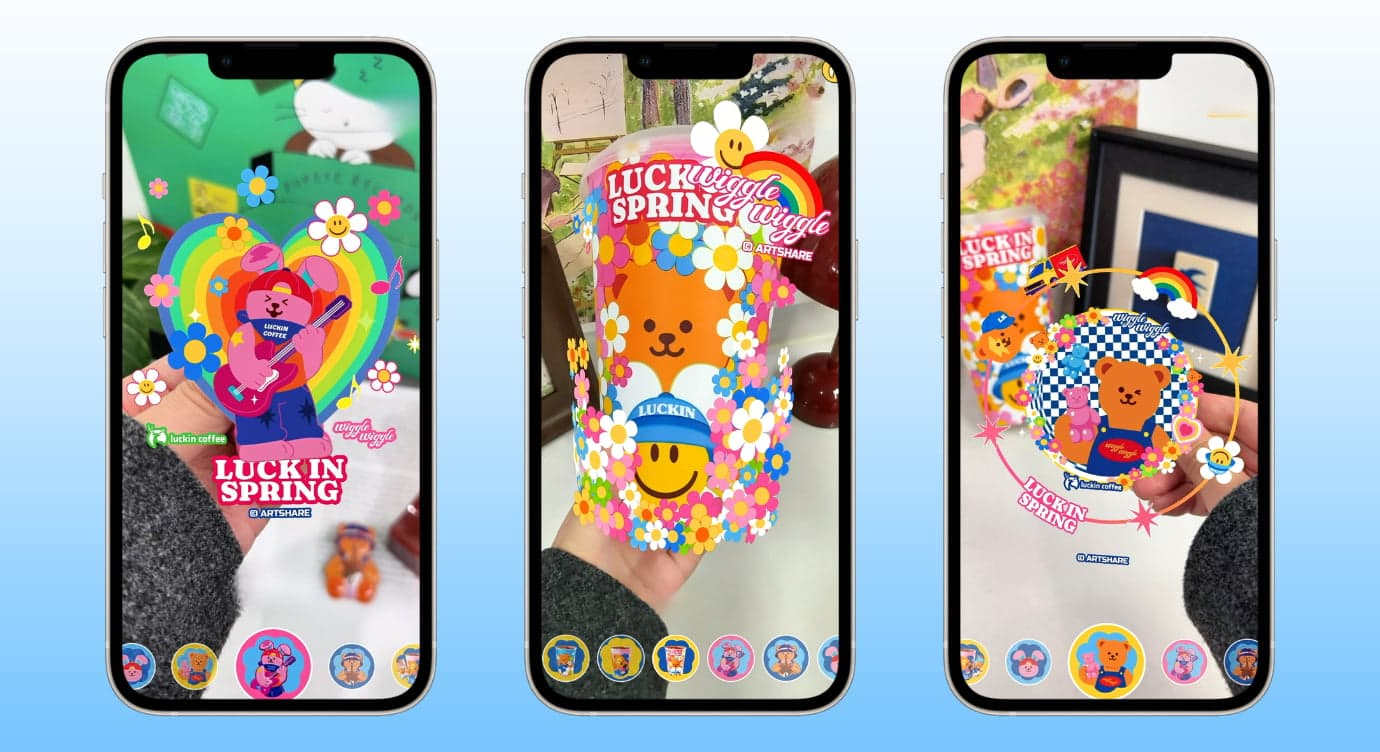
Luckin Coffee partnered with Korean lifestyle brand Wiggle Wiggle on a limited collection. The campaign included AR-enabled coffee cups and some merchandise AR experience.
Customers scanned the packaging to unlock AR animations. The experience increased engagement and lifted sales of the collaborative products.
AR Campaign in Designer Toy: POP MART AR In-Store Experience
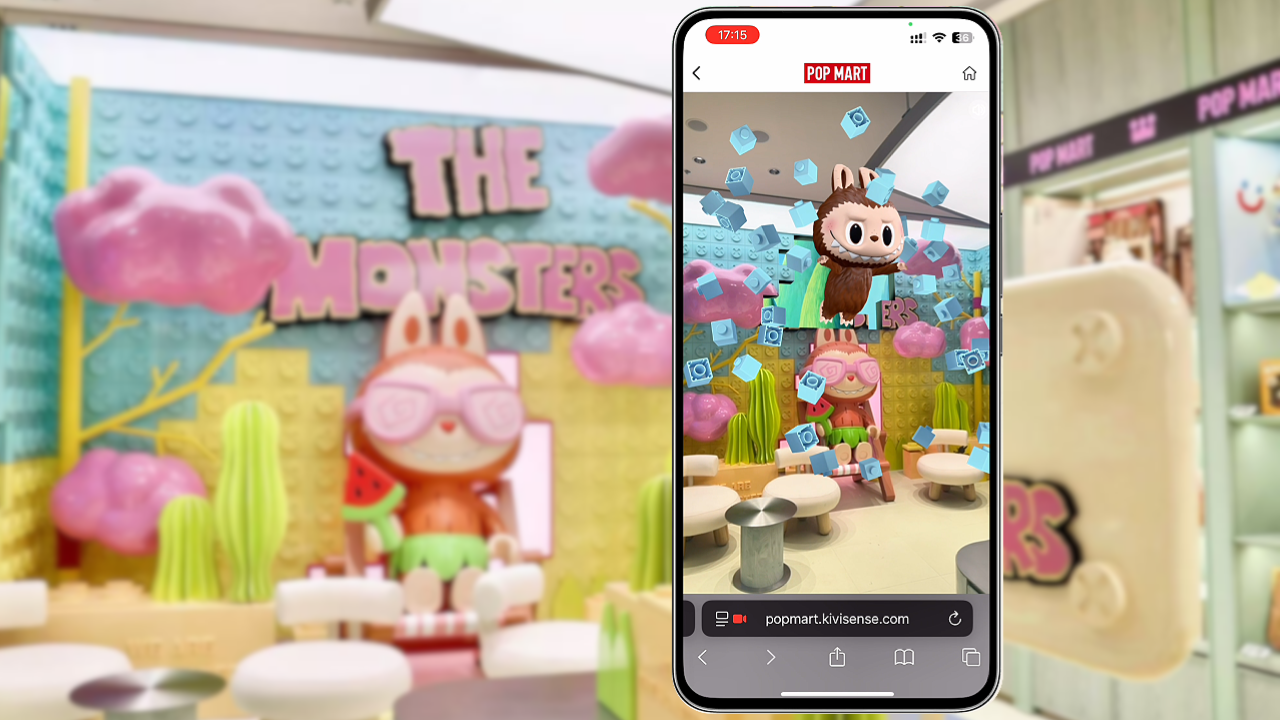
POP MART launched an AR game experience for its first Australian store. The campaign featured fan-favorite characters like Molly, Labubu, and Twinkle Twinkle.
Shoppers scanned codes in-store to use AR filters, join AR treasure hunts, and interact with Labubu installations. The AR effects made Labubu appear to break through walls into the real world.
The experience improved in-store enjoyment. It also helped customers discover products and supported higher conversion rates.
For more insights on how WebAR elevates in-store and pop-up experiences with app-free, high-engagement interactions, explore this guide: WebAR for Pop-Ups: No App Needed, Just More Engagement
How Agencies and Creators Can Launch AR Marketing Campaigns
AR campaigns move fast. Marketing teams need to maximize their funnel quickly. That makes ease of use and broad compatibility critical when choosing an AR platform.
Kivicube| Augmented Reality Platform for Marketing
For most augmented reality marketing projects, Kivicube is a strong choice. It is an AR platform built specifically for marketing teams and agencies.
If you want to learn how to create an augmented reality scene from scratch with Kivicube, check out this quick start tutorial: Kivicube Quick Start: Create an AR Scene with No Prior Experience.
Why Choose Kivicube?
- Ready-to-use AR marketing templates: Kivicube offers templates for AR packaging, AR filters, AR treasure hunts, and more. You can swap in your own images and assets to finish a campaign in minutes. Some projects take less than one hour.
- Full WebAR support: WebAR lets users experience AR through a mobile browser. No app download is required. Kivicube supports image tracking, face tracking, body tracking, plane tracking, and other popular WebAR features. If you want to learn how WebAR empowers brands to reach more users and boost conversions in detail, you can check out this article: How WebAR Empowers Industries to Boost Business Conversion Rates.
- AI-powered creation tools: The platform includes AI tools to speed up production. You can remove video backgrounds automatically, generate 3D models, and create AI videos. Everything happens in one place without switching between tools.
- Online visual editor: You can build complex AR experiences with simple drag-and-drop controls. No advanced technical skills are needed to create professional campaigns.
- Data analysis capabilities: Kivicube supports data analysis functions, allowing users to intuitively view the user engagement of each AR scene and export data reports. This facilitates data review and helps marketing teams optimize subsequent AR campaigns based on real user data.
If you want to learn more about using Kivicube to create various commercial AR cases, check out our channel’s tutorial series
Augmented Reality Campaign| AR Brochure Tutorial
FAQ
What if Kivicube’s built-in features don’t meet my needs?
Kivicube supports custom development for brands and agencies with unique requirements. If you need special interactions, 3D animations, or enterprise-level integrations, the team can create a tailored solution.
Do I need coding skills to run augmented reality campaigns on Kivicube?
Coding skills are not required for most AR campaigns. Kivicube’s visual, drag-and-drop editor can fulfill most of your AR campaign needs. If you do have development experience, you can also integrate our ready-to-use APIs for more flexible and advanced projects.
What kinds of augmented reality marketing projects can I build with Kivicube?
You can create almost every popular type of augmented reality marketing experience. These include AR packaging, AR face filters, AR body effect, AR treasure hunts, AR games, product visualization. In fact, Kivicube can handle nearly all the gameplay we mentioned in the case studies just now!
Why is WebAR important for modern augmented reality marketing?
WebAR allows users to experience augmented reality directly through a web page, without the need to download any apps. It can be embedded in multiple channels such as a brand’s social media platforms and official apps, helping brands provide the maximum number of touchpoints and maximize the effectiveness of marketing campaigns.
How fast can I launch an AR campaign with Kivicube?
Many basic AR marketing projects can go live in less than one day. With ready-to-use templates and AI-powered creation tools, you don’t need long production times. Even complex campaigns can be finished much faster than traditional AR development.
Is Kivicube free to use ?
Kivicube offers a free version that supports the creation of 2 scenes and 500 experiences. It is completely sufficient for agencies that are initially trying to test the feasibility of augmented reality marketing campaigns.
Conclusion
Augmented reality marketing is no longer a futuristic experiment. It is a practical, high-impact way to connect with customers and drive real business results.
Augmented reality campaigns boost engagement, increase time spent with your brand, and support higher conversion and loyalty.WebAR makes these experiences accessible to almost every smartphone user.
With a platform like Kivicube, you don’t need a large budget or a team of developers to create professional AR campaigns. You can build, test, and launch quickly with templates, visual editing, and AI tools.Whether you work in retail, FMCC, beauty, or Luxury, AR can help you stand out in a crowded market.
Use the campaign ideas in this guide to inspire your next project and bring your brand closer to your audience.