How AR Shopping Is Revolutionizing Online Retail & E-Commerce
AR shopping is reshaping retail with 31.9% annual growth. Explore market data, real-world applications, and AR shopping solutions for retail and e-commerce.
Online shopping had been growing for years, with 2015 being a remarkable tipping point when Cyber Monday alone generated $3.07 billion in sales. A decade later, AR shopping is experiencing a similar breakout moment, with the market expanding at a 31.9% CAGR. Here's a look at the application, market size, and how brands can get started with AR shopping today.
What Is Augmented Reality Shopping?
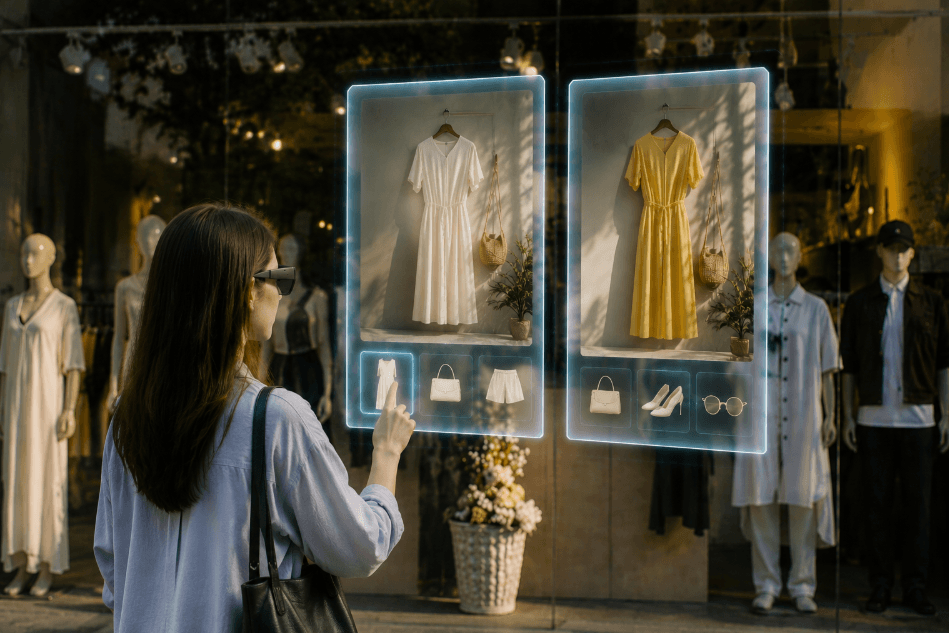
Augmented reality (AR) shopping is a technology that brings products online into a buyer's real-world environment, creating a try-before-buy experience. It allows shoppers to view online products in their actual surroundings, inspect product details, or see items on themselves using a smartphone, tablet, or AR glasses. This technology is widely adopted in retail and e-commerce. Some common AR shopping types are:
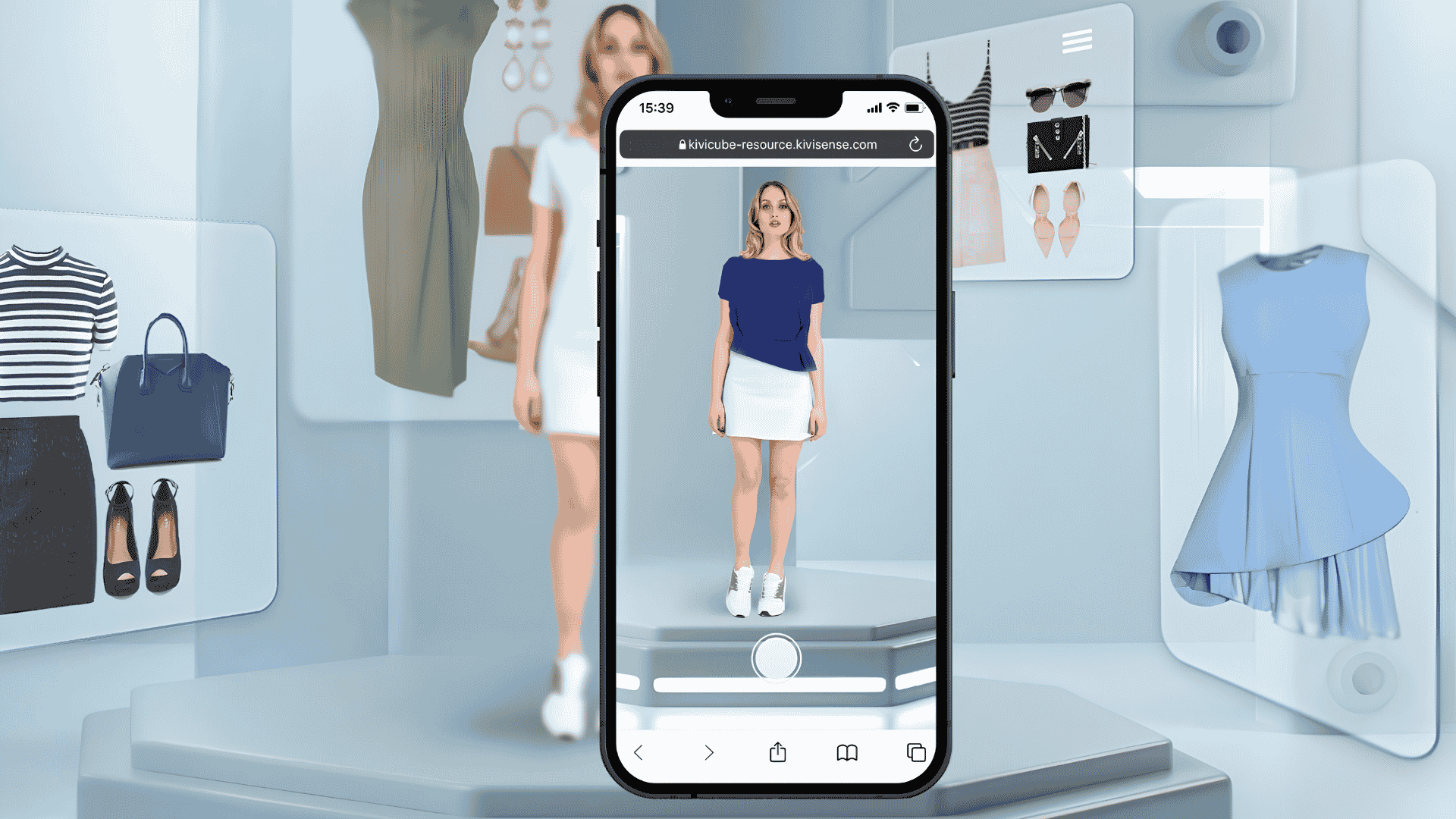
1. Virtual Try-Ons: Virtual try-ons allow shoppers to digitally try on products before making a purchase. This is commonly used in the clothing and fashion industry, enabling buyers to see how clothes, glasses, accessories, makeup, and more look on them without actually wearing them.
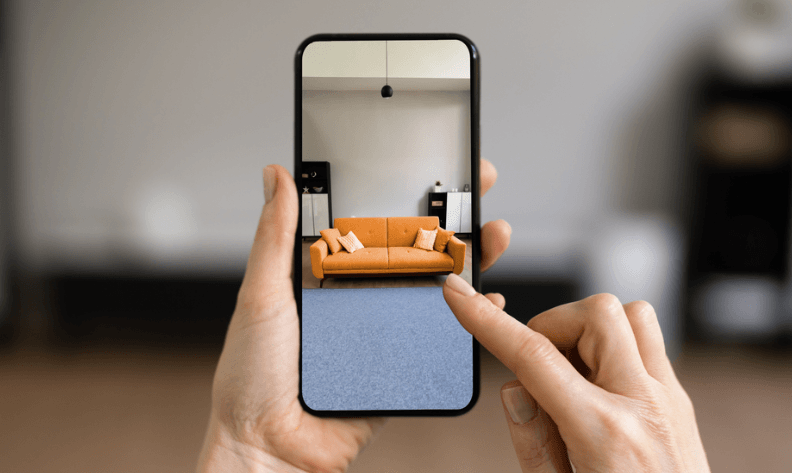
2. Preview Placement: A product preview placement experience helps shoppers to visualize how the product would look in their own space with life-like size and colors. It is particularly popular in furniture, home decor, and electronics.
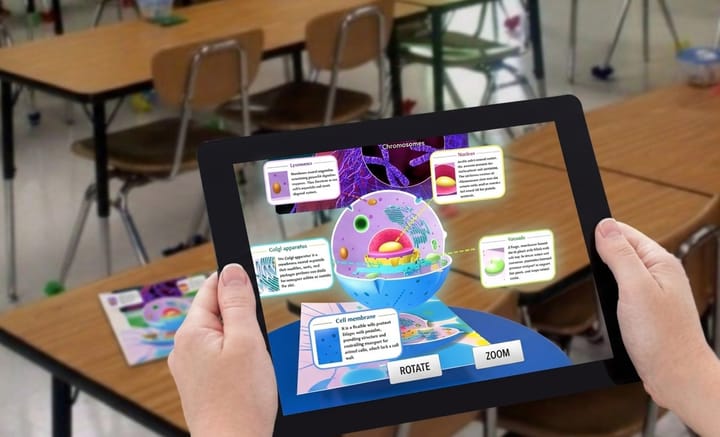
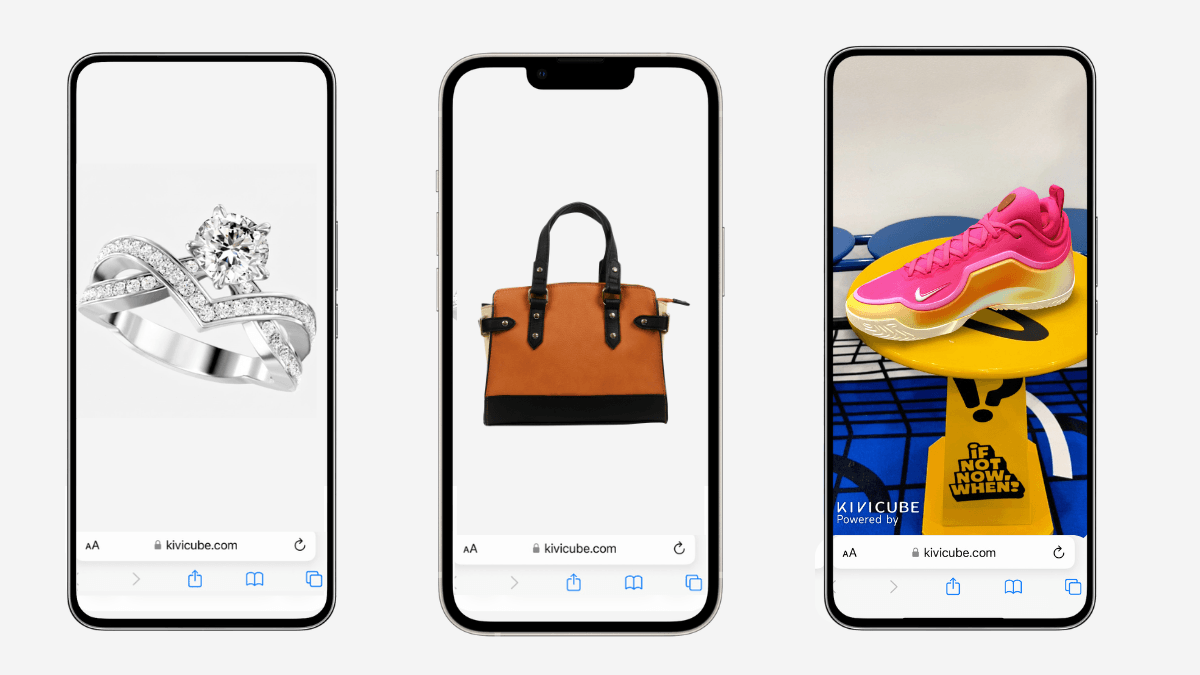
3. 3D Product Viewing: This allows shoppers to inspect a product from every angle and zoom in/out. Unlike static images, this gives customers a comprehensive understanding of a product's design, texture, color, and dimensions. Common in electronics, bags, jewelry, etc.
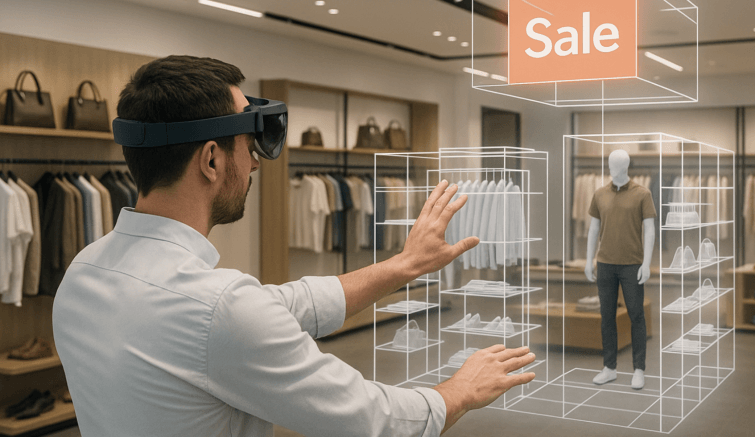
4. AR Store: This allows brands to create a virtual retail space that is overlaid onto the user's real‑world surroundings. Customers can see a digital storefront appear in any open space. Buyers can walk around it and browse product displays as if they were in a physical boutique.
Surging AR Shopping Market Size & Share
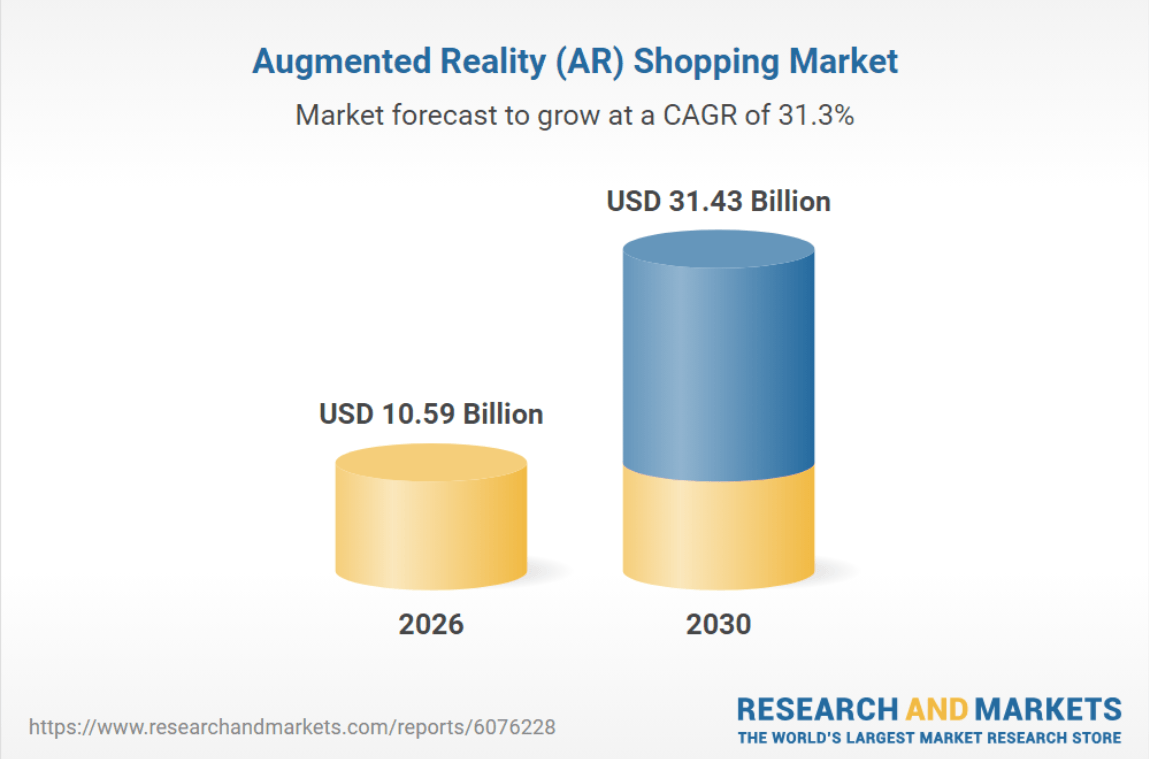
The augmented reality shopping market is expanding at an extraordinary pace. According to Research and Markets, the global AR shopping market was valued at $10.59 billion in 2026 and is projected to reach $31.43 billion in 2030, representing a compound annual growth rate of 31.3%.
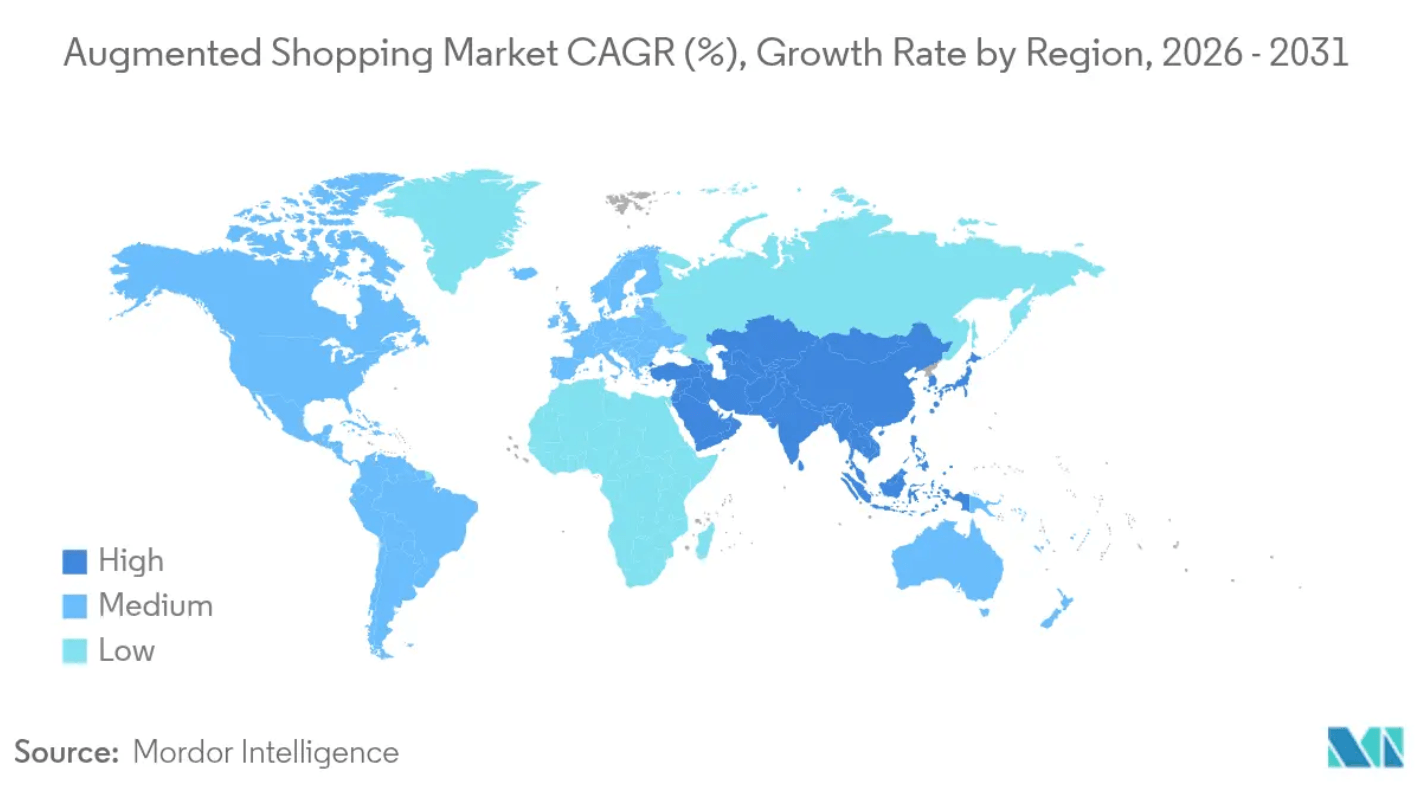
As for market share, AR shopping shows consistent momentum across region, industry, and device type, all trending upward.
- Regional landscape: North America currently leads the AR shopping market, while Asia-Pacific is emerging as the fastest-growing region, driven by mobile-first shopping behavior and rapid 5G deployment.
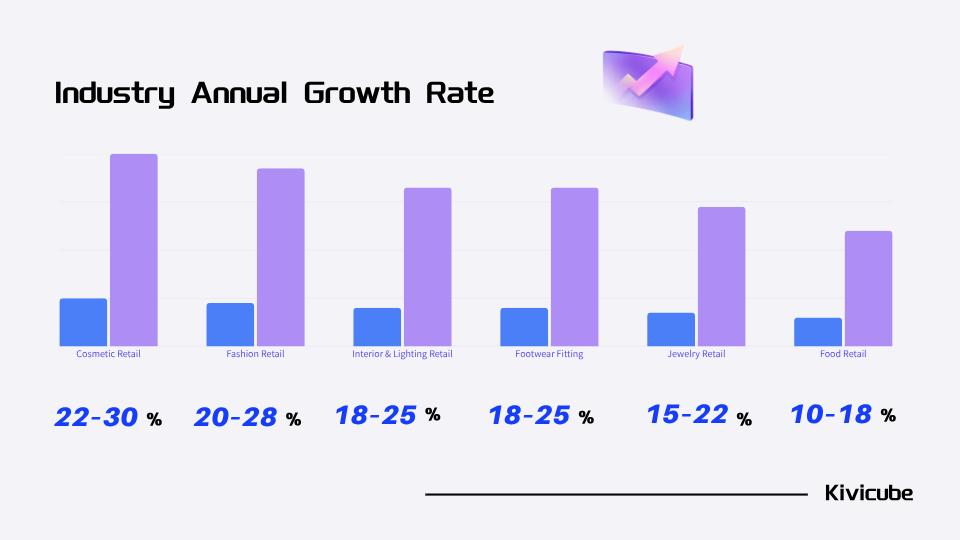
- Industry Annual Growth: According to Research and Markets, cosmetic retail leads AR adoption with 22%-30% annual growth, followed by fashion at 20%-28%, interior and footwear both at 18%-25%, jewelry at 15%-22%, and food retail at 10%-18%.
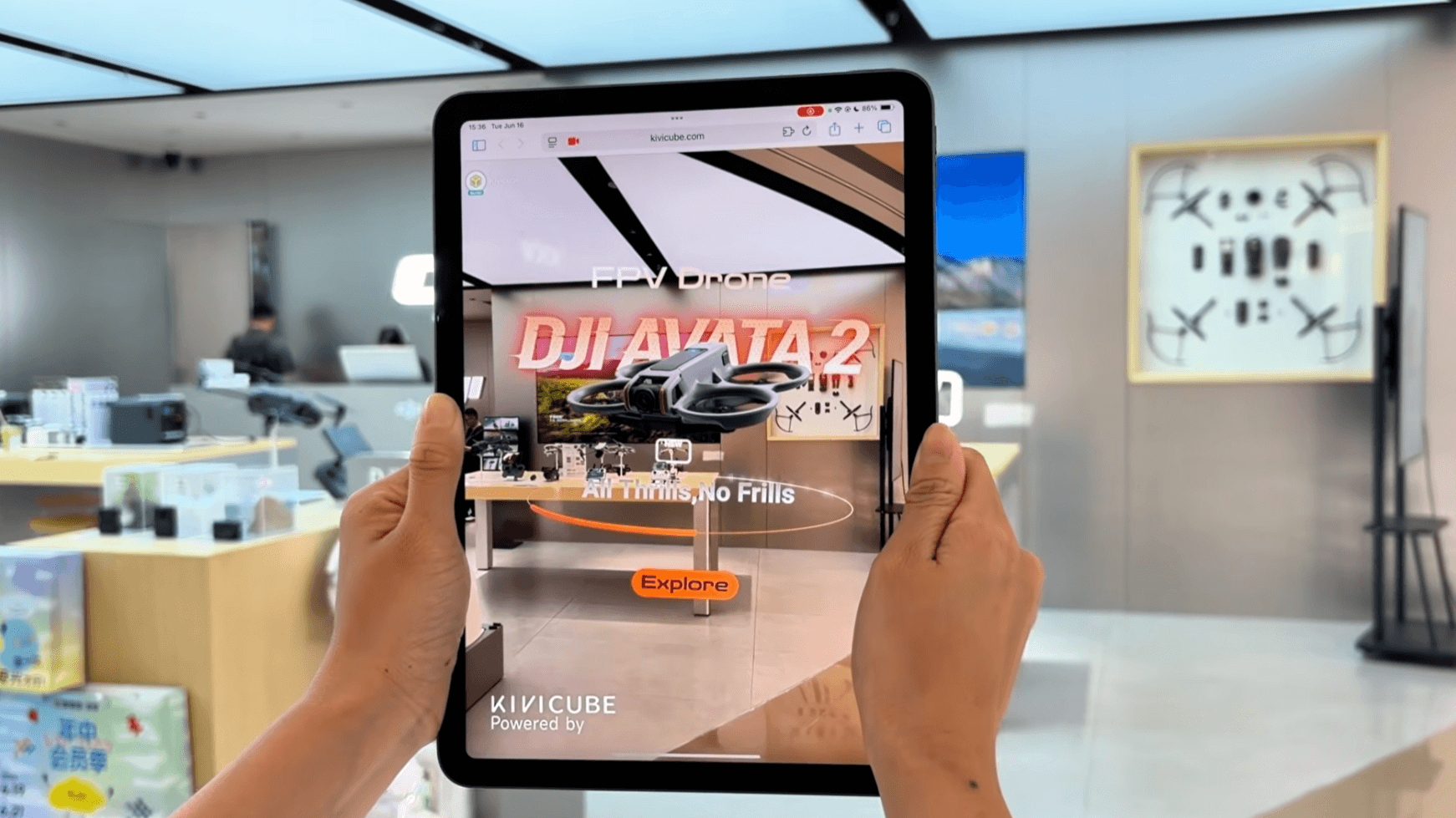
- Device preference: Handheld devices (smartphones, iPads, etc.) dominate the market, with AR glasses and smart mirrors gaining traction as the technology evolves.
For B2B retailers and e-commerce brands, these numbers all tell the same fact: AR shopping is no longer a niche experiment but a competitive necessity.
<< You May Need:
 Leonie
5 Real World AR Shopping Experiences
Step away from the data, AR shopping is playing out in the real world. From fashion design to luxury brands, the cooperation between enterprises and AR companies has brought solid value.
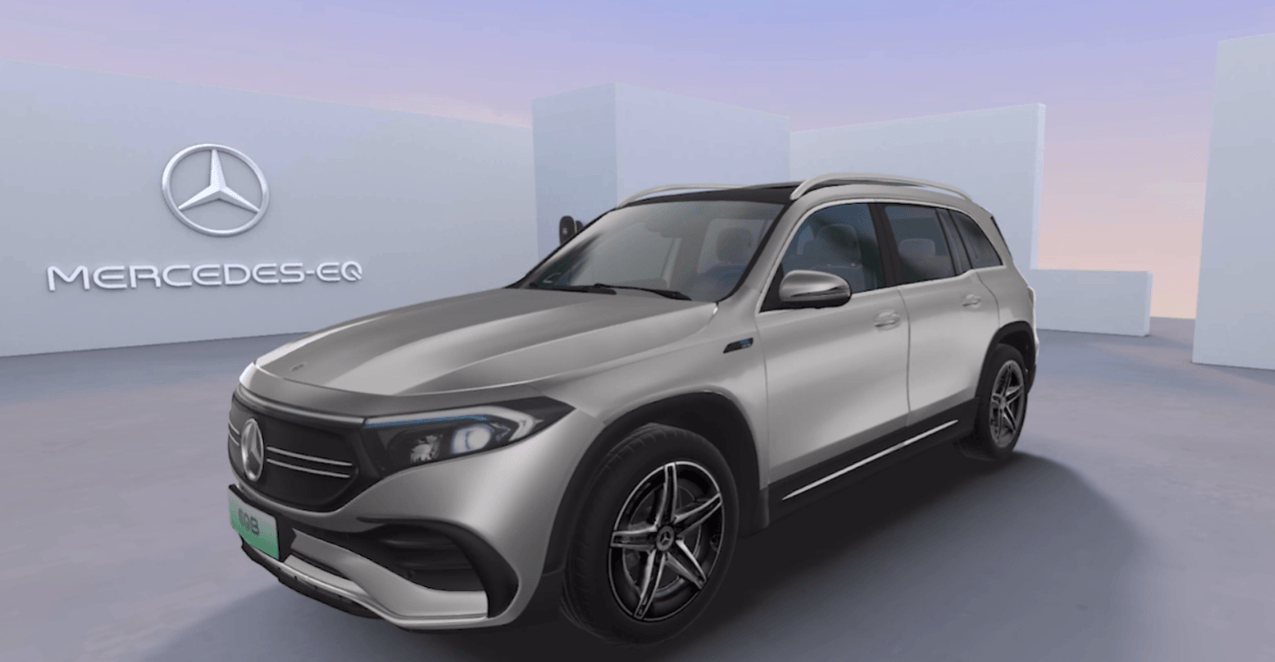
Mercedes-Benz AR Shopping Experience
Mercedes-Benz partnered with Kivisense to launch an immersive 3D car configurator for its luxury EQ series all-electric SUVs. The experience allows customers to customize body colors in real time and explore the vehicle from every angle. Users can open doors, the sunroof, and the trunk to inspect both exterior and interior details in high‑fidelity 3D.
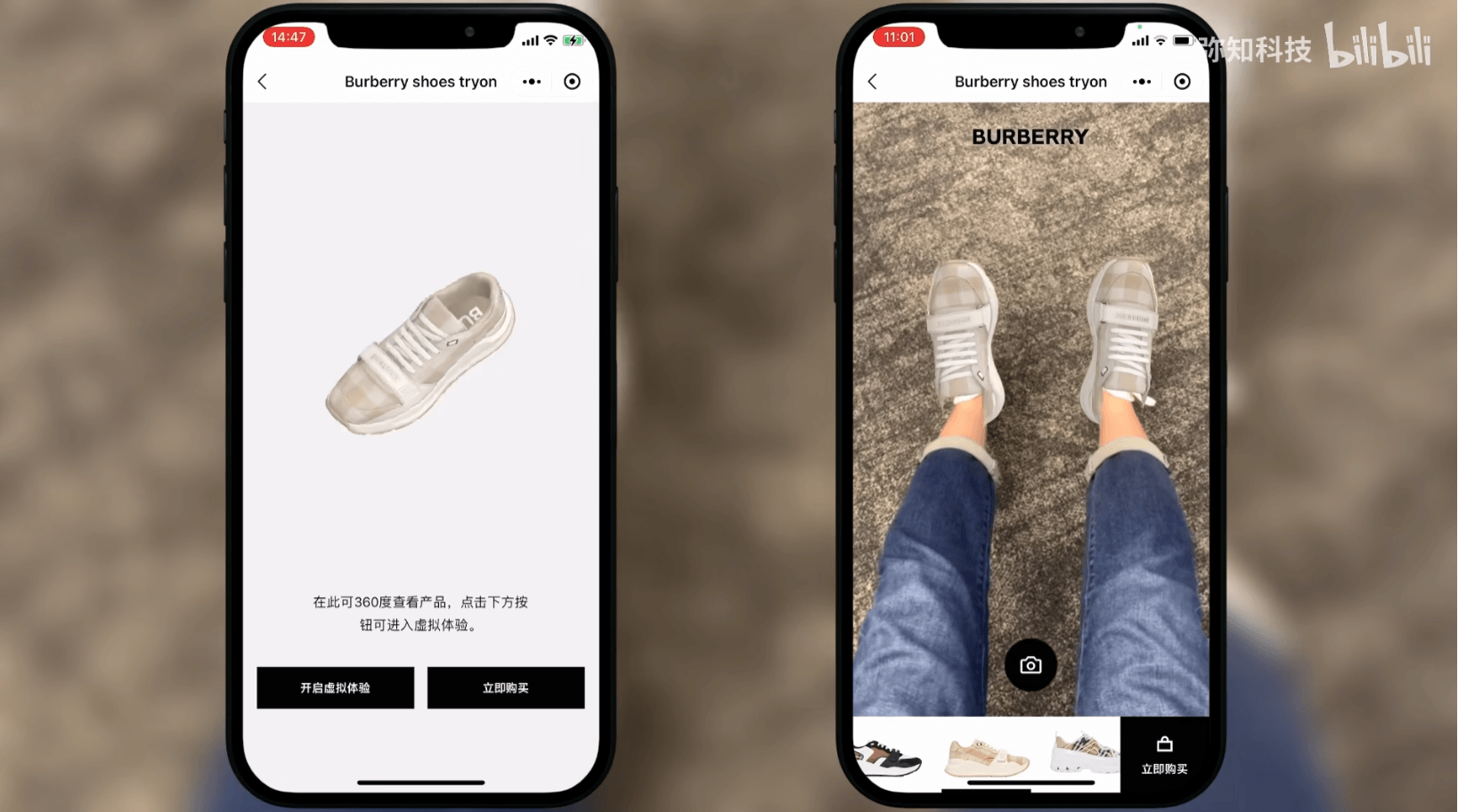
Burberry AR Shoes Online Shopping
Burberry partnered with Kivisense to launch an online AR shoe try-on experience. The brand's signature check pattern is brought to life through high-performance 3D rendering combined with real-time foot tracking technology, creating an immersive try-on experience.
Louis Vuitton AR Makeup
Louis Vuitton made a bold entry into beauty with its debut makeup line "La Beauté Louis Vuitton," bringing AI and AR-powered virtual try-on experiences to consumers across 33 countries via web and mobile apps.

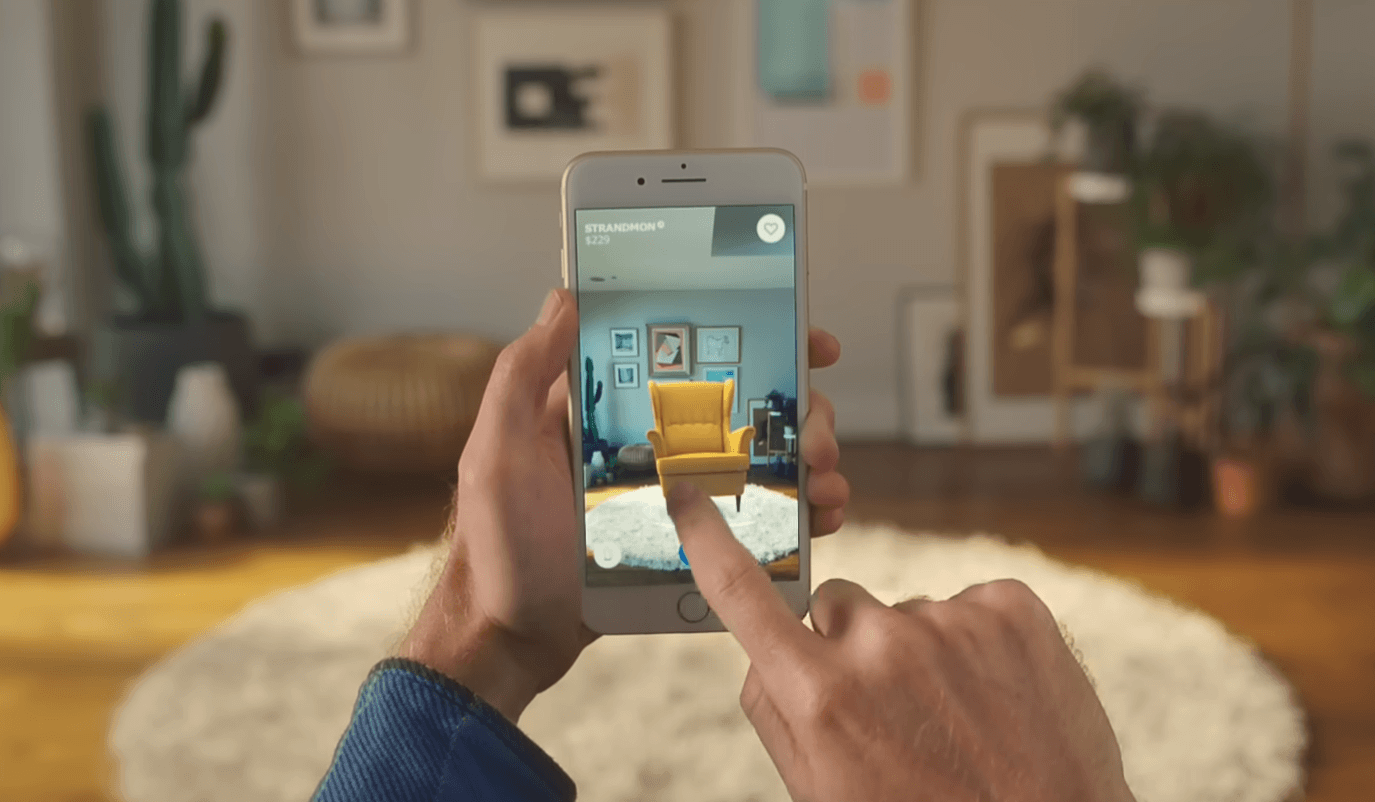
IKEA Augmented Reality Furniture Shopping
IKEA Place lets users visualize true-to-scale 3D furniture in their actual rooms, switch colors instantly, and even view product reviews alongside AR previews.
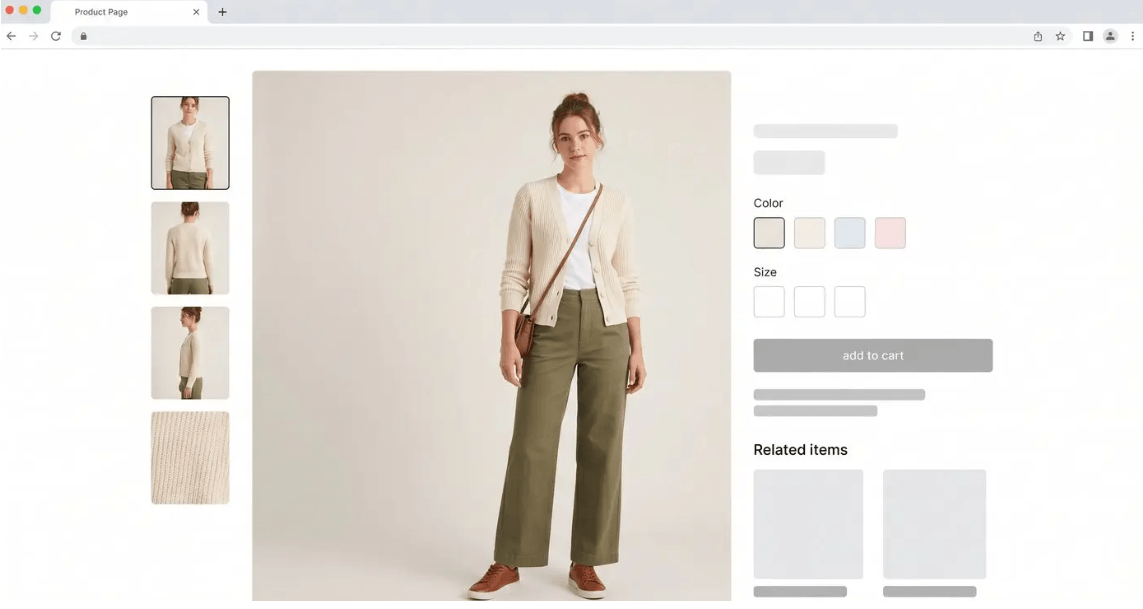
Zara Virtual Fitting Room
Zara has launched an AI-powered virtual fitting room in Spain, allowing customers to try on garments with hyper-realistic avatars. The brand has also deployed AR-enabled fitting rooms in London and Tokyo, where shoppers scan a QR code and see digital clothes projected onto their bodies in real time.
Best AR Shopping Solution for Retail & Ecommerce
In terms of utilizing augmented reality for retail and e-commerce, Kivicube turns out to be your best AR shopping solution. Unlike traditional AR tools that require customers to download a separate app, which is a major barrier to participation, Kivicube runs all AR experiences directly through mobile browsers, without any app downloads. Besides, its visual drag-and-drop editor enables businesses of any size to create professional-grade AR content without coding, and free projects are available to get started with zero commitment.
Shopping & Retail Templates
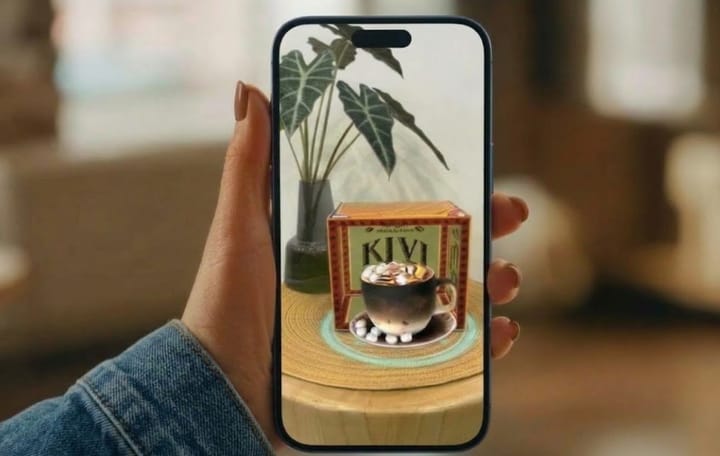
Drawing on extensive experience partnering with global brands, Kivicube offers hundreds of professional templates for shopping and retail, covering AR packaging, AR product pages, AR glass try-on, AR furniture placement, and so on. There's surely one for you to create your own AR shopping experience within minutes.
Ecommerce Embedding Options
We provide flexible embedding solutions that work seamlessly across product pages, dedicated apps, and major ecommerce platforms like Shopify, ensuring your AR shopping experience reaches customers wherever they shop.
Analytics Dashboard
The built‑in analytics dashboard delivers real‑time data on viewer engagement and timing, helping you fine‑tune your AR marketing campaigns with confidence.
Customization Available
Every business has unique sales goals. Our experienced team offers tailored AR solutions to meet your specific needs. Contact us to discuss your products and objectives. We are here to help.
How AR Shopping is Revolutionizing the Future of Retail
Augmented reality is reshaping the future of online shopping by shifting the consumer journey from a guess model to a try-and-experience one. The compound annual growth rate of 31.3% speaks for itself.
And the journey has only just begun. With the rise of generative AI, AR shopping is set to become even smarter. Kivicube's newly launched AI AR Agent is a prime example. Brands can easily create AR experiences using only prompts now, and consumers may virtually try on any products by describing them in the future. The best time to join is now.
<< You May Like:
Leonie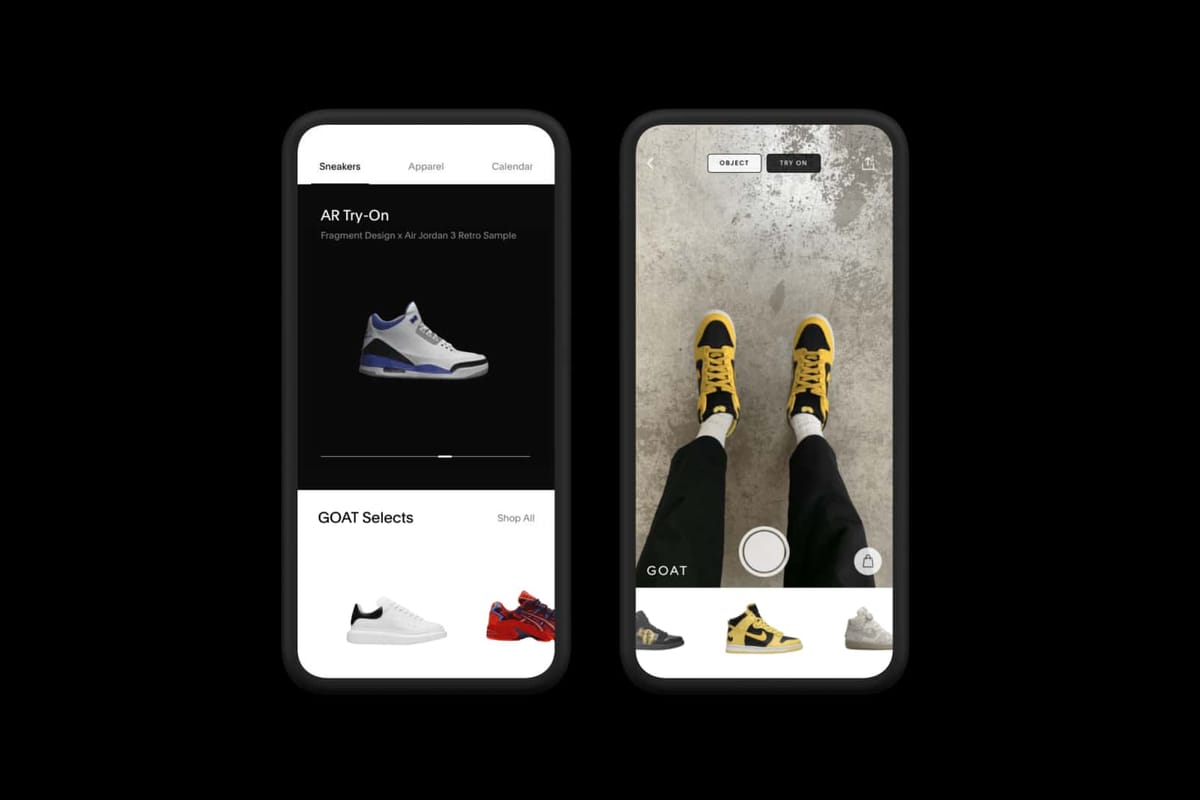
Conclusion
The online shopping experience has shifted from static browsing to immersive AR shopping experiences. The emergence of WebAR tools like Kivicube further accelerates the pace by removing the app download barrier. The infrastructure is ready, and now is the perfect time to join.
FAQs
How Does AR Shopping Work?
AR shopping uses a device's camera and sensors to scan the user's real‑world environment. Computer vision algorithms detect surfaces, lighting, and spatial dimensions, then overlay a digital 3D model of the product onto the live camera feed.
What Is the Difference Between AR and VR Shopping?
AR (Augmented Reality) overlays digital content on top of the real world, keeping the user grounded in their physical environment. VR (Virtual Reality) completely replaces the real world with a fully digital, immersive simulation that requires a headset. For shopping, AR is more practical because it lets customers visualize products in their own homes or on themselves, and WebAR platforms like Kivicube run that entirely on the browser.
What's Driving the Growth of AR Shopping?
Several factors are fueling the rapid expansion of the AR shopping market: rising smartphone penetration, the rollout of 5G networks, AI-powered virtual try-on solutions, growing consumer demand for fitting products, and retailers' increasing focus on reducing return rates while boosting conversion.
Is an App Necessary for AR Shopping?
Not necessarily. Traditional AR often requires a dedicated app, but WebAR technology allows AR experiences to run directly in a mobile browser without any download. WebAR provider like Kivicube makes AR shopping instantly accessible via a simple link or QR code.
How Long Does It Take to Create an AR Shopping Experience?
Within minutes. Unlike traditional AR coding creation, WebAR solutions enable entirely drag-and-drop editing, which could easily be done within minutes. Or, you can reach out to us for customized solutions for your product.