Augmented Reality Jewelry in E-commerce: Successful Campaigns & The Best WebAR Solution
Tending to boost sales with augmented reality jewelry? Here, you’ll get the solution with several successful cases and a practical WebAR vendor for your brand.
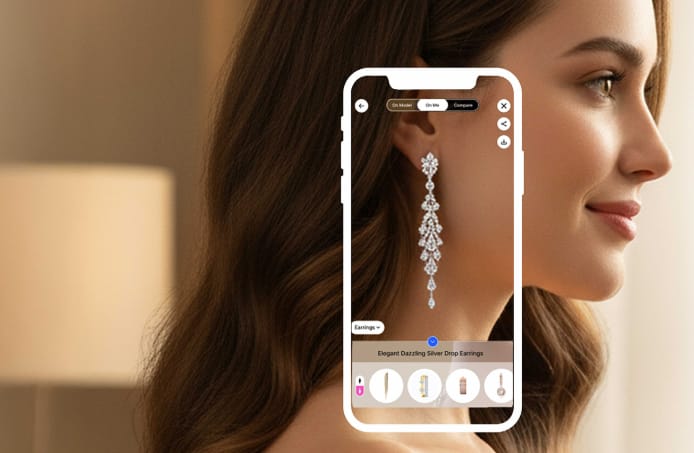
Augmented reality jewelry technology is changing how consumers discover and purchase jewelry online. Through smartphones and web browsers, users can virtually try on life-size rings, bracelets, earrings, necklaces, and other jewelry in real time, allowing shoppers to see how jewelry looks on them before making a purchase.
AR jewelry try-on experiences help reduce purchase hesitation and lower return rates in online shopping, while helping jewelry brands create more immersive online shopping experiences. According to a report from Dataintelo, retailers using AR try on technology reported up to a 32% reduction in return rates and a 27% increase in average order value.
So how are jewelry brands using AR to increase e-commerce sales? If you’re looking for ways to increase the conversion and sales of your jewelry products, read on. In this post, we’ll explore augmented reality jewellery with leading jewelry AR campaigns and a WebAR solution for high-fidelity AR projects for jewelry brands.
What Is Augmented Reality Jewelry Try-On?
Augmented reality jewelry try-on is a technology that allows customers to virtually wear 3D jewelry products through smartphones, tablets, or web browsers in real time, helping users visualize size and appearance. With a powerful AR body tracking algorithm, it places jewelry on users in real time and adjusts dynamically as users move. This immersive AR experience is key for jewelry purchases, especially for e-commerce, where customers cannot physically try on products.
How Does AR Jewelry Try-On Work?
AR jewelry try-on technology combines real-time 3D rendering and AR body tracking for an interactive and engaging AR product visualization experience. Whether customers use an in-store AR mirror, smartphone, or desktop browser, the system can accurately track body movement and overlay virtual jewelry onto users. Many AR jewelry experiences also include interactive features such as switching between product styles, changing colors, or previewing different jewelry collections, helping shoppers explore products more confidently before purchasing.
Benefits of AR Jewelry Try-On for Ecommerce Brands
AR jewelry try-on technology offers several advantages for ecommerce brands.
Reduce jewelry return rates
Product returns often happen when online images fail to match real-world appearance and cost merchants significant losses each year. Luxury jewelry returns can become extremely expensive due to shipping, insurance, and product damage risks, and finally impact overall profitability.
Increase conversion rates
According to Shopify data cited by Threekit, products with AR experiences can achieve conversion rates up to 250% higher than standard product pages. When shoppers can accurately preview how jewelry looks on them and how it matches the real product, they can be more confident to place an order.
Reduce high-end jewelry inventory
Each unsold luxury jewelry item represents tied-up funds and significant financial pressure, especially when items become outdated and face price markdowns. Augmented reality jewelry try-on enables customers to virtually try on a wider range of jewelry on their smartphones. This digital interaction encourages exploration and purchases across a broader range of jewelry collections, helping brands minimize excess SKU inventory.
3 Successful Augmented Reality Jewelry Campaigns
With the rapid growth of AR technology, it’s easy to drive ecommerce conversions with AR jewelry try-on experiences. Let’s take a closer look at the 3 successful AR campaigns of jewelry brands.
- Tiffany & Co x Snapchat Augmented Reality Bracelet Campaign
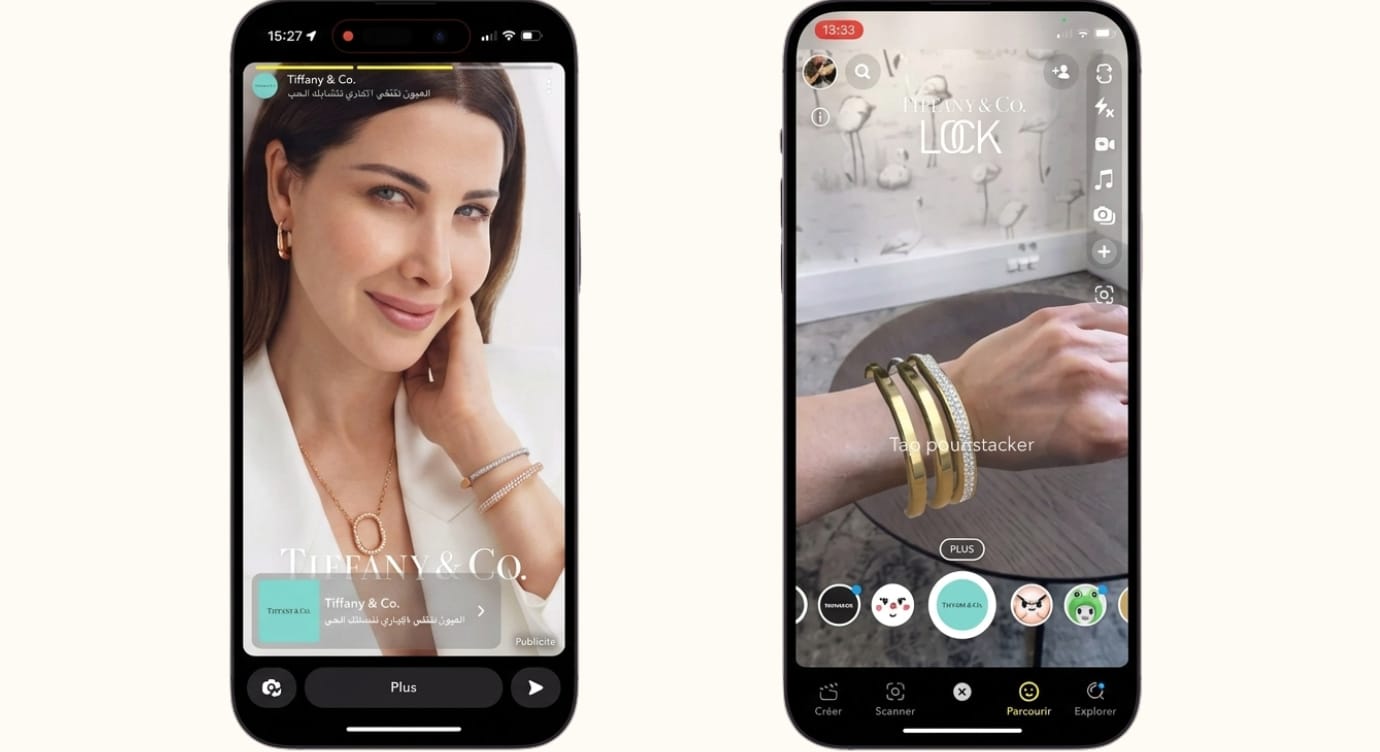
In 2023, Tiffany & Co partnered with Snapchat to strengthen its presence in the Saudi Arabian market through an interactive AR campaign. The brand launched a Snapchat lens that invites users to virtually try on styles of Tiffany & Co’s Lock collection jewelry directly through their phones, bringing users an immersive experience.
The campaign achieved impressive engagement, reaching nearly 10 million Snapchat users within 24 hours. According to Snapchat, the campaign also increased product awareness and improved brand recall by 9 points among the target audience.
- Swarovski AR Jewelry Ecommerce Experience
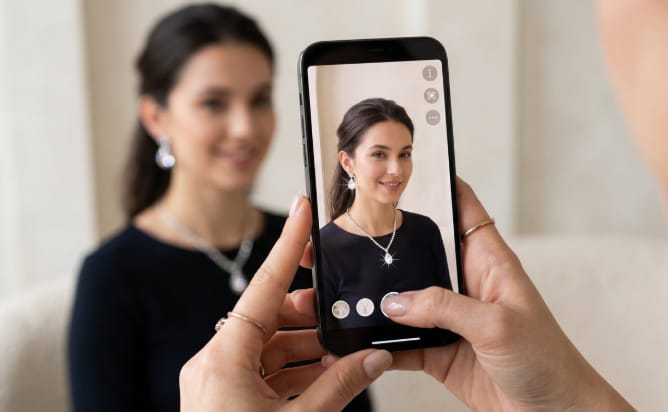
Swarovski has also embraced virtual try-on technology. A major strength of Swarovski’s brand is the sparkle of the crystal, it’s essential to present the magic of how crystals capture the light and reflect light with high brilliance. However, traditional 2D product images struggled to capture the brilliance and light reflection of Swarovski crystals, that’s why the brand chose to adopt AR technology.
Within the Swarovski augmented reality try on jewelry feature, consumers can not only virtually try on jewelry online to check their wearing effect, but also experience the light refraction of the crystal as they move to closely replicating real-life jewelry appearance. It also improved online customer satisfaction, increased time spent per session and reduced the return rates.
- Cartier Looking Glass Augmented Reality Ring Experience
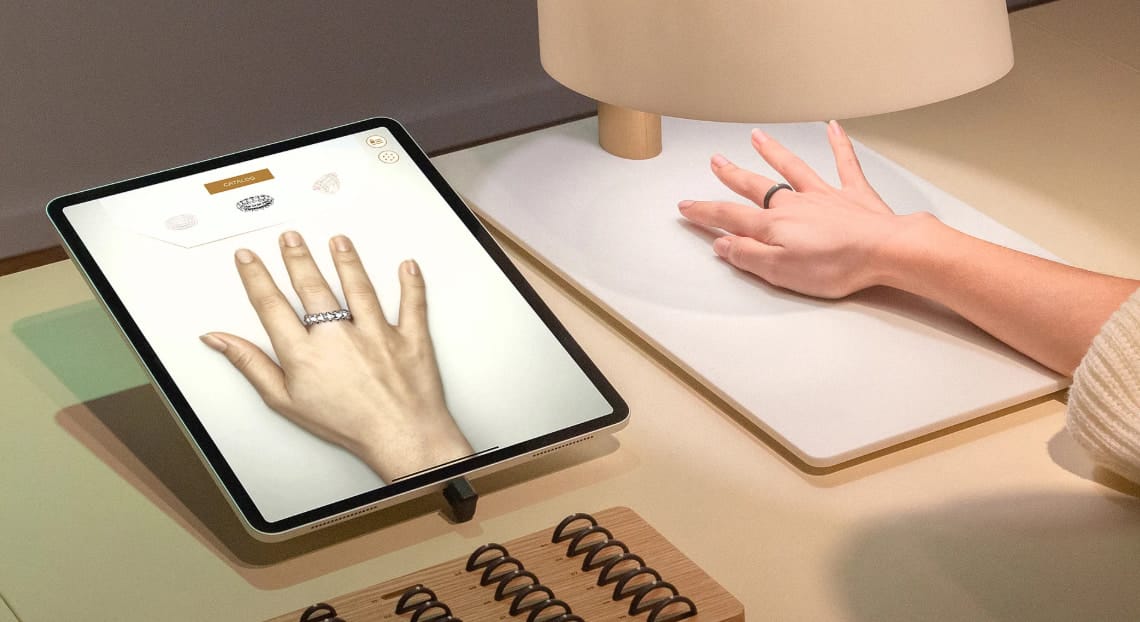
Cartier has also explored augmented reality jewelry try-on technology from a different perspective. Unlike most brand-led AR jewelry try-on campaigns that rely on 3D modeling technology, it experimented with an advanced GAN approach to improve how virtual rings appear on users’ fingers under real-world lighting conditions.
This approach helps enhance realism in AR try-on experiences by improving how jewelry adapts to different hand shapes, skin tones, and lighting environments. It also addresses a key limitation of traditional retail, where customers can only try a limited selection of rings in-store.
You can also explore more AR ecommerce cases in the post:
 Leonie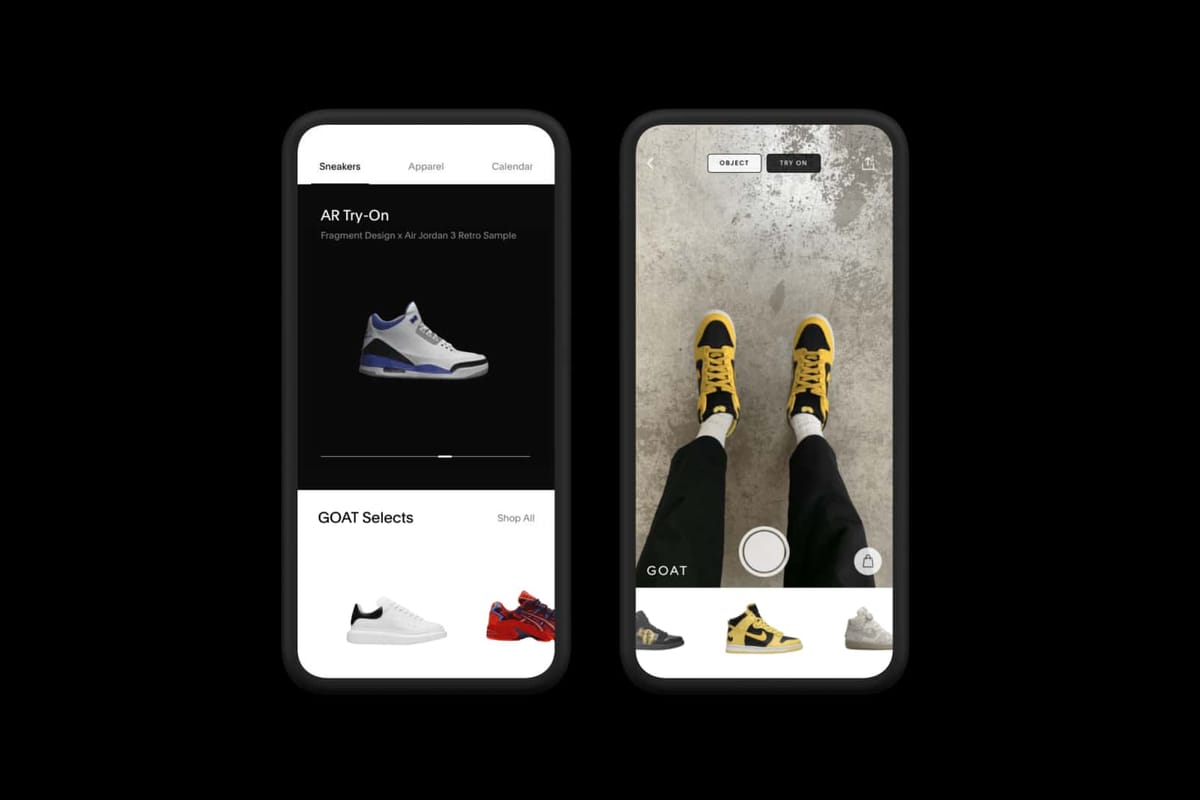
How Jewelry Brands Use WebAR to Increase Sales
For jewelry brands and retailers, accelerating product digitization and maximizing online channels has become a growing trend in digital marketing. High-end jewelry brands have adopted AR technology for ecommerce and delivered strong performance results. AR jewelry try-on has proven to be an effective method for driving jewelry marketing.
However, the high costs and long development cycle may deter some small and medium-sized brands. In addition, requiring users to download an app reduces engagement with AR jewelry experiences. This is where WebAR platforms become valuable.
Unlike AR apps, webAR vendors enable brands and retailers to launch AR try on projects with lower costs and shorter development cycles. Since they are fully web-based, these experiences can be deployed across official websites, e-commerce platforms, and social media channels without requiring any app downloads.
Best WebAR Vendor for Augmented Reality Jewelry Brands
Which WebAR vendor is worth considering? Here I recommend Kivicube, which has been widely adopted by jewelry brands for high-quality AR jewelry try-on experiences and offers an all-in-one solution at a lower cost.
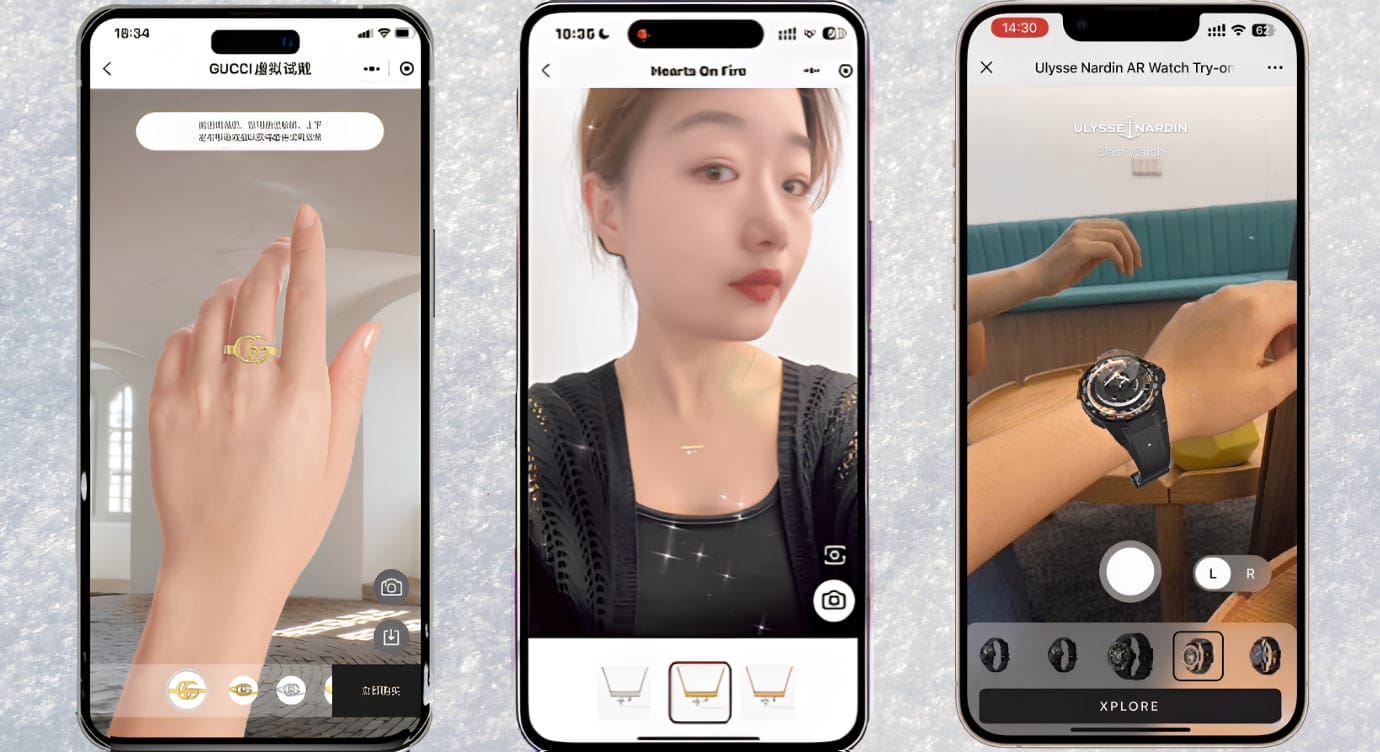
What You Get:
Powerful Body Tracking Algorithm for Stable AR Jewelry Try-On Experiences
The AR body tracking technology can detect body parts, including neck, wrists, ears, and more in detail, enabling more accurate and stable tracking. Even when consumers move or adjust the camera angle, they can experience a realistic AR jewelry try-on effect in real time.
High-Precision Rendering with Up to 95% Jewelry Fidelity
With a high-precision rendering engine, it delivers up to 95% fidelity in reproducing jewelry materials and simulates how light interacts with gold, silver, diamonds, and crystals, ensuring jewelry appears highly realistic in a digital environment.
AI-Powered 3D Model Generation for Short Development Circle
Using the built-in AI 3D model generator, the team can generate 3D jewelry models from your product images, then refine and deploy them in AR projects. The AI-assisted workflow helps shorten the time required for 3D model and AR scene creation, accelerating the final delivery of augmented reality jewelry experiences.
Web-Based Sharing for Wide Deployment Cross Platforms
WebAR technology enables you to deploy 3D jewelry visualization scenes across websites, ecommerce platforms, social media channels. Everything can be launched with just a few clicks, ensuring wider reach at a lower cost.
Augmented Reality Jewelry Try-On Showcases Built with Kivicube
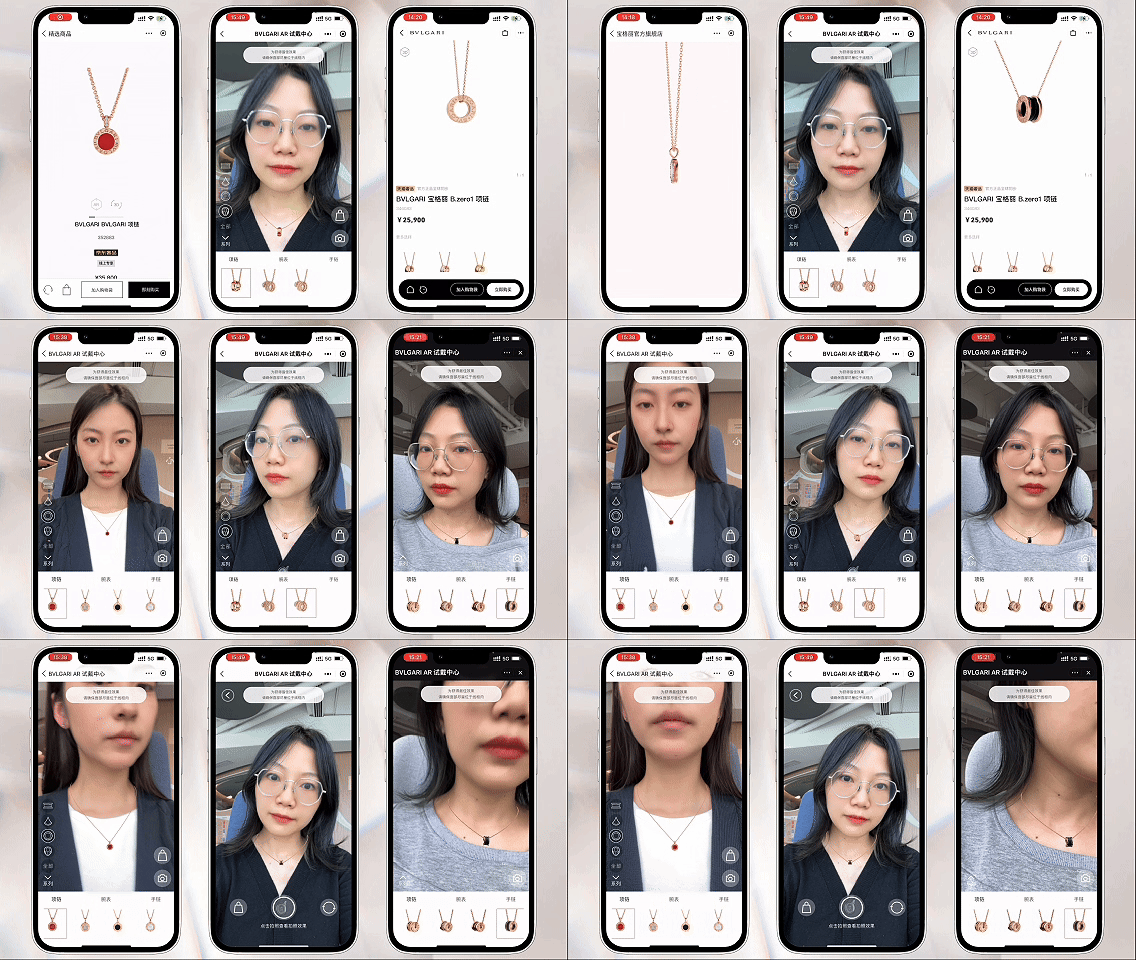
Case 1. Bvlgari AR Jewelry
Bvlgari launched augmented reality necklace try-on experience created with Kivicube on Chinese platforms, including WeChat Mini Programs, JD, and Taobao. The high precision rendering technology replicates the texture and quality of the jewelry, providing customers with a highly realistic try on experience. This immersive AR scene attracted strong user engagement and helped increase the brand’s ecommerce sales performance.
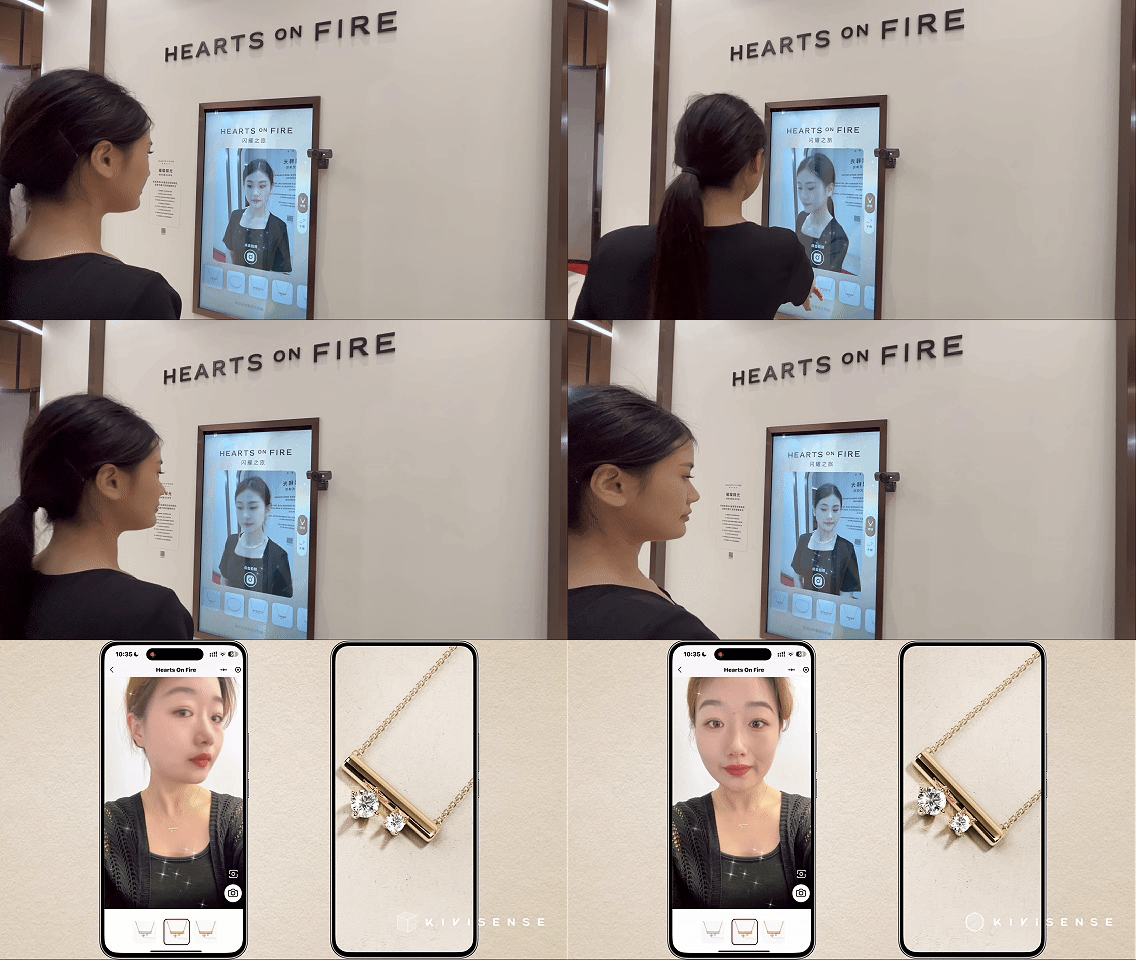
Case 2. Hearts on Fire AR Jewelry
The renowned luxury diamond jewelry brand Hearts on Fire also collaborated with Kivicube to provide a jewelry try on AR experience for its consumers. With an AR magic mirror or WeChat mini program, users can see how they would look with the 3D jewelry model with high precision. This campaign demonstrates how AR try-on technology can enhance customer engagement and support higher conversion rates for luxury jewelry brands.
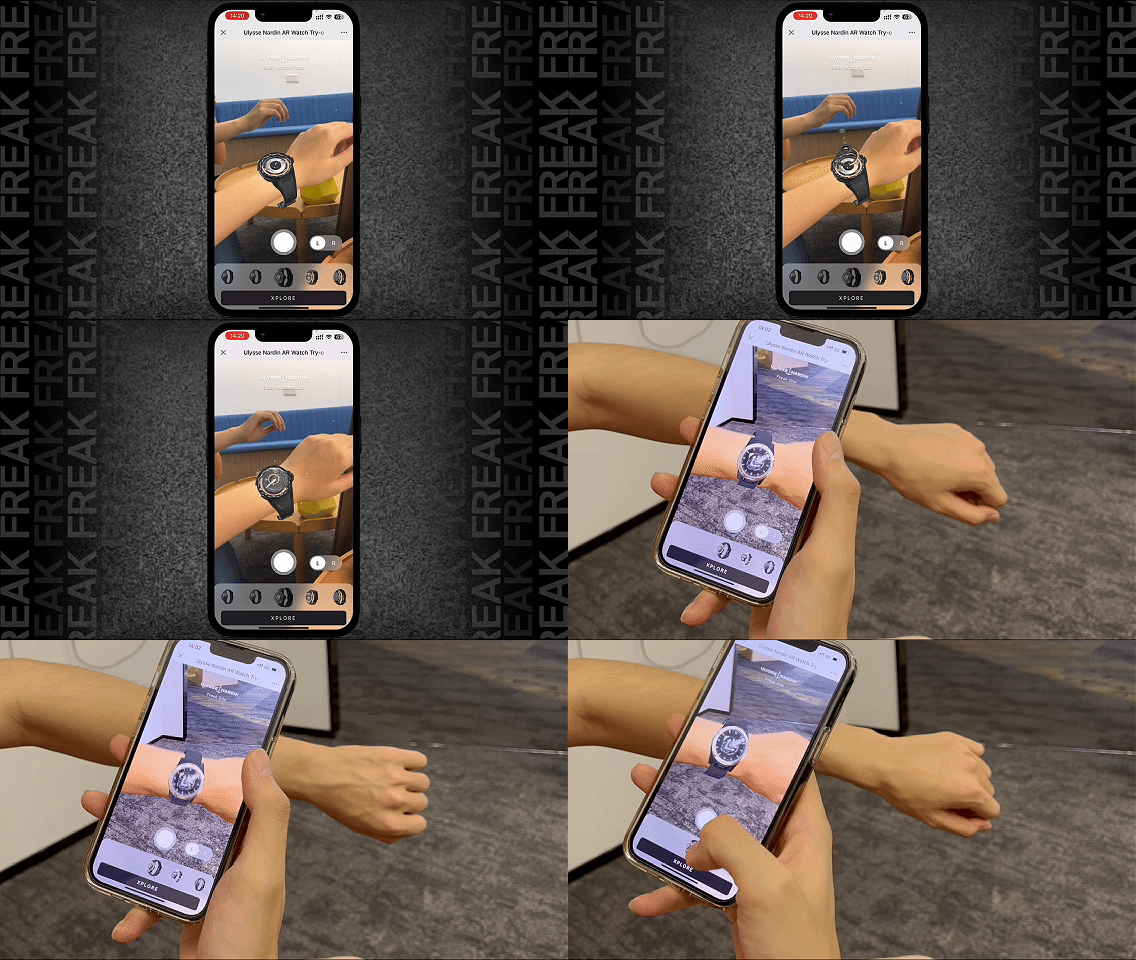
Case 3. Ulysse Nardin AR Watch Try On
Our cooperation with Ulysse Nardin is a successful example of augmented reality watch try-on. Within the Freak fantasy watch AR try on WeChat mini program, consumers can experience a highly realistic watch try-on effect powered by stable wrist tracking and high-precision 3D rendering technology. By switching between different styles, they can explore the brand’s avant-garde and craftsman-level designs in advance. This immersive AR experience has shortened the decision-making cycle in online shopping and supports higher ecommerce conversion rates.
FAQs about Augmented Reality Jewelry
Q: What types of AR jewelry can I try on?
There’re already multiple types of AR jewelry try-on experiences for you, including necklaces, earrings, bracelets, rings, and more. If you want a more customizable AR jewelry try on for your own brands, then the WebAR vendors like Kivicube are useful.
Q: Do I need to download an app to try on jewelry?
Not always. Many brands now prefer WebAR technology, which enables their customers to try on the AR jewelry using their phone without downloading an app.
Q: Is the jewelry size in AR experiences consistent with the real product?
Yes. To deliver a high-quality virtual try-on experience and encourage purchases, most leading jewelry brands prioritize high fidelity, especially in terms of size and materials, when developing AR try-on experiences.
Q: Can I customize jewelry using AR?
Of course. With leading WebAR vendors like Kivicube, brands can change the colors, switch styles, and even add interactive features to bring their ideas to life.
Final Thought
Augmented reality jewelry try on is now a trend for jewelry brands to boost their online purchasing services. Through the immersive shopping experience, brands can eliminate users' hesitation for “image-to-product” mismatch, effectively reducing return rates and improving sales. Therefore, jewelry AR try on can be a proven marketing strategy for jewelry brands and retailers.
For jewelry brands exploring scalable virtual try-on solutions, WebAR platforms like Kivicube provide a more accessible way to launch immersive ecommerce experiences. As a professional WebAR platform, it has collaborated with multiple luxury jewelry brands and shows its capability for engaging and interactive jewelry try on experience for brands to boost sales.
Contact Kivicube and talk about any of your ideas about digital jewelry fitting.