Augmented Reality Store: How Retailers Use AR to Transform Shopping Experiences Offline and Online
Augmented reality stores are transforming online and in-store shopping. Explore their benefits, real-world examples, and AR solutions for retailers.
AR technology is revolutionizing consumer interaction with stores, both online and offline. Rather than using conventional product displays, AR technology enables retailers to provide interactive AR experiences, such as virtual try-ons and 3D product visualization. Such transformations have also brought about tangible results for businesses.
House of Fraser, for example, reported that users engaging with its AR features had a purchase rate 115% higher than the average among app users. Another example is that of BIG W, which, in collaboration with Yahoo, has been running AR shopping campaigns and has increased store visits by 48%.
This guide explores what an augmented reality store is, its key benefits, real-world examples, and how retailers can create customized AR store experiences.
What Is an Augmented Reality Store?
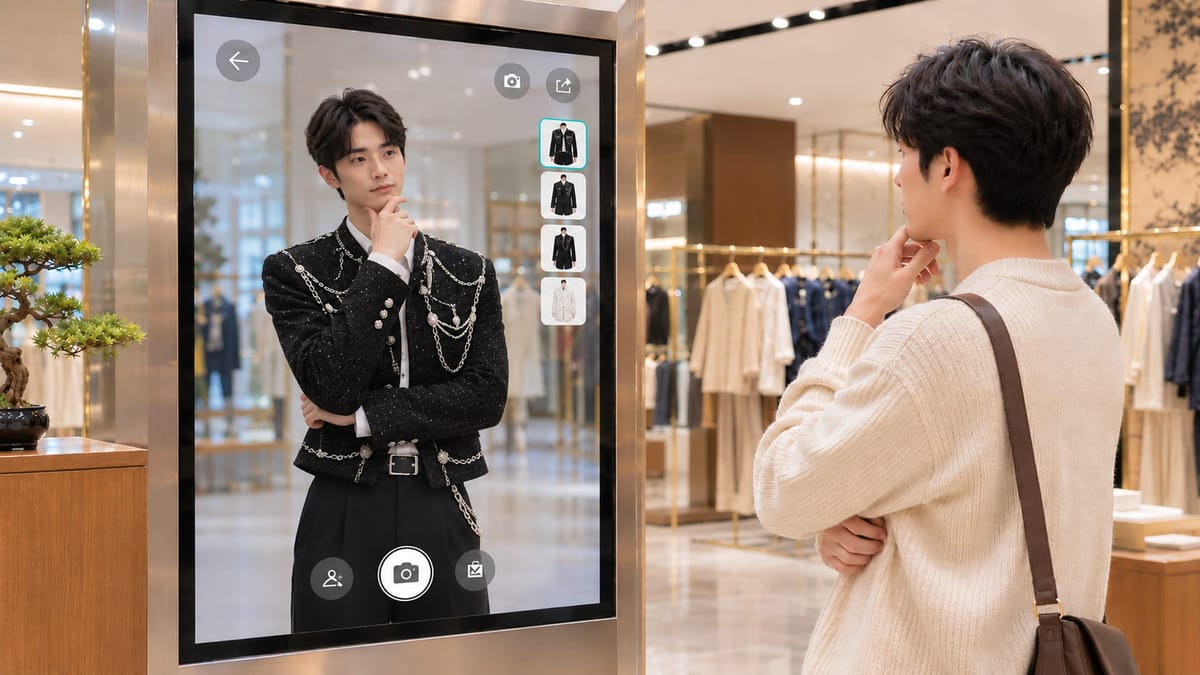
An augmented reality store is a retail environment that uses AR technology to enable consumers to interact with digital product representations using their own devices. An AR store does not necessarily refer to a fully virtual storefront. It can also describe a physical retail environment or an application of augmented reality in retail stores. For instance, consumers in a physical store use an AR mirror to virtually try on clothes and compare different styles, while in an online store, they can view multiple AR furniture products in their homes.
Benefits of Augmented Reality Stores
What actually makes augmented reality stores so special? Here are four key benefits of incorporating AR into the shopping experience.
- Improve Customer Engagement and Shopping Experiences
Given that consumers increasingly expect interactive shopping experiences, both online and offline retailers are turning to AR technology to engage customers with their products. The application of interactive and visually appealing content makes the shopping experience both online and offline much more attractive for customers.
- Increase Purchase Confidence and Drive Conversions
Consumers can check the details of the products and view how they may look in their space. This is especially valuable for online buyers since they cannot touch or feel the products before buying them. In brick-and-mortar stores, augmented reality can give consumers additional information and help them make comparisons. By making product information more accessible and visualization more realistic, AR can increase purchase confidence and encourage customers to complete their purchases.
- Expand Product Display and Marketing Opportunities
AR store environments help retailers display more information without being constrained by the physical space available on the shelves. Customers can explore different product designs, colors, and configurations through interactive digital displays. Additionally, retailers can use AR campaigns to attract attention and promote new products through experiences such as AR packaging and virtual try-ons.
- Reduce Inventory and Physical Display Costs
By incorporating augmented reality in stores, retailers will be able to minimize the need for physical samples and displays of the products. Instead of creating physical samples for each variation of the product, companies can make use of augmented reality to do so digitally.
8 Real-World Augmented Reality Store Examples
AR stores do not always take the form of a fully virtual storefront, but is also shown as integrating AR features into existing physical stores or online shopping channels. From interactive storefront displays to online product visualization, these use cases show how businesses connect with customers in new ways. Let’s explore the 8 real-world augmented reality examples in retail stores.
1. LEGO Augmented Reality Store with Snapchat
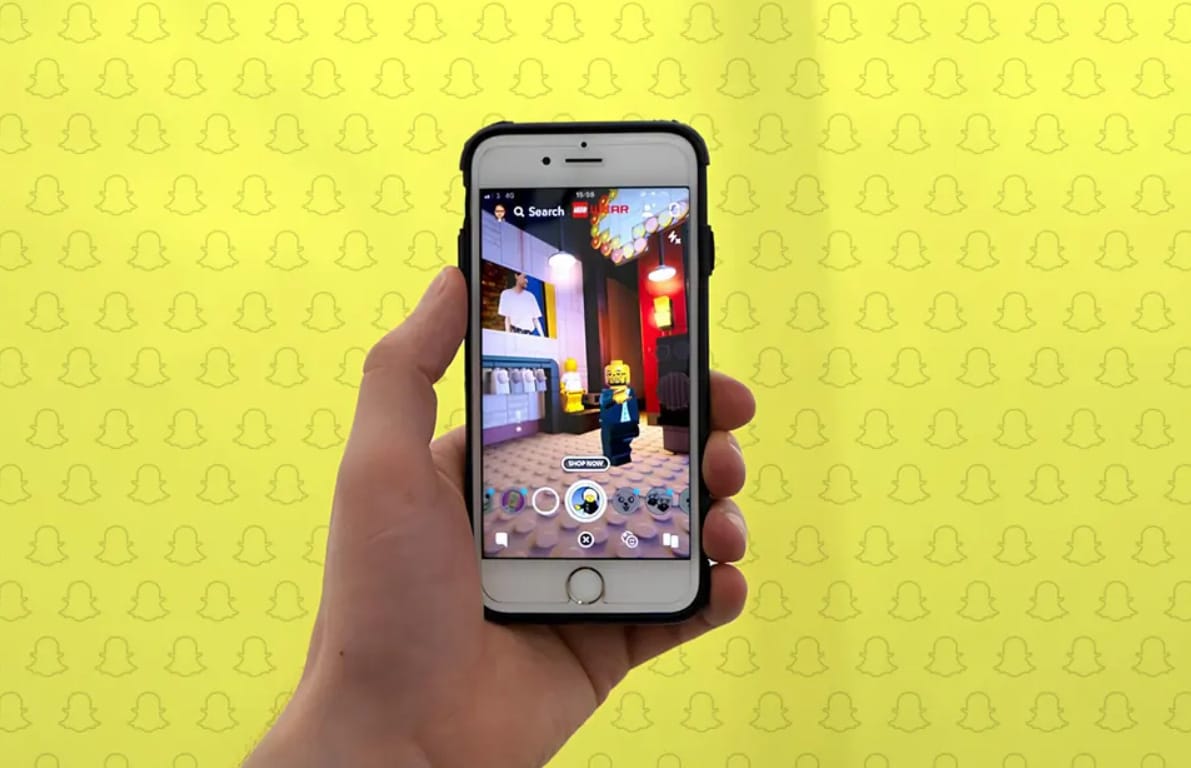
LEGO Wear partnered with Snapchat to launch an AR clothing shop during London Fashion Week 2019. The physical pop-up did not have any clothes on display in the real world. All a visitor needed to do was scan a Snapcode to enter a virtual shop through Snapchat to explore LEGO mannequins, an interactive DJ booth, and an arcade machine. They could even browse the special edition range and buy some items online. The experience was not limited to the London pop-up. Snapchat users worldwide could access the virtual store through the Snapcode.
2. Machine-A × Institute of Digital Fashion Virtual AR Shopping Boutique
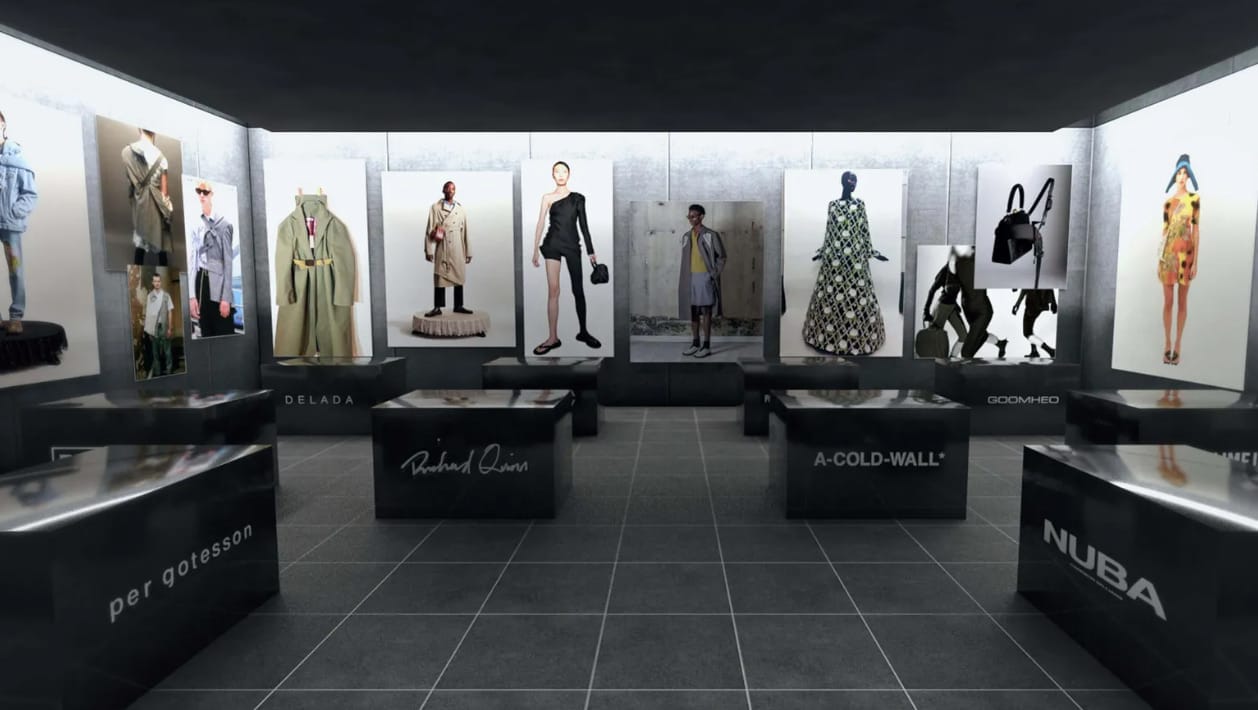
In February 2021, London fashion retailer Machine-A, together with the Institute of Digital Fashion (IoDF), launched A New Future, an AR boutique for London Fashion Week. Customers could scan QR codes on posters and billboards across London to access a virtual recreation of the store on their smartphones. Inside the AR store, they could explore the Autumn/Winter 2021 collections from designers such as Martine Rose, Richard Quinn, and A-Cold-Wall*, view unfinished designs, and read personal messages from creators.
3. POP MART AR Pop-Up Campaign
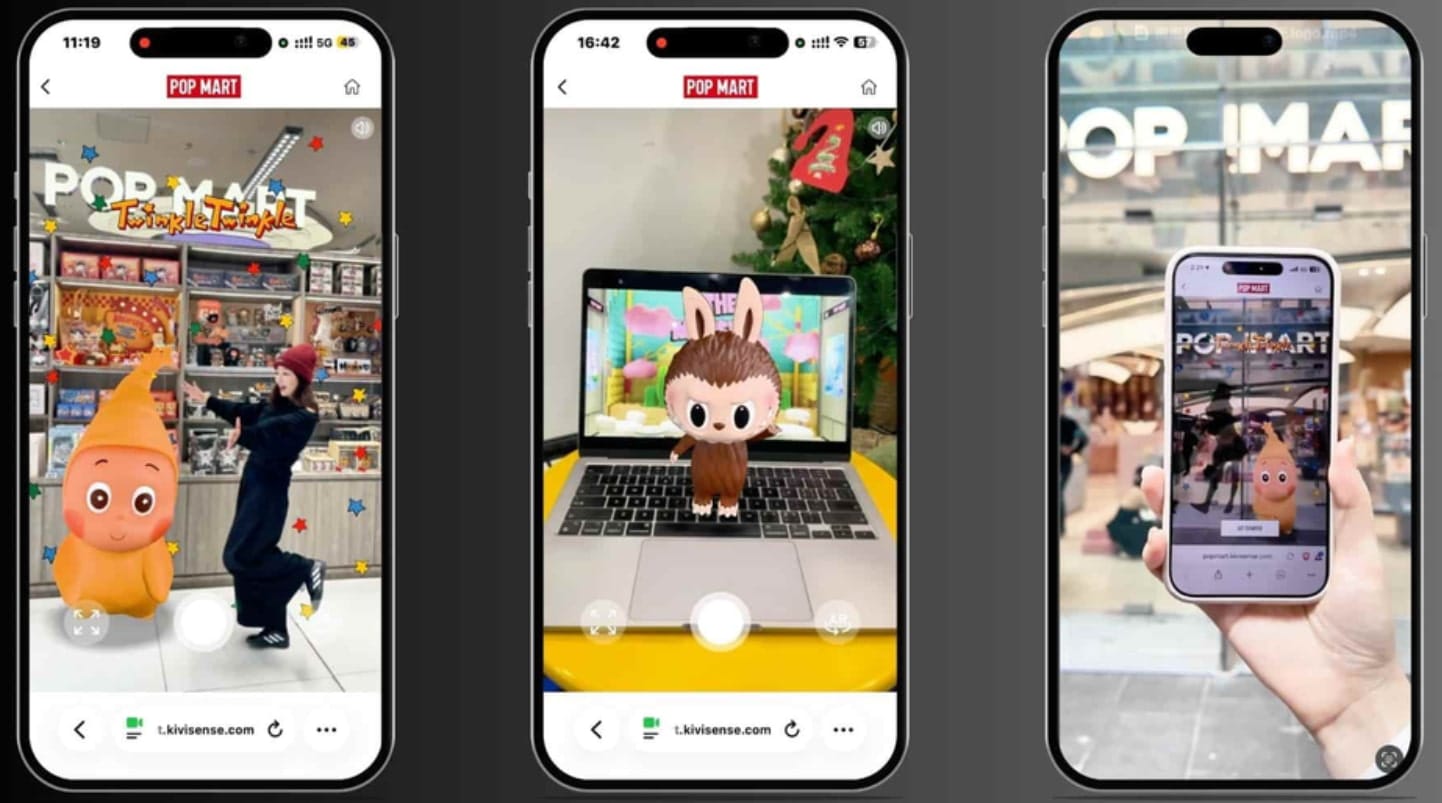
POP MART worked with Kivicube to introduce a WebAR experience at its Australian flagship store, featuring popular characters such as Labubu, Molly, and Starman. Customers could scan QR codes inside the store to access AR installations, join an interactive treasure hunt AR game, and try character-themed face filters without downloading an app. These activities added a playful layer to the in-store shopping journey and encouraged customers to explore the store. The shareable AR filters also extended the augmented reality in-store experience beyond the physical location, allowing shoppers to share their interactions online and spread brand awareness.
4. Hearts on Fire In-Store Augmented Reality Mirror
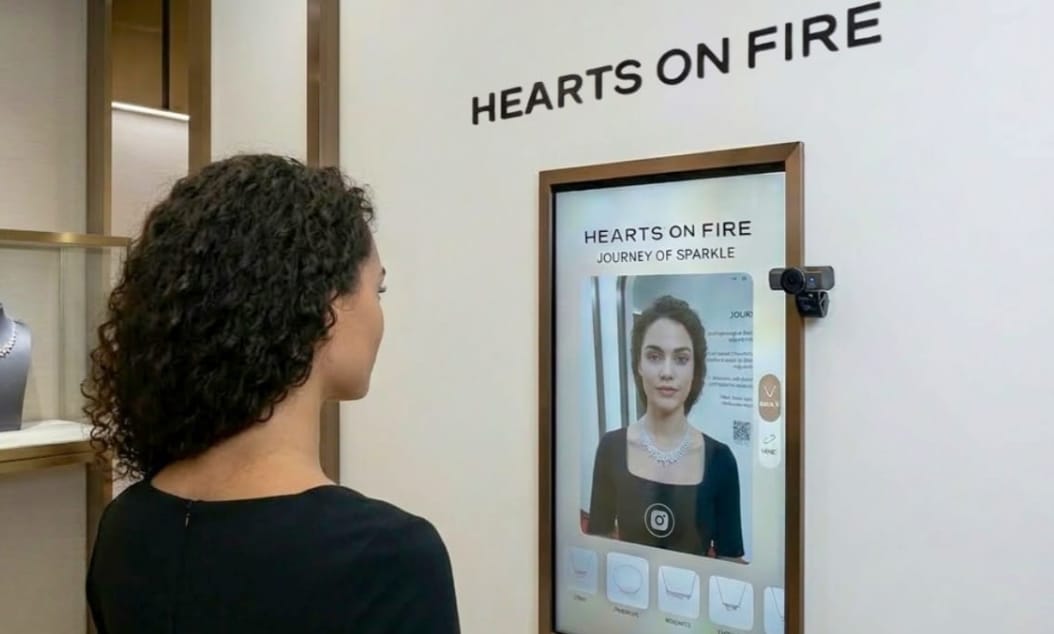
Hearts on Fire, a premium American jewelry brand, collaborated with Kivicube to offer WebAR try-ons of its jewelry products both in-store and online. In-store shoppers can virtually try on different jewelry designs using AR mirrors or dedicated kiosks. Online shoppers can access a similar experience through the Hearts on Fire website, mobile app, or WeChat Mini Program.
5. MMUUZZ Live Clothes Try-On
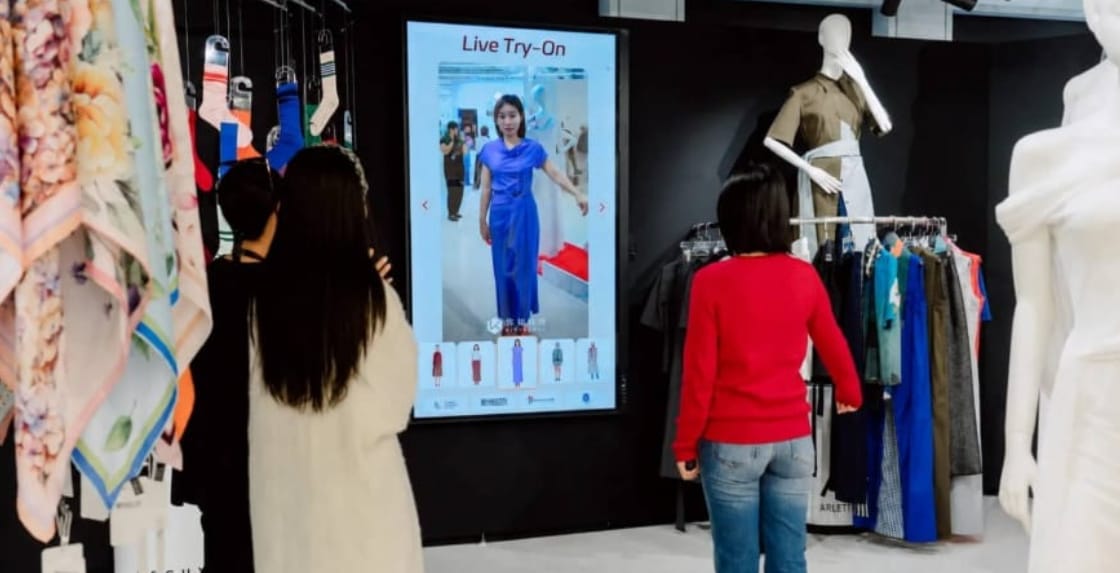
In addition, fashion retailers can incorporate live virtual try-on into both in-store and online shopping experiences. At Shanghai Fashion Week on October 8, 2026, fashion brand MMUUZZ introduced an in-store live virtual try-on experience developed by Kivisense. Customers can see how different outfits look on them in real time using a camera.
6. LIVAT Augmented Reality Mall Experience
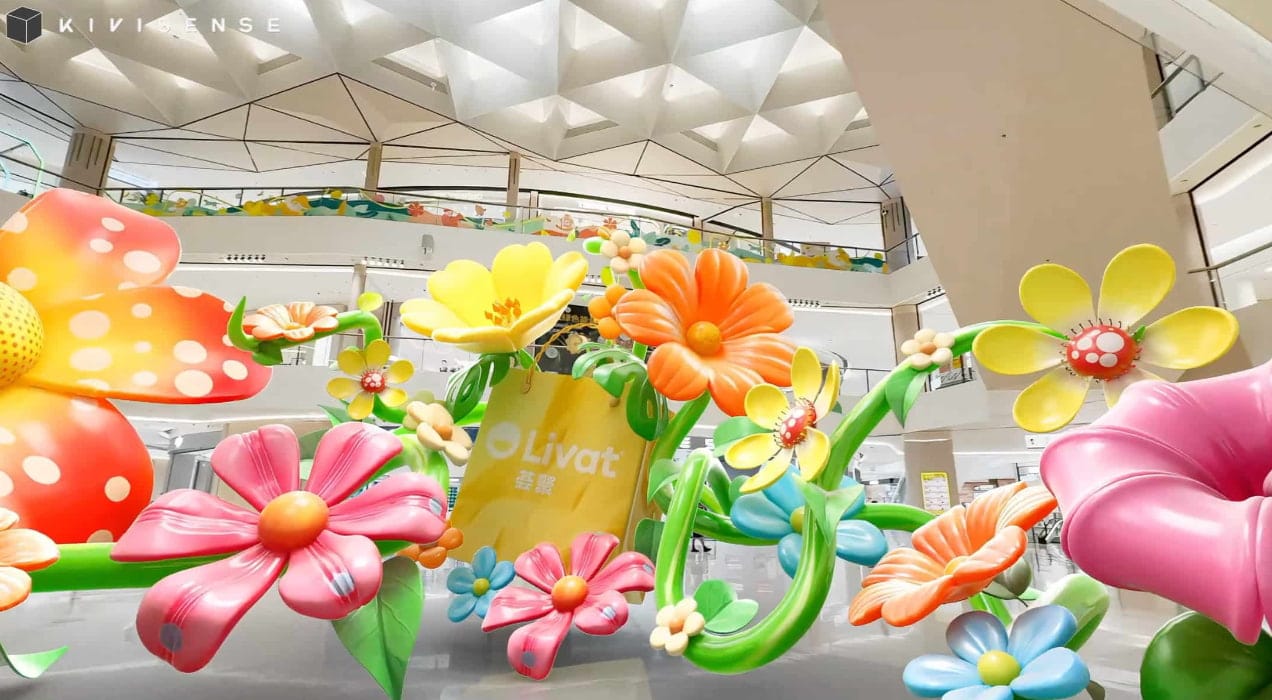
WebAR has been introduced at LIVAT Mall, featuring IKEA-themed filters, AR games, and large-scale immersive installations. Shoppers can interact with this digital content during their shopping spree at the mall. They can also access merchant-specific coupons that encourage them to visit participating stores and explore their products and services.
7. IKEA Kreativ AR Furniture Visualization
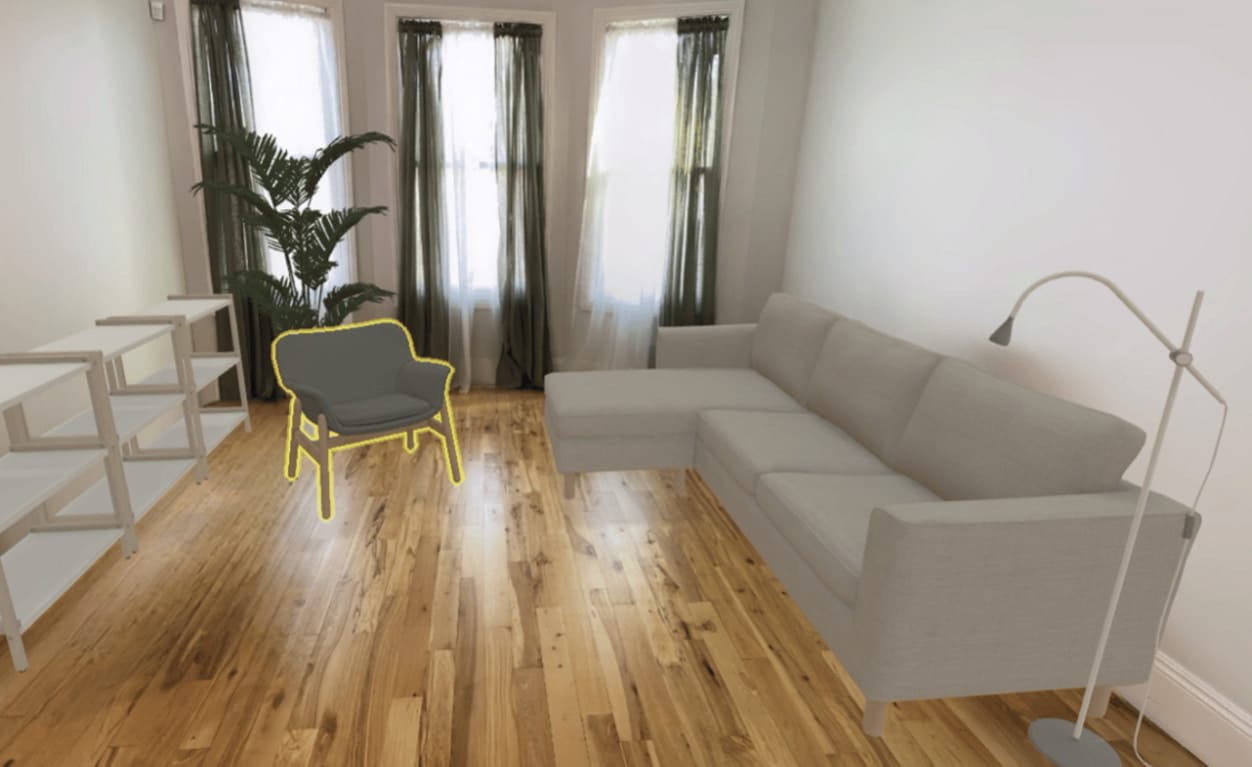
IKEA Kreativ integrates AR product visualization into online furniture shopping. Using IKEA Kreativ, customers can capture images of their rooms and visualize IKEA products in their living spaces. They can also rotate furniture models and examine them in 3D to better understand how each item might fit into their space before purchasing. These room-planning and product-discovery features make online furniture shopping more visual and interactive.
8. Sephora Makeup AR
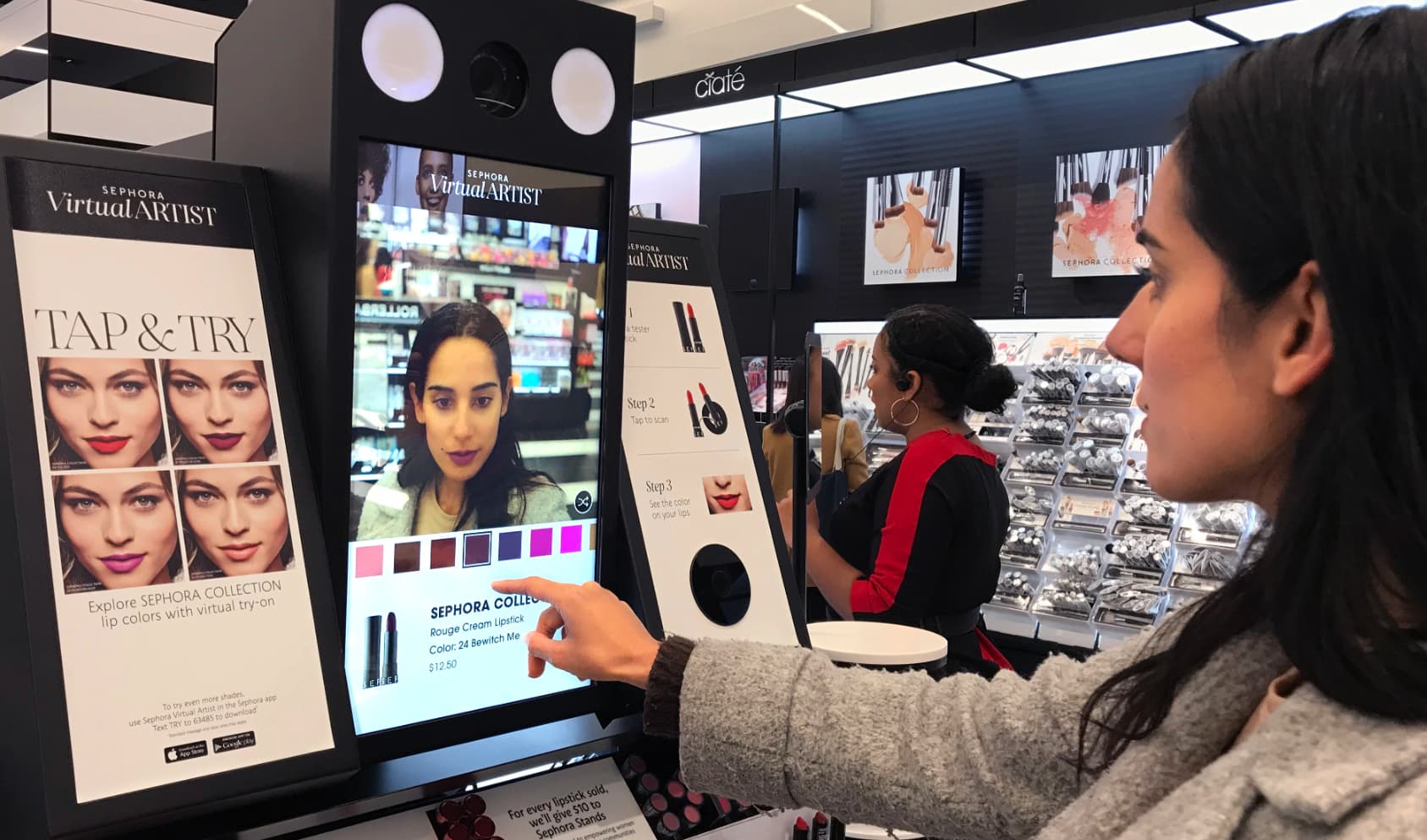
Sephora offers an augmented reality experience in both its online and in-store shopping experiences. The brand provides its Virtual Artist, which enables people to use their smartphone cameras to virtually try on different lipstick shades, eye makeup looks, and other cosmetic products on their own faces. In physical Sephora stores, AR mirrors also allow shoppers to preview different makeup looks.
Explore more AR marketing examples in this post:
 Bella
How to Create an Augmented Reality Store Experience
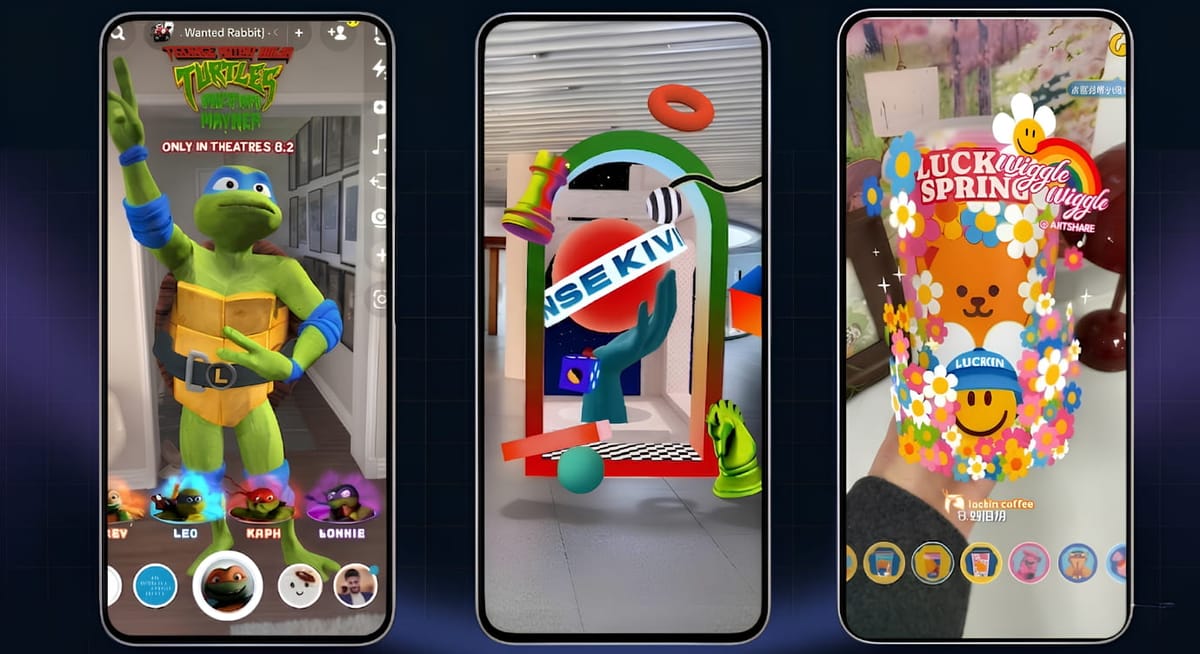
When it comes to creating engaging AR shopping experiences, Kivicube stands out as a strong solution for retailers. Being able to provide in-store AR experiences such as virtual try-ons and 3D product visualization, Kivicube has worked with multiple well-known brands and received positive feedback for its solutions.
Why Kivicube:
Works for Different Types of Retail Stores: It offers interactive shopping experiences such as virtual try-ons and 3D product visualization for retailers across various industries. Kivicube has also worked with well-known brands, such as POP MART and Hearts on Fire, to create engaging AR experiences that bring their products closer to consumers.
Full AR Types for In-Store Experience: The AR provider supports multiple AR tracking types, including image tracking, face tracking, world tracking, landmark tracking, and more, to accommodate a wide range of retail products and in-store applications.
Flexible AR Embed Options: It offers a variety of AR scene embedding solutions to ensure your AR experience accurately reaches your target audience. You can seamlessly embed AR scenes into product pages, supported applications, and e-commerce platforms. You can also generate QR codes and print them on physical marketing materials.
Built-In Data Analytics Dashboard: The built-in data analytics dashboard allows you to understand specific data about your AR experience, including click-through rates, scan rates, and interaction durations. You can adjust the existing AR scenes to better align your store promotions and events with current user interests.
Customizable AR Services: Beyond its no-code creation tools, Kivicube also offers professional customization services for businesses with specific AR project requirements. Whether you need a customized virtual try-on, interactive product display, or branded AR campaign, our team can work with you to develop a solution tailored to your business requirements.
Feel free to contact us and discuss how to attract more customers and boost sales through augmented reality store scenes.
Final Thought
Shopping is evolving beyond traditional product browsing and physical try-ons. Today, AR is bringing more interactive and immersive experiences to both online and in-store retail environments. The growing availability of AR platforms like Kivicube is making these experiences more accessible to businesses of different sizes through cost-effective AR creation tools and customized solutions. Have an AR shopping experience in mind? Contact our team to discuss your project.
FAQs About Augmented Reality Store
What is the difference between an augmented reality store and a virtual store?
An augmented reality store integrates digital content into physical or online shopping environments, allowing customers to interact with virtual products and information through their devices. A virtual store, by contrast, typically refers to a digitally created shopping environment where customers browse and purchase products in a virtual setting.
How can retailers start an augmented reality store project?
Retailers may begin by determining where AR experiences could be used in their stores, such as virtual try-ons and 3D product visualization. They can then create AR experiences using a no-code platform or work with an experienced AR provider, such as Kivicube, to develop a customized solution. Customers can access the published AR experience through a link or QR code, without downloading a dedicated app when using a WebAR solution.
Will AR replace physical product displays in retail stores?
AR can reduce the need to physically display every product variation, but it cannot completely replace traditional product displays. Customers may still want to feel the materials, examine product quality, and physically try on certain items before purchasing. AR works best as a complement to physical merchandising.