20 Best Web-Based AR Examples in the Real World [2026]
In this post, we’ll discuss the 20 best web-based AR examples in industries and provide a webAR solution for simple AR scene creation.
![20 Best Web-Based AR Examples in the Real World [2026]](/post/content/images/size/w1200/2026/06/web-based-ar-examples-cover.jpg)
WebAR has become an increasingly important tool for marketing, education, retail, and customer engagement. Research published in ScienceDirect indicates that AR has been widely adopted by brands such as L'Oréal, Snap, and Adidas to create more engaging customer experiences.
This post will show you 20 successful web-based AR examples across industries. It also introduces a no-code WebAR solution for creating your own AR experiences.
What is Web-Based Augmented Reality?
WebAR is a technology that overlays digital content, including images, 3D models, and even videos, onto the physical world through a mobile web browser. Unlike traditional AR, which relied on apps, webAR enables users to directly experience AR with no app download.
How Does WebAR Work?
WebAR works with mobile browsers (like Safari and Chrome) to access the camera, gyroscope, and sensors in your phone. After scanning a QR code or opening a WebAR link, it will ask for your permission and analyze the real world surrounding you with modern web technologies like WebXR and computer vision algorithms. Then the browser can track the camera movement and overlay digital content on the physical space in real time.
20 Real-World Web Based AR Examples
The following examples show how brands across different industries are using WebAR to engage customers and enhance digital experiences.
WebAR in Retail & Ecommerce
Many businesses have reported higher engagement and stronger conversion performance after adopting AR-powered shopping experiences. According to SkyQuest Technology, the global augmented reality market is projected to grow from $42.04 billion in 2023 to $375.90 billion by 2031, expanding at a CAGR of 31.5%.
Case 1. L'Oréal WebAR Makeup Simulator
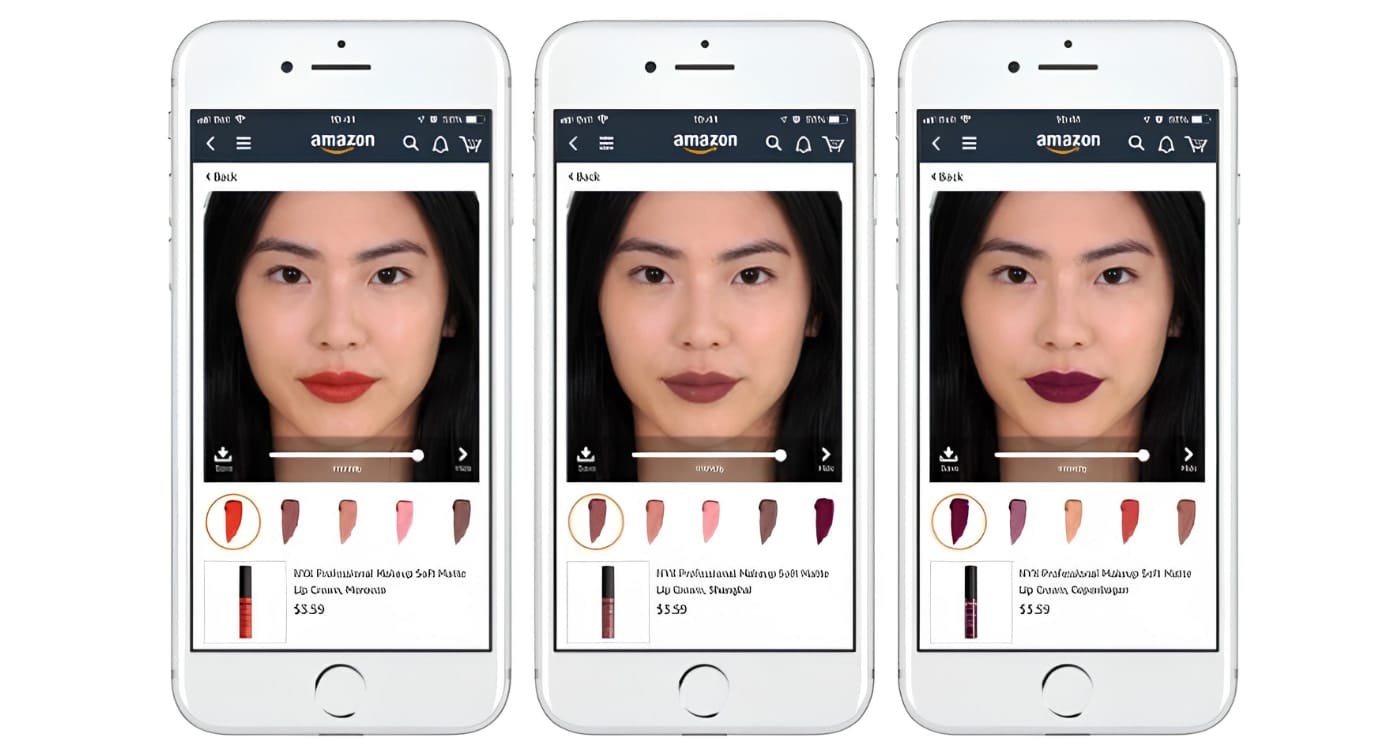
L’Oréal uses WebAR to deliver a virtual makeup try-on experience in the browser, allowing shoppers to test products before making a purchase. The results exceeded expectations, doubling user engagement time and increasing conversion rates by 3x.
Case 2. Jordan WebAR Campaign

Jordan webAR campaign with Kivicube lets shoppers virtually try on collaboration hoodies in their places before buying. They can try different sizes, colors, and styles just using their phone cameras. It reached a 1:8 sharing ratio and a 1,500% year-over-year increase in user engagement.
If you're interested in AR clothing, the post can show you more details:
 Bella
Bella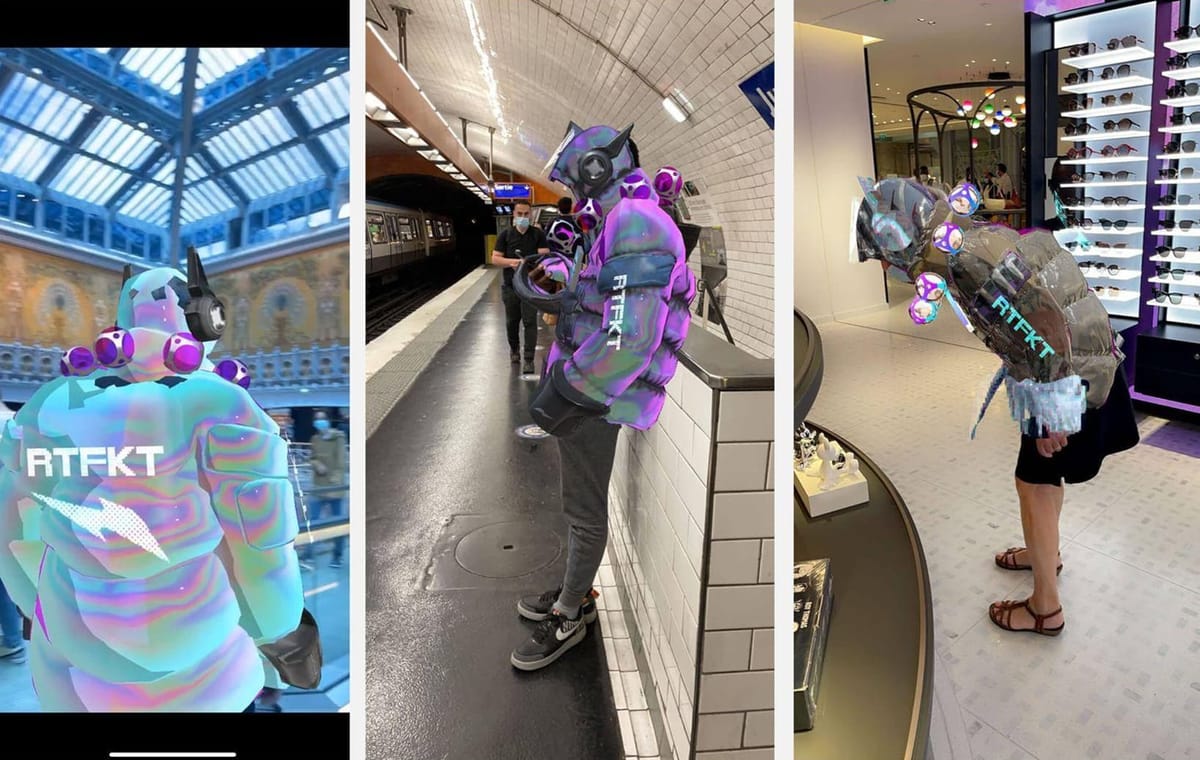
Web-Based AR in Food & Beverage
Real-world food and beverage companies have proven that WebAR campaigns work. Frontiers in Food Science and Technology (2026) found that AR transforms food packaging from static information into three-dimensional experiential engagement systems.
Case 3. Coca-Cola AR Packaging Marketing Campaigns
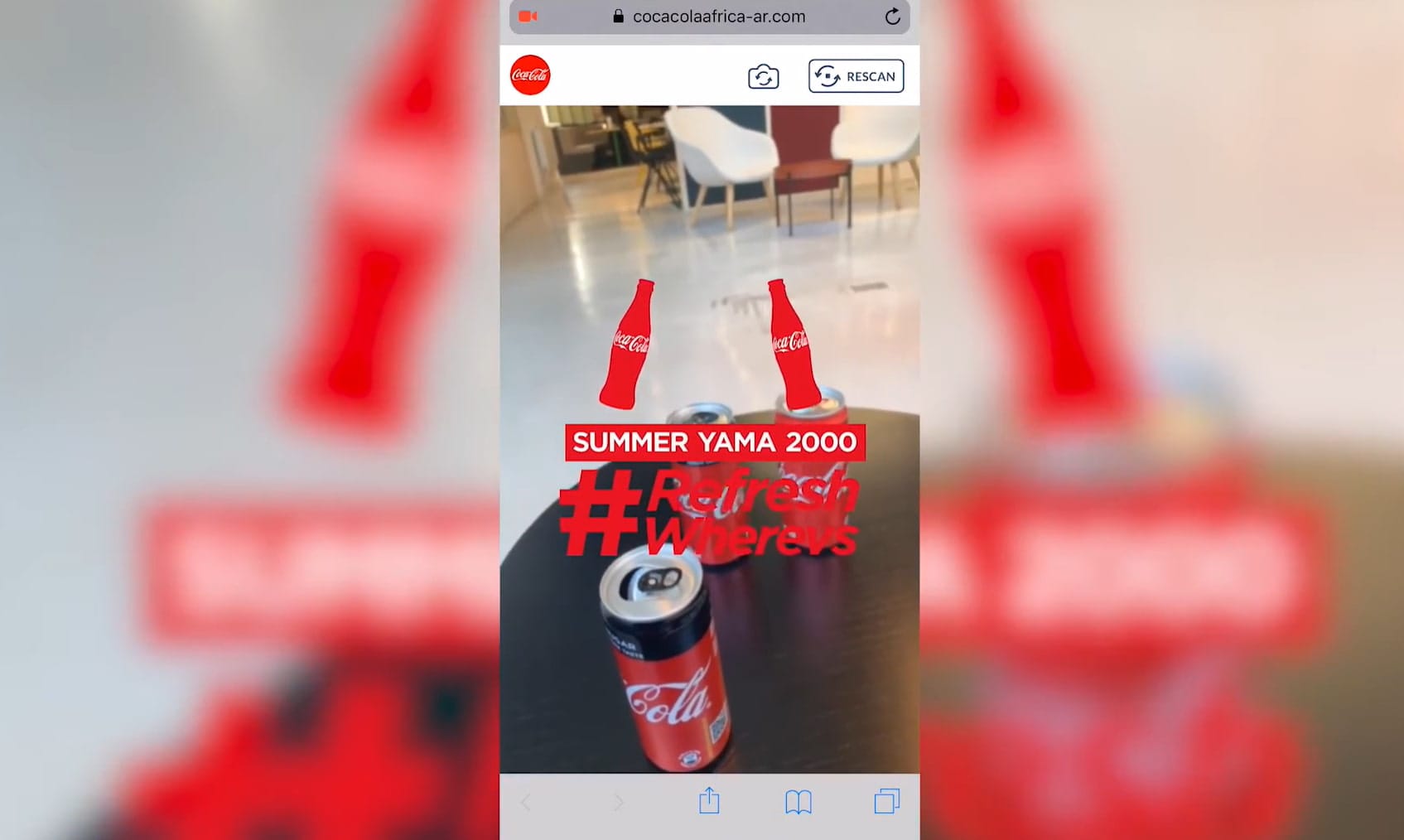
As part of the AMA 2000 campaign, this webAR experience allows people to have fun with a magic AR filter that makes the Coca-Cola bottles/caps hover above the users’ heads. This AR campaign brought a memorable summer for the locals, especially the centennials, and helped them to connect in the country.
Case 4. Luckin AR Packaging
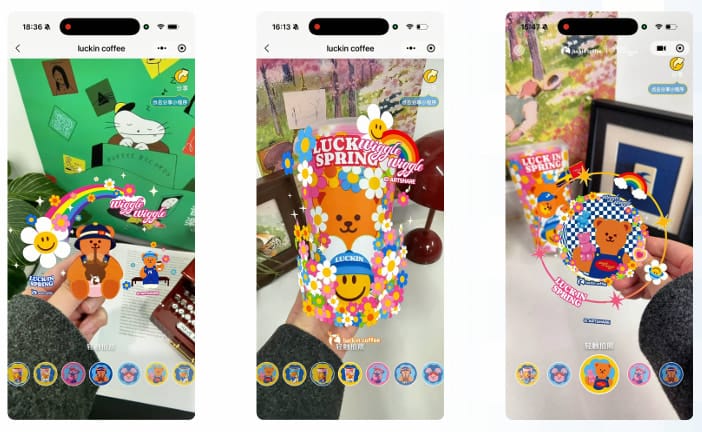
Partnering with Kivicube, the coffee brand Luckin provided customized AR packaging experiences for core marketing materials, including cups, PU balls, badges, and more. By combining digital content with co-branded materials, it significantly enriches users' offline experience, making each interaction feel fresh and rewarding. The web-based campaign helped improve customer engagement and supported stronger conversion and repeat-purchase performance.
Case 5. La Tagliatella AR Menu

La Tagliatella group has launched a no-app AR menu experience to present their dishes interactively and immersively. Each food has a QR code and a web link, so it can be easily shared across platforms. The AR menu largely increases customers’ interest in the meals and has a positive influence on restaurant marketing.
Interactive Augmented Reality in Education
WebAR technology also works on eliminating the long-term problem of traditional education, helping students to understand knowledge instead of rote memorization with interactive experiences. A major meta-analysis of 134 (quasi-)experimental studies published in Computers & Education shows that AR-based instruction has a large positive overall effect on learning outcomes.
Case 6. Smithsonian AR Museum
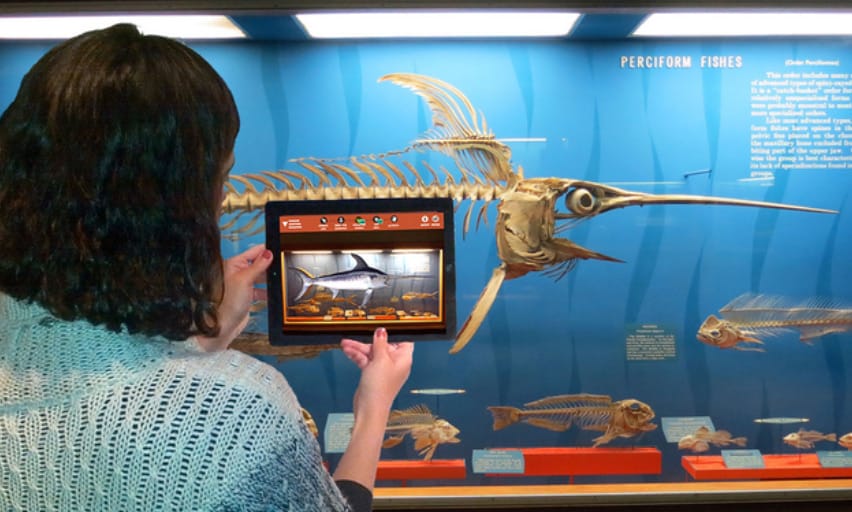
The Smithsonian National Museum of History announced an AR program that can make the Bone Hall come to life with lively and animated interactions. From diamondback rattlesnake skulls sinking fangs into rodents to identifying bat species with their voices, visitors can enjoy themselves while learning about natural history.
Case 7. Google Expeditions AR Pioneer Program
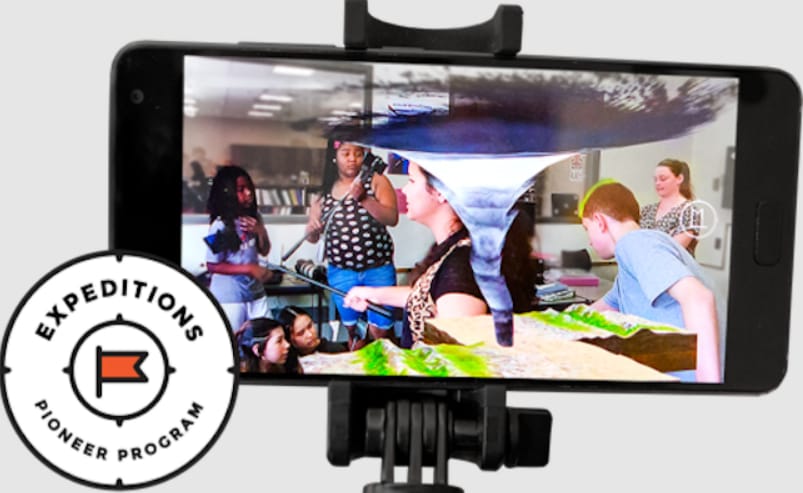
Google adopted augmented reality to its own education platform - Google Expeditions, enabling students to have close contact with 3D object models like volcanoes and DNA molecules on virtual field trips. More than 2 million students have experienced the AR program and provided positive feedback.
WebAR in Fashion
The fashion industry has been one of the earliest adopters of AR technology for creativity showcasing and has gained wonderful results for development. All AR characteristics, such as interactivity, vividness, etc., have a positive and significant influence on consumers’ purchase intention for fashion goods.
Case 8. AR Designs in London Fashion Week
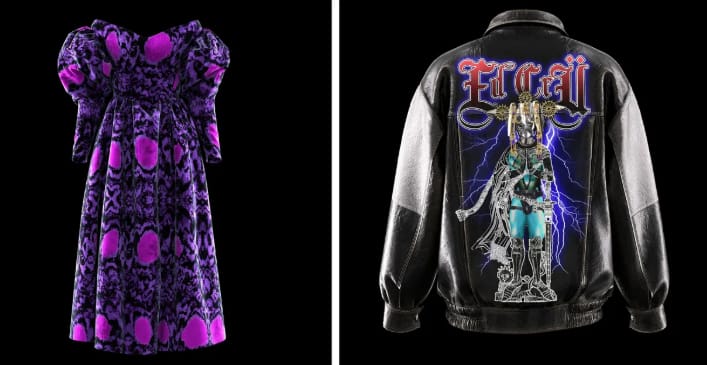
London Fashion Week designer Edward Crutchley, together with AR fashion platform Zero10, recreates two looks from the catwalk with augmented reality elements. One of the catwalks is an off-the-shoulder purple dress, which can be viewed with a 3D colour transformation from purple to white to black. Another one is a leather jacket with movement-triggered lightning bolts.
Case 9. Bvlgari AR Jewelry Try On
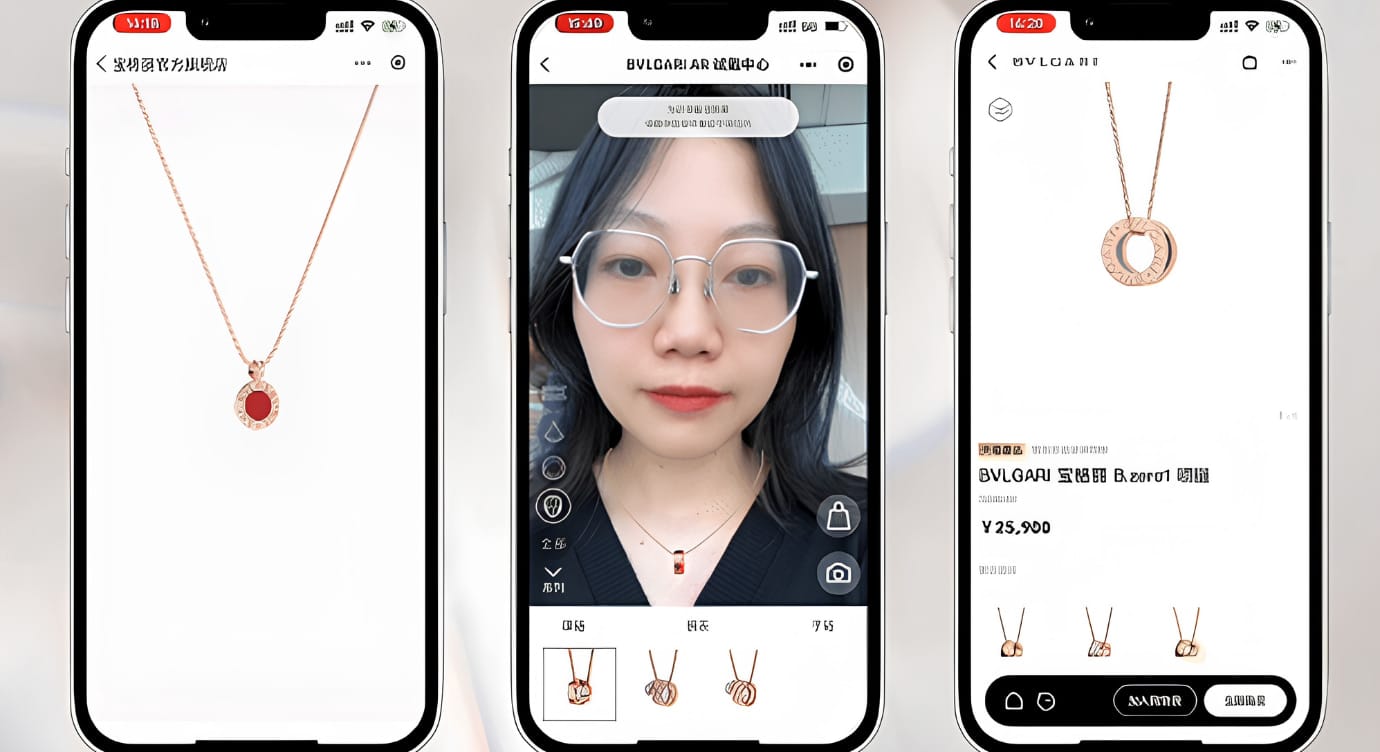
Web-based augmented reality jewelry try-on changes people’s methods for exploring and purchasing jewelry online. Bvlgari partnered with Kivicube for a realistic webAR necklace try-on experience, allowing users to interact with Bvlgari jewelry in high-definition rendering. The experience was designed to increase engagement while helping customers evaluate products more confidently before purchase.
WebAR in News & Publishing
The news and publishing industry has used web-based augmented reality technology to engage readers. Research from Sage Journals shows that AR visualizations significantly increase users’ sense of physical presence compared to static and non-AR interactive formats.
Case 10. amNewYork × Metaio AR Newspaper Campaign
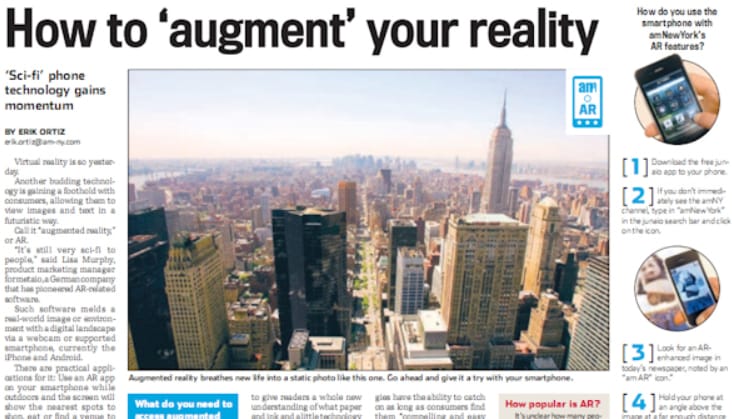
amNewYork and AR junaio browser joined forces to launch an interactive newspaper on Nov. 23, 2010. Simply opening their phone cameras and scanning the newspaper, readers can watch the Macy’s Thanksgiving Day balloons surge from it and uncover the answer to who is invading Gotham City.
Case 11. AR Mural for the Dallas Mavericks
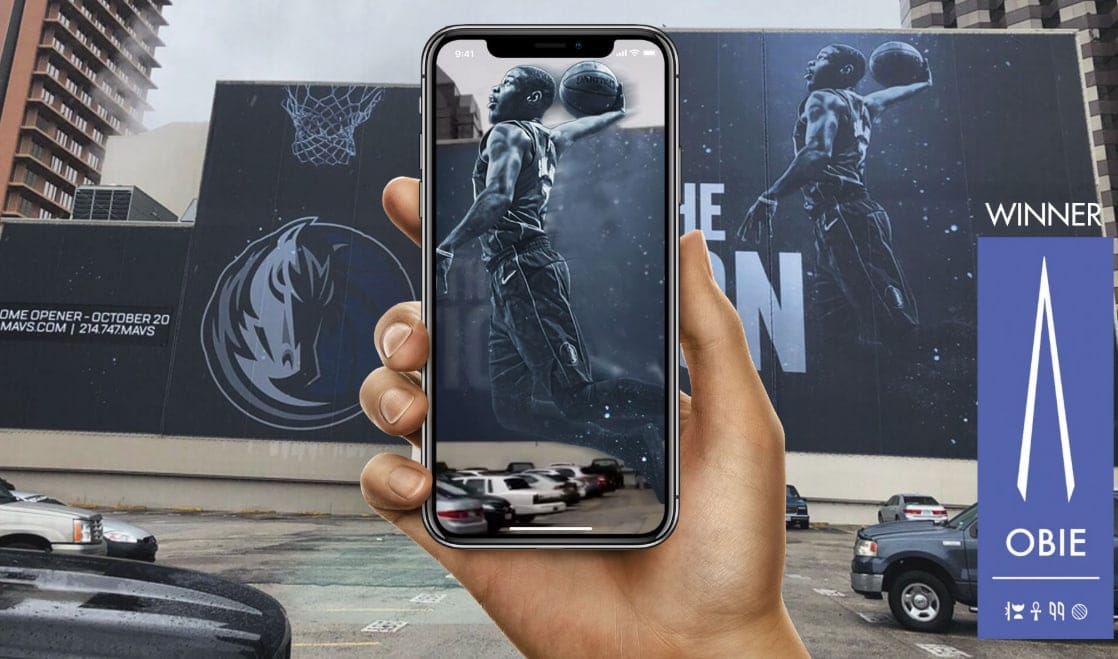
Dallas Mavericks, collaborating with Groove Jones, launched a 70′ x 200′ AR mural for fans during the season opener in the heart of downtown Dallas. Within this marker-based webAR experience, fans of Dennis Smith Jr. can watch his vivid and realistic dunk instantly after scanning the mural.
AR Cases in Gaming Industry
AR games are also reported to bring immersive experiences and effectively improve engagement across multiple studies.
Case 12. Harry Potter: Wizards Unite AR Game
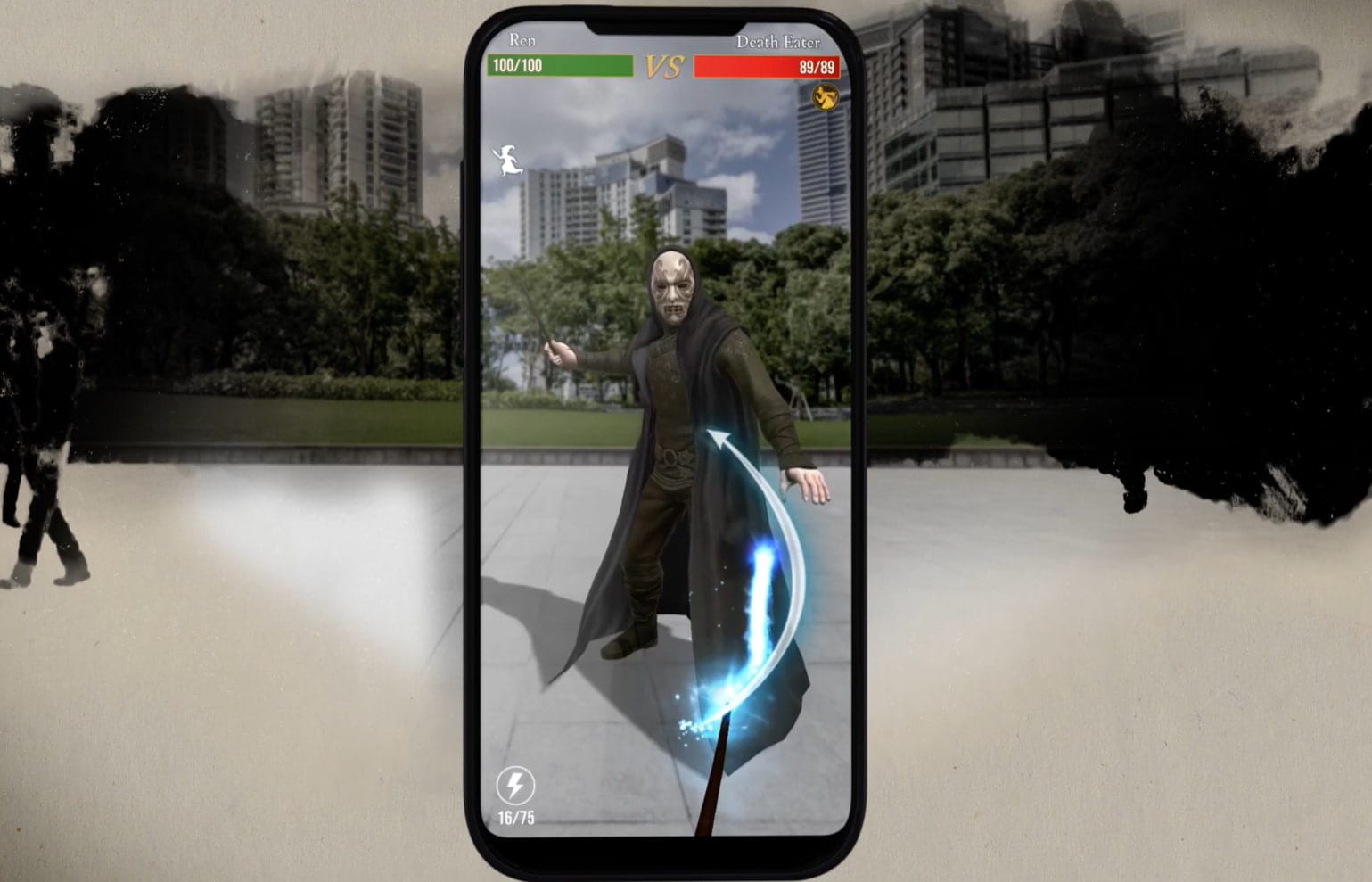
Developed by the same studio for Pokémon Go - Niantic, Harry Potter: Wizards Unite continued working with an AR system to enable users to interact with specific game elements at in-game hotspots that are mapped with the real world around them. Combined with this novel gaming mechanic, it stirred strong user engagement.
Browser AR in Entertainment
A controlled experimental study in Sage Journals indicates that AR-enhanced media significantly increases user engagement, interaction, enjoyment, and perceived immersion compared to traditional digital content. That’s why more and more entertainment activities come with the advanced webAR technology.
Case 13. Jumanji: The Next Level WebAR Promotion Campaign
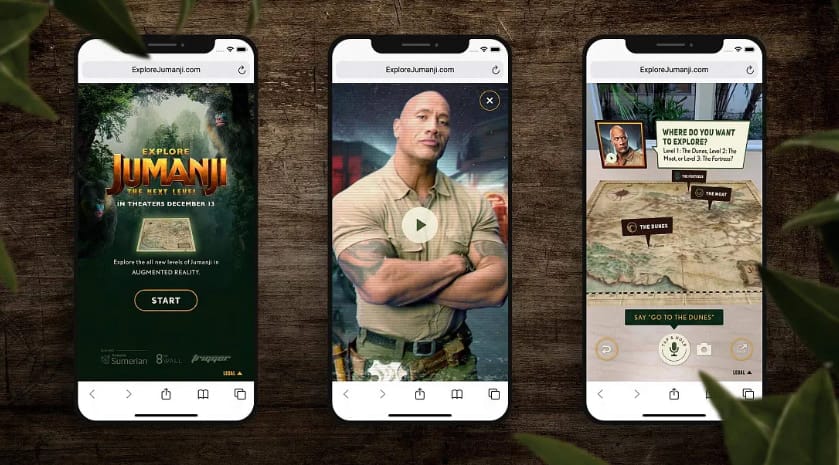
To promote the release of the movie Jumanji: The Next Level, Sony Pictures Entertainment embraced webAR technology for a new campaign, which allows fans to get into the magic Jumanji world instantly. When fans speak out “Show me Jumanji”, the AR technology will bring the movie scene and character videos to life with interactive animation. Instead of purely watching videos from afar, fans can directly engage with the digital Jumanji content around them in the real world.
Case 14. Ninja Turtles X Snapchat AR Lens
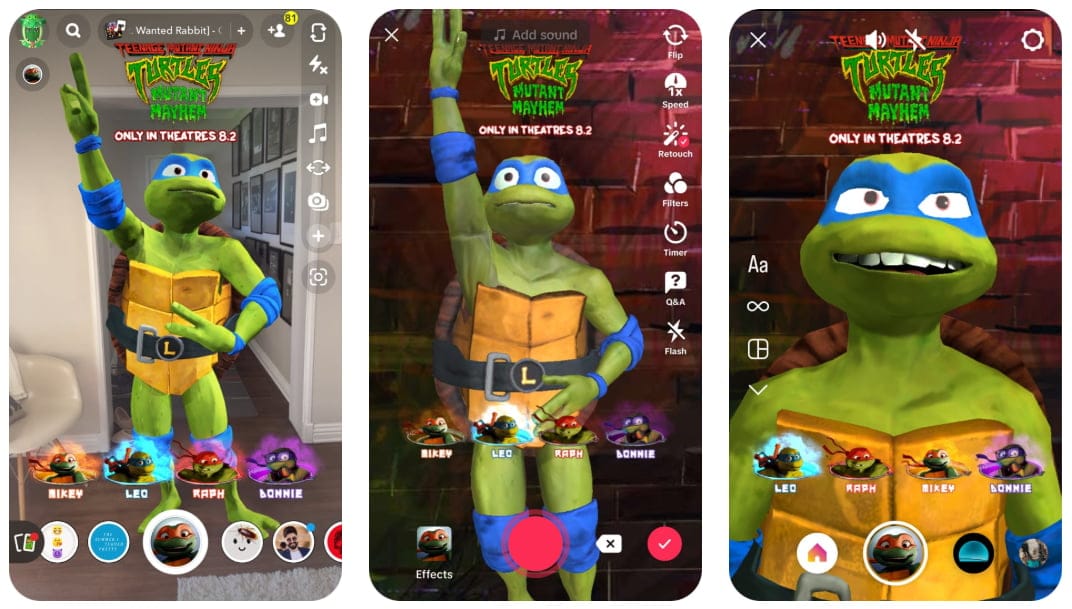
Paramount Pictures decided to create a marquee immersive experience with the help of Pretty Big Monster, showcasing the updated image of characters for new audiences and existing fans. Social platforms, such as Snapchat, created an AR lens that recognizes users’ faces with AR face tracking technology and totally transforms them into Ninja Turtles characters controlled by their own movements. Thousands of videos created in the first week indicate the radical response of this AR lens.
WebAR for Hospitality & Tourism
The hospitality and tourism industry has also found engaging methods to add augmented reality for a better customer experience.
Case 15. Hub Hotel Interactive Rooms
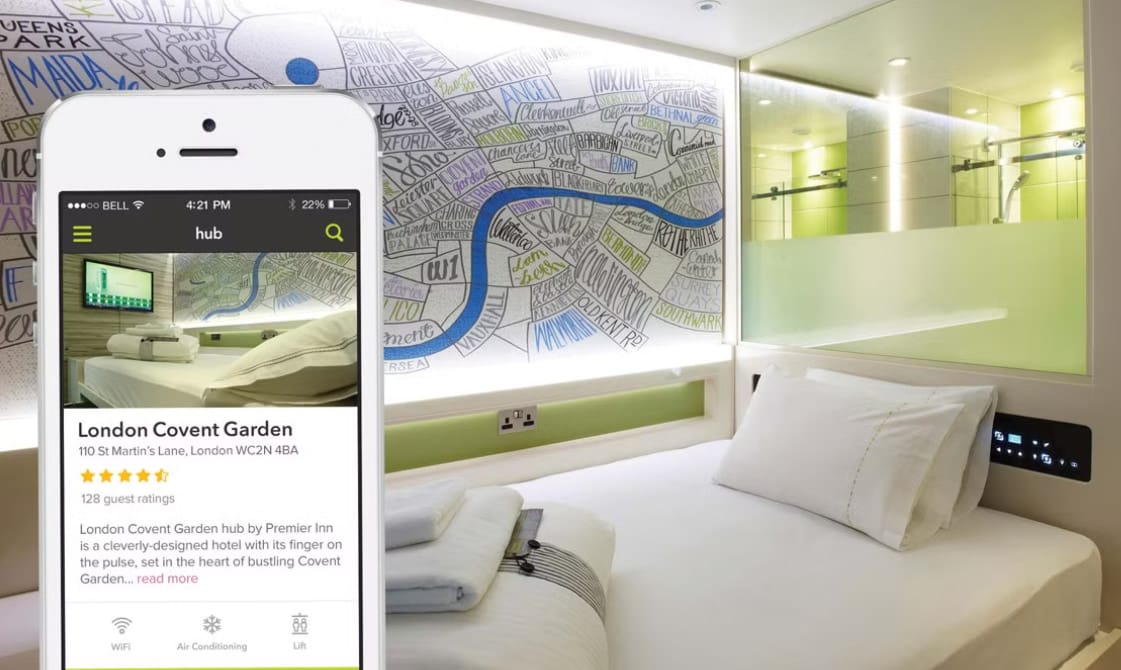
Due to the fierce competition in the hospitality industry, many hotels are seeking methods to attract more guests than others. Augmented reality comes as a practical solution to meet their requirements. Hub hotel from Premier Inn, integrated AR technology with wall maps in their rooms. Guests can see information about local hotspots by pointing their phones at the wall map, making their stay more entertaining and convenient.
Case 16. Kizil Caves AR Reconstruction
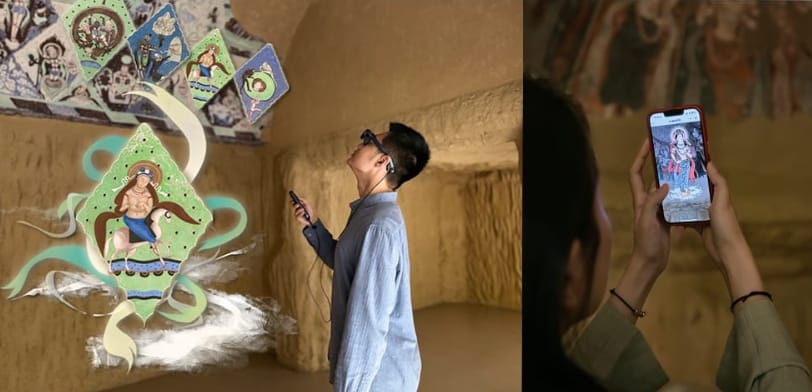
Kivicube partnered with Kizil Caves to launch a web-based AR recreation experience. Visitors could scan the given QR code and see how charming the murals are with the animation. The project received positive visitor feedback and helped make the historical content more accessible.
WebAR in Automotive Industry
As one of the classic big-ticket items, purchasing a car can be a kind of investment. People tend to know more information before placing an order to avoid dissatisfaction. Therefore, AR is required for car companies to intuitively present the models, colors, styles, and more car details with an interactive scene.
Case 17. BMW Configurator for 3D Visualization
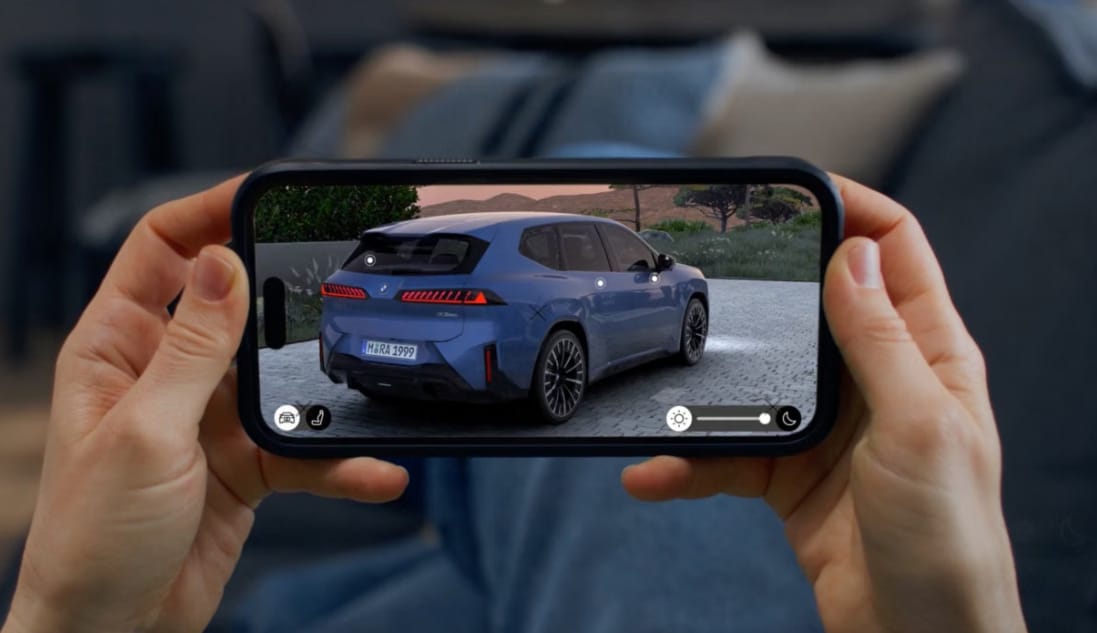
BMW provided an ultra-responsive AR visualizer for users to dive into the immersive and visually striking car-using environment. With the smooth operation and advanced rendering tech, it enables users to move fast and even zoom in on the details for further checking. Not limited to interactions, it also shares detailed information about the cars without disrupting users’ AR playtime.
Want to make your own AR car? This tutorial can be helpful:
Bella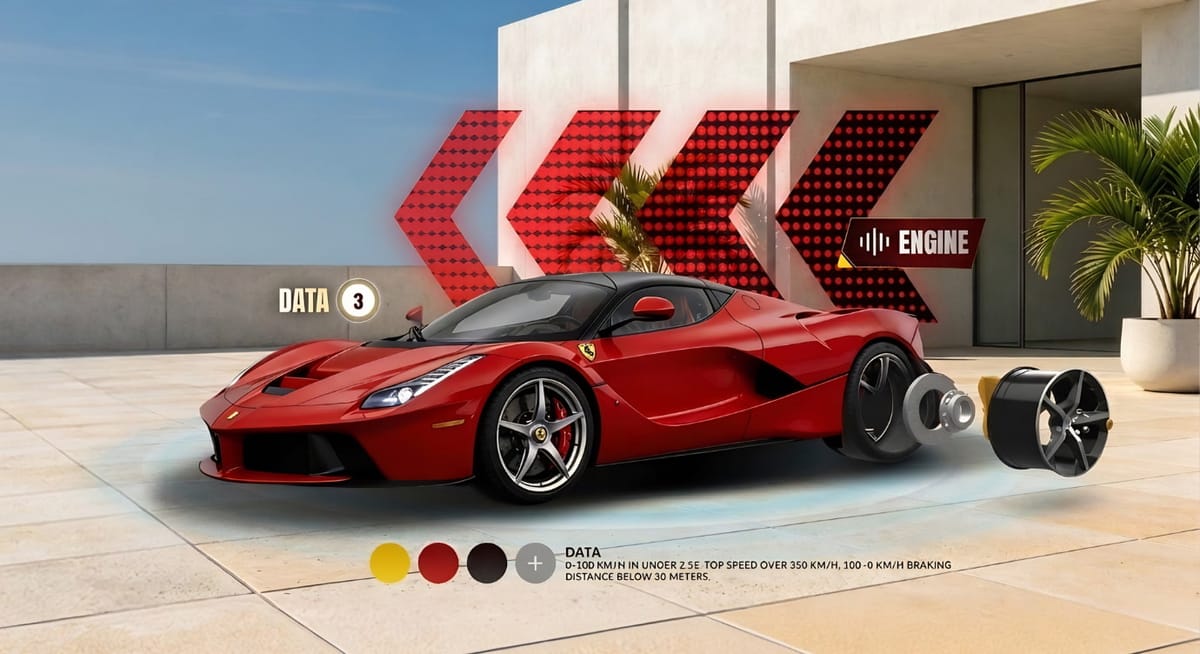
AR Web-Based Experiences in Sports Marketing
When it comes to sports, people may expect the marketing for sports events and athletes to be as good as reality. And augmented reality comes as a practical solution here.
Case 18. NFL Super Bowl LIII AR Campaign
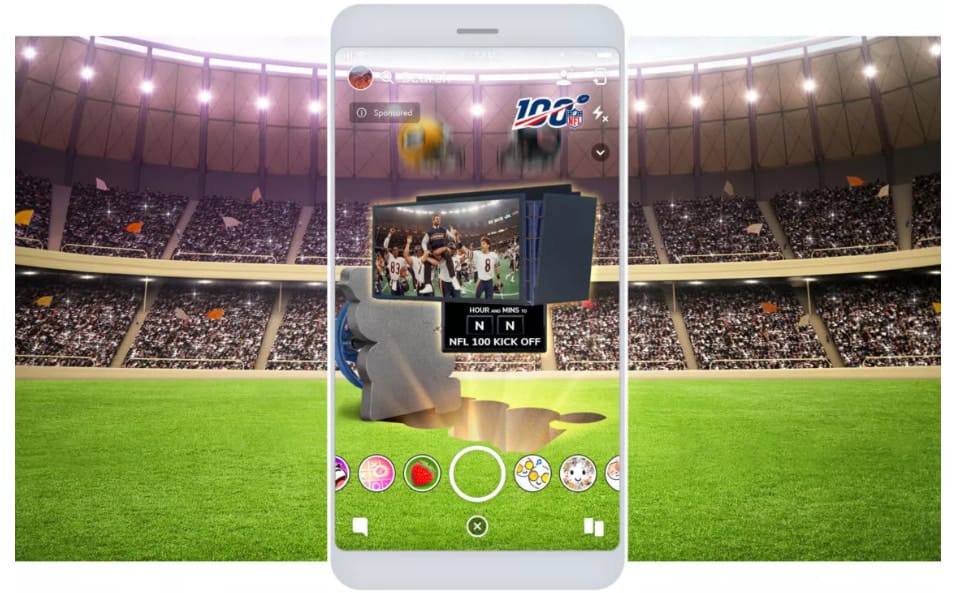
The NFL’s Super Bowl LIII AR campaign with team-branded AR selfie filters sparked a craze. Fans of both teams can show their support by sharing their selfies with the AR effects, presenting a high degree of user engagement. This campaign reached an astonishing view count of over 303 million times.
Immersive AR Experiences in Healthcare Industry
The healthcare industry is a sector for AR applications that cannot be ignored. No matter if it’s for medical education, in-depth research, or patient condition assessment, AR can play an important role across all of these use cases.
Case 19. Cleveland Clinic AR Heart Visualization
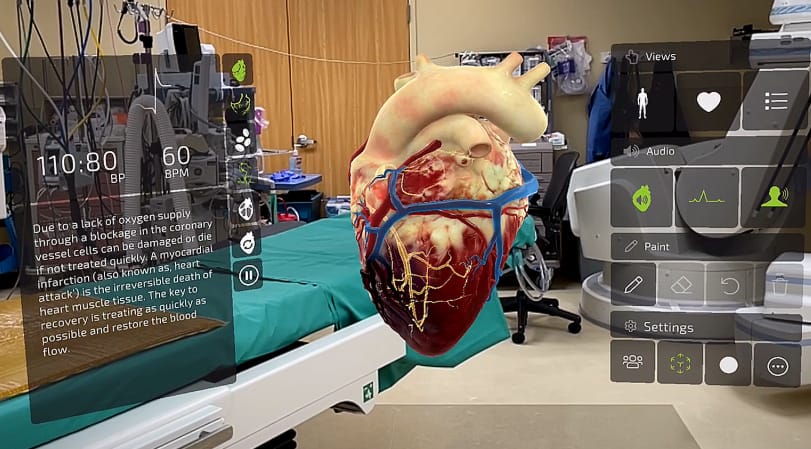
To make medical education interesting and explorable, the AR tool INSIGHT HEART has been developed with impressive visualizations of the human heart in various conditions, including normal heart rate, atrial fibrillation, and even myocardial infarction. No need for predefined markers, it allows users to place the 3D heart model in the real world with interactions when they scan their surroundings.
Augmented Reality in Software Industry
Software companies increasingly use AR to improve product demonstrations, onboarding experiences, and interactive training.
Case 20. Adobe Aero Interactive AR Product Demonstrations
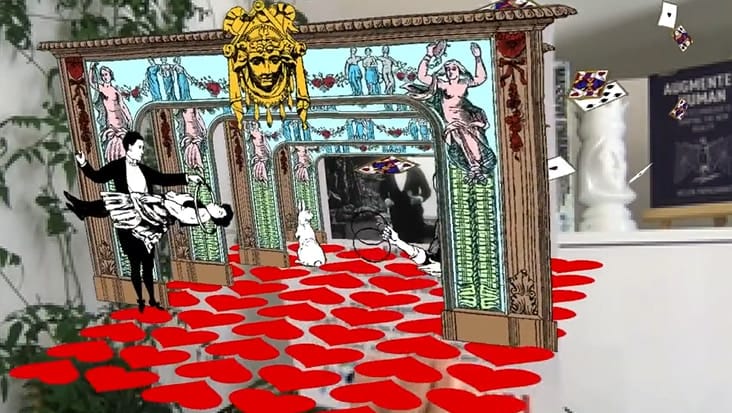
Adobe launched Aero in 2019, an Augmented Reality tool for creators to design AR experiences with the customized assets from Adobe Photoshop, Illustrator, and other software. The augmented reality tool made creative expression and storytelling much easier than ever before.
These web-based AR examples show how brands are using browser-based augmented reality to create immersive experiences without requiring users to download an app. But how are these experiences actually built?
A Practical Web-based AR Solution for AR Scene Creation without Coding
Kivicube is here to provide a practical webAR solution with simple drag-and-drop creation, no coding required. It enables everyone, even beginners, to design, adjust, share, and have fun with the AR scenes directly through web browsers.
Kivicube Video Intro
What it offers:
Large exclusive template and asset library: More than 300 creative AR templates are provided, covering fields including education, entertainment, e-commerce, etc. Besides, plenty of pre-designed assets can be directly used for AR scene creation.
Various AR types: Multiple advanced AR technologies are accessible, such as image AR, world AR, landmark AR, and more. The advanced AR tracking technology enables a stable and consistent AR experience.
Efficient AI-assisted workflow: It integrates with a series of AI tools to create images, 3D models and videos in just one click, improving AR creation efficiency.
Expert-level customized service: With an experienced team, it offers an all-round AR creation service, from creative design to tech development, covering numerous commercial promotion requirements.
Data analysis dashboard: The built-in data analysis tool could present data such as click counts, scan rates, and interaction duration when people scan and experience your AR creation.
Make a Web-Based AR Experience in Only 3 Steps
Follow the 3 steps to make a unique webAR scene with Kivicube.
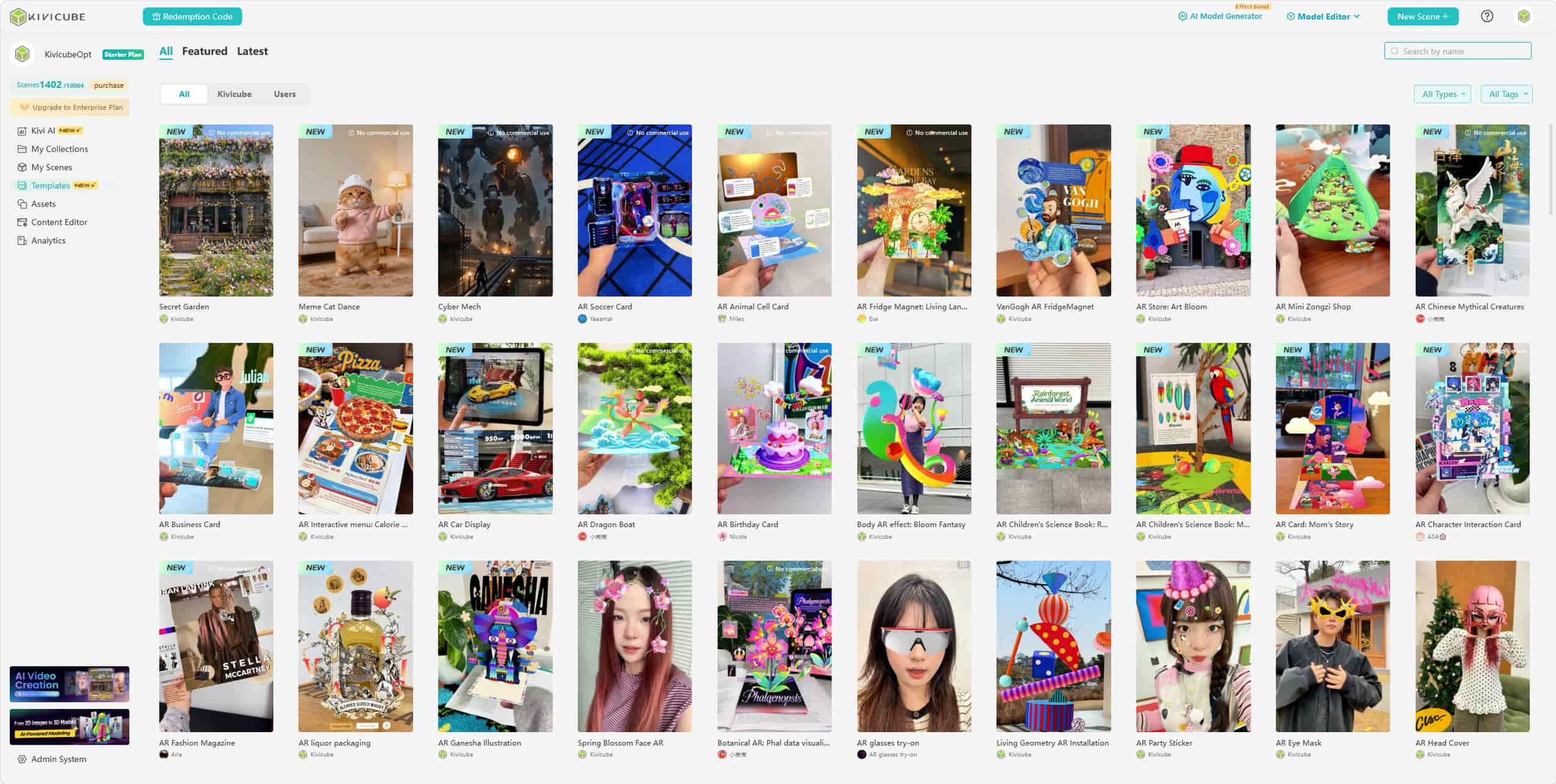
Step 1. Sign up for an account and turn to the Templates column. Search for an AR experience template you want to use in the top right corner, then click “Duplicate” to use the template.
Step 2. In the grid editor, upload your assets and replace the original assets in the template with your own. Then adjust the interactions and animations.
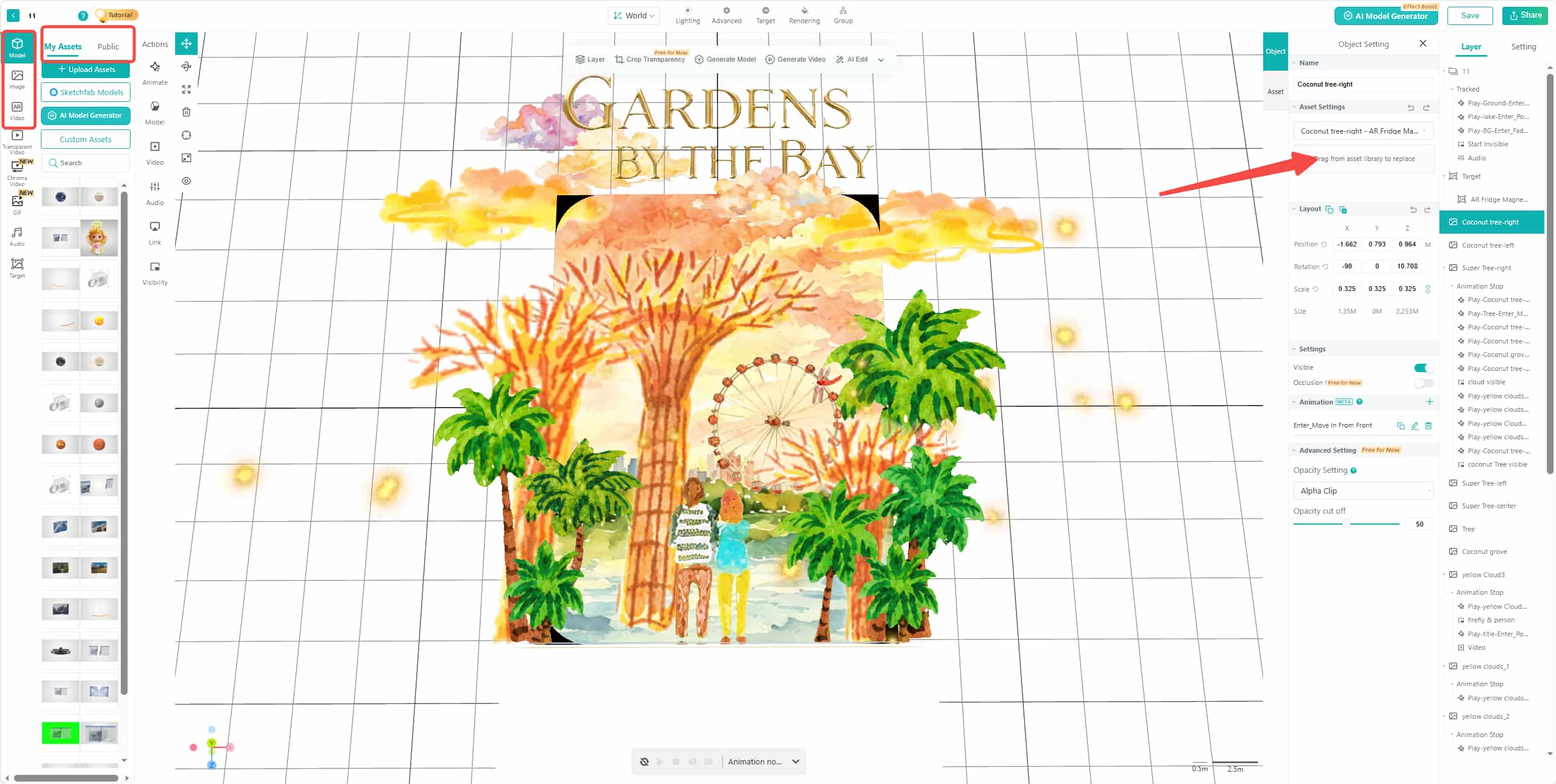
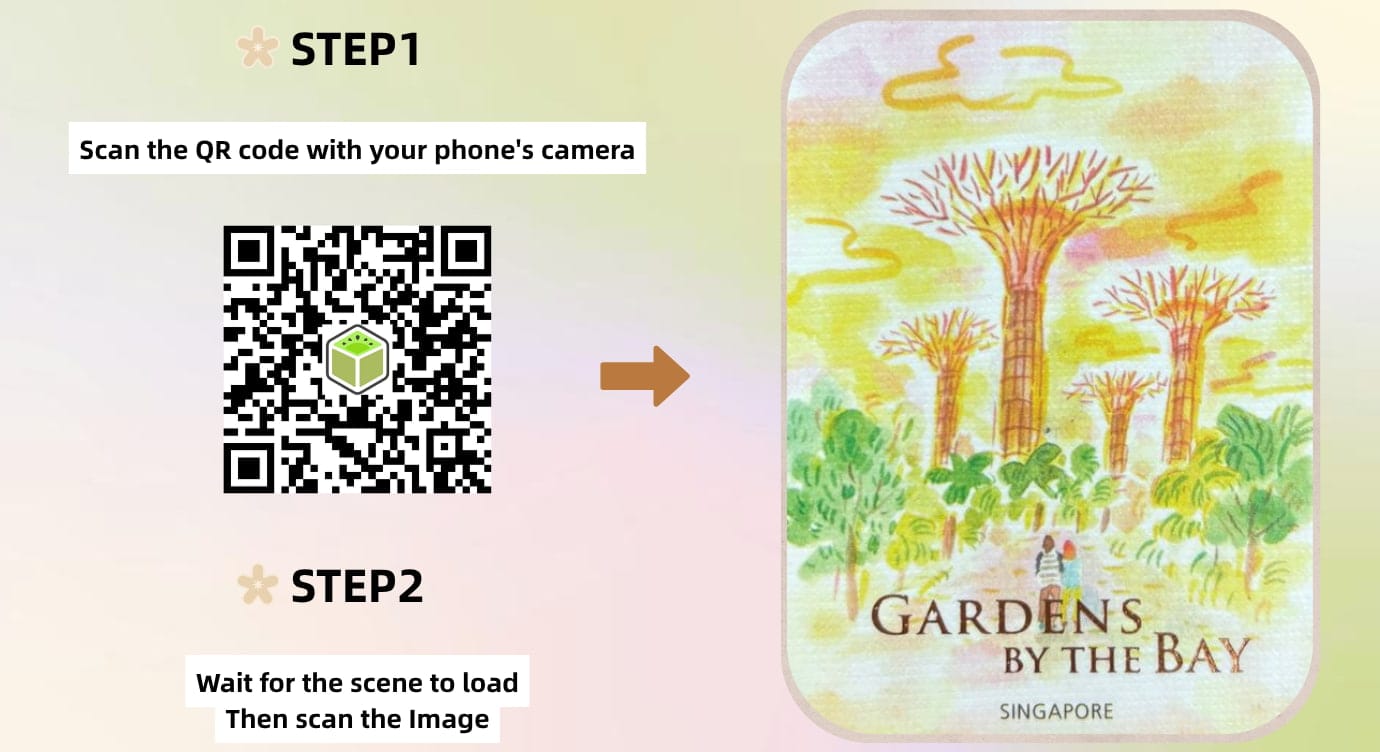
Step 3. Click “Save” and “Share”, then share the QR code or link to the new web-based AR scene across platforms.
Final Thought
WebAR has become one of the most accessible ways for organizations to deliver immersive digital experiences without requiring users to install an app. Whether they want to increase marketing conversion, improve learning efficiency, create the latest trending topics, and more, the web-based AR examples in the post have shown the power of it. If you are curious about how to make your own with WebAR, Kivicube is recommended for you with simple clicks.