Augmented Reality Advertising: 15 AR Ad Examples and Tips for Creating Viral Campaigns in 2026
n this post, we’ll explore augmented reality advertising, cover use cases, 15 AR ad examples, and how to create AR advertising experiences at a lower cost.
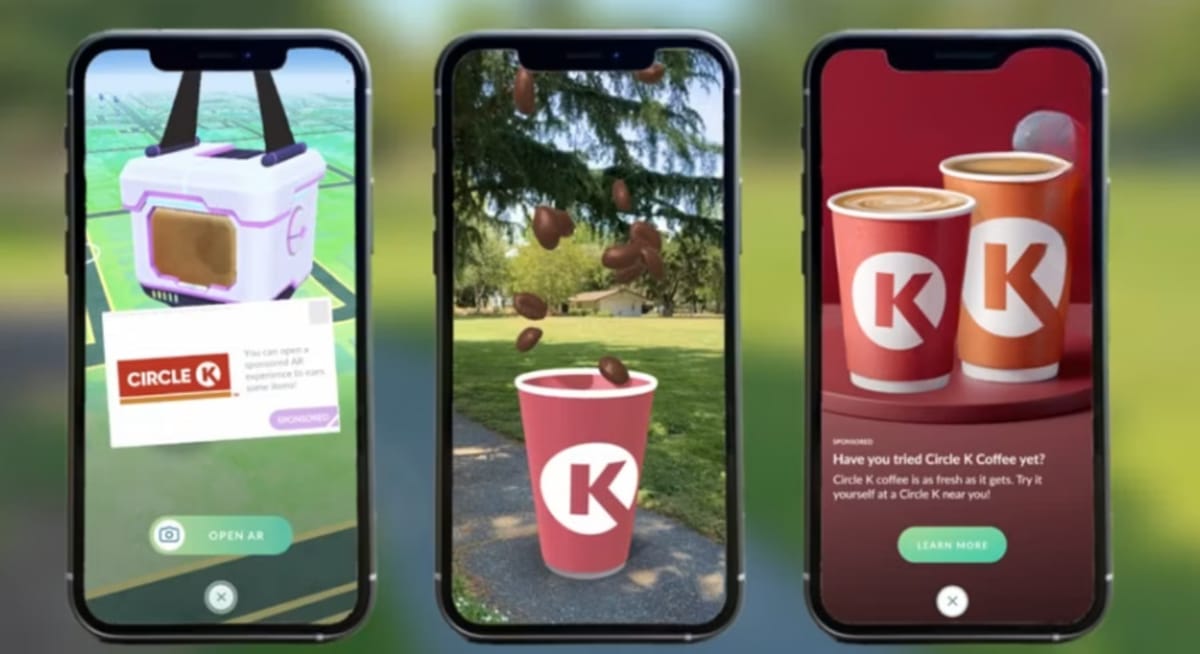
Advertising is increasingly focused on creating personalized and memorable brand interactions. And with the emergence of multiple new technologies, marketers are now exploring new ways to engage their target audiences. AR technology adds digital content to the real world, giving users more immersive and interactive experiences.
However, many brands still rely on traditional advertising methods they are familiar with. In this post, we’ll introduce what AR advertising is, 15 real-world brand examples, and a solution for you to get a customized augmented reality advertising experience with ease.
Key Takeaways
By combining digital content with real-world advertising augmented reality campaign materials, brands can offer more immersive experiences and improve user engagement. Here are some key takeaways:
• A study published in ScienceDirect found that AR advertising increased consumers' curiosity and attention toward the ad, which in turn improved their attitudes toward the advertisement.
• Brands like Red Bull, Ford, IKEA, and Coca-Cola are using AR technology to increase user engagement and reach a wider audience.
• You can try WebAR platforms like Kivicube to add augmented reality to advertisements.
What Is Augmented Reality Advertising?
Augmented reality advertising uses AR technology to create interactive brand experiences by overlaying digital content, such as images, audio, videos, and 3D objects onto the real world. Instead of only showing a product in a traditional ad, brands can let customers interact with virtual products, effects, characters, or other content through their phones.
From Pokémon GO to advertising augmented reality campaigns by Nike, Burger King, and Sephora, more brands are incorporating AR into their advertising. ARtillery Intelligence forecasts that mobile AR revenue will grow from $10.5 billion in 2023 to $21.5 billion in 2028. In addition, research published in the Journal of Retailing and Consumer Services examined how AR advertising affects consumer responses and found evidence of its value as a marketing tool.
How Is Augmented Reality Used in Advertising?
AR advertising can be delivered on different platforms, such as apps, social media platforms, digital signage, and more, to reach a wider user base. With engaging digital advertising, businesses can deliver unique and memorable experiences for their consumers.
Here are some common use cases of AR advertising.
1. Virtual Product Try-Ons
This use case is usually for retail and e-commerce. Users can preview how products look on them through a virtual try-on experience on their phones. From makeup and clothing to accessories, more retailers are adopting this technology.
2. Product Visualization
To reduce uncertainty when shopping online, businesses apply AR to let their consumers preview the product features in detail. Instead of simply watching promotional videos or viewing other marketing materials, consumers can interact with the AR products and explore more features.
3. Interactive AR Packaging
Another use case of AR advertising is digital packaging. With interactive and engaging digital content, even an ordinary package can show products in different colors and configurations, plus additional information brands want to convey.
4. Interactive Print Ads
By adding digital content to traditional printing materials, such as posters, magazines, brochures, and flyers, businesses can bring print to life and make it more engaging and attractive for readers. Users can simply scan a QR code to view videos, 3D content, product information, promotional offers, and more.
5. AR OOH Ads
AR can make out-of-home advertising more eye-catching and interactive, helping brands capture attention in busy public spaces.
6. Social AR Filters and Lenses
Social platforms combine AR with camera filters to create branded effects for selfies, photos, and videos. Usually, the filters include face effects, virtual accessories, animated characters, and other interactive brand experiences for social sharing.
7. Gamified Advertising Experiences
Due to digital fatigue, consumers have become more interested in personalized and meaningful experiences. Gamified AR advertising uses game mechanics such as points, rewards, and levels to encourage consumers to interact with branded content.
Curious about interactive AR games? Here you can explore more about them:
 Juli Cooper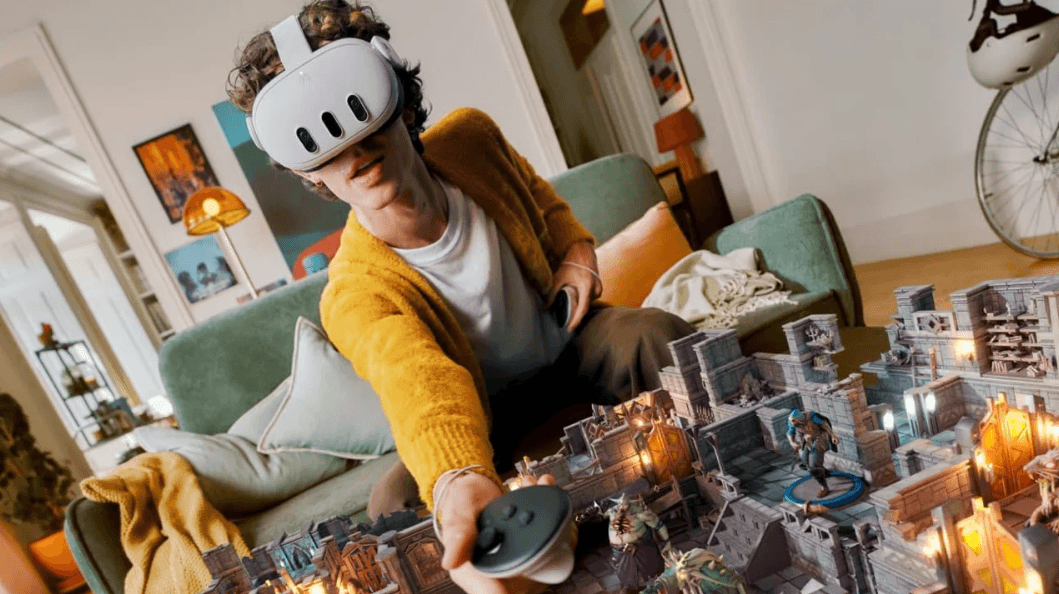
15 Augmented Reality Advertising Campaigns with Different Goals
AR advertising can indeed leave a deep impression on users and support brand awareness. An analysis of 38 campaigns found that campaigns incorporating AR generated 2.4× higher ad-awareness lift and 1.8× higher brand-awareness lift, while AR Lens users showed a 6.4× higher swipe-to-purchase ratio than commercial viewers.
Since AR ads are attractive, engaging, and easy to share online, they are helpful in enhancing brand awareness. Below are some well-known augmented reality advertising examples with different goals.
1. Increase Brand and Campaign Awareness
Augmented reality advertising campaigns need to catch consumers’ eyes and have strong recall. AR advertising can make branded content more interactive and memorable. A 2026 study in Sage Journals found that AR advertising significantly improved consumer engagement, memorability, and ease of understanding.
Examples:
1. Red Bull World Series Cliff Diving AR
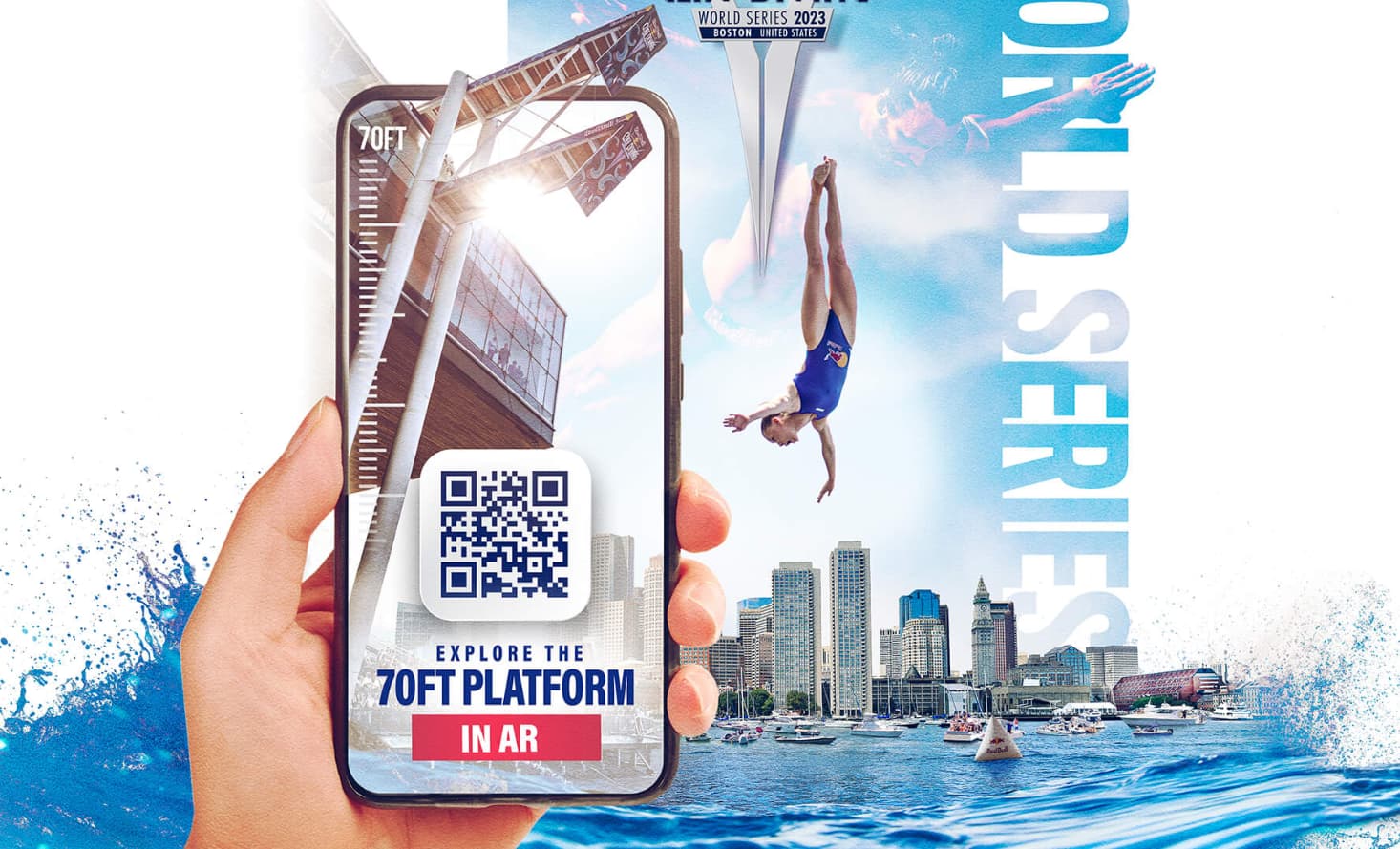
Red Bull applied WebAR technology to bring its World Series Cliff Diving experience to mobile users in a more interactive way. After scanning a QR code, users could experience the scale of a 70-foot dive through their smartphones. Besides, users can also learn more about cliff diving from the shared animated infographics about the evolution of the sport, as well as pictures of the divers.
2. Abu Dhabi Piccadilly Lights AR
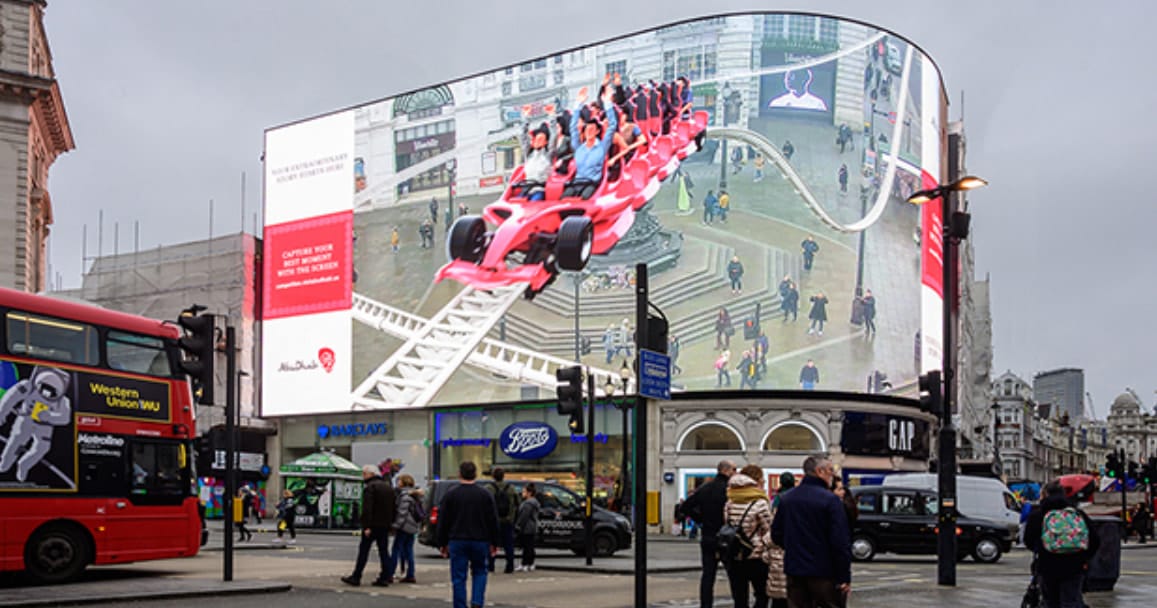
Abu Dhabi transformed London’s Piccadilly Lights into a large-scale AR advertising experience. The two-week augmented reality ad campaign showcased Abu Dhabi’s landmarks across the iconic screen and earned a Guinness World Records title for the largest AR screen.
3. Zootopia 2 AR Lenses
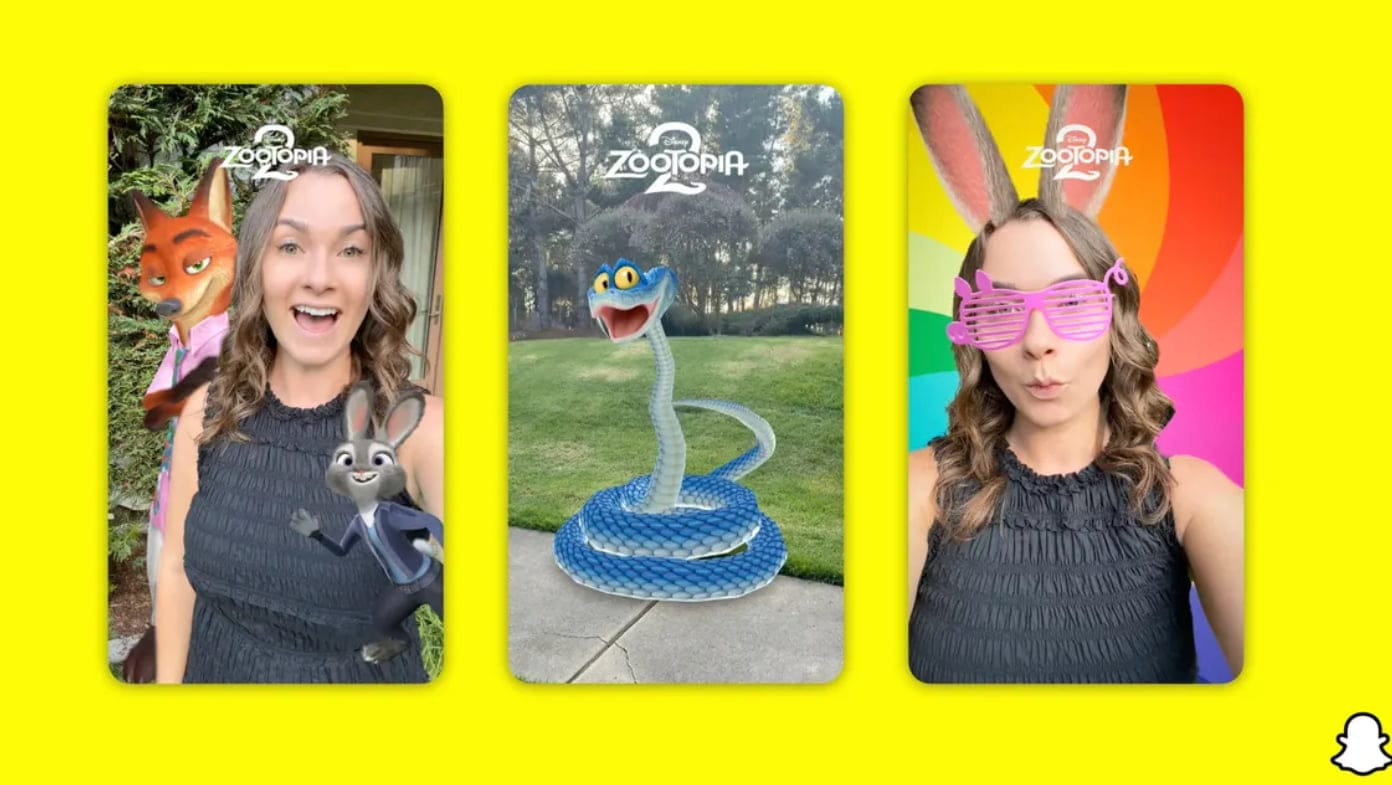
To celebrate the release of Zootopia 2, Disney and Snapchat worked together to launch 7 Zootopia 2 AR filters inspired by Judy Hopps, Nick Wilde, and Clawhauser. The AR advertising campaign also combined AR with OOH activations and in-film integration to extend the movie’s reach beyond theaters.
2. Drive Product Discovery
AR is also beneficial for giving consumers a more vivid way to discover and explore products. A 2021 study on Springer Nature Link found that AR product presentation improved imagery and information fulfillment, supporting better product evaluation.
Examples:
4. Lacoste LCST In-Store AR
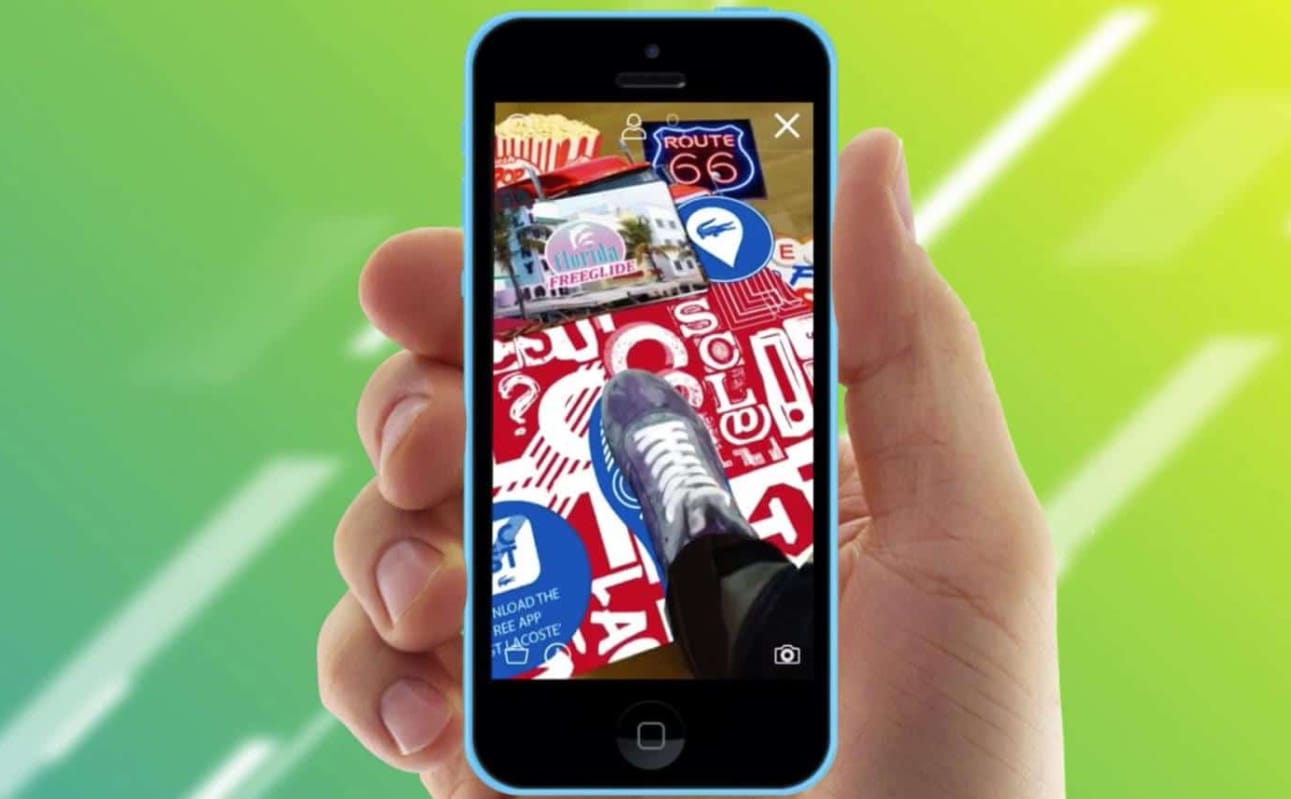
Lacoste turned store windows, in-store signage, and promotional postcards into AR touchpoints for its LCST collection. After scanning, shoppers could explore 3D products and browse the wider range. This AR marketing campaign attracted more than 30,000 user interactions, extending product discovery beyond traditional in-store displays.
5. Ford Mustang GT Performance AR
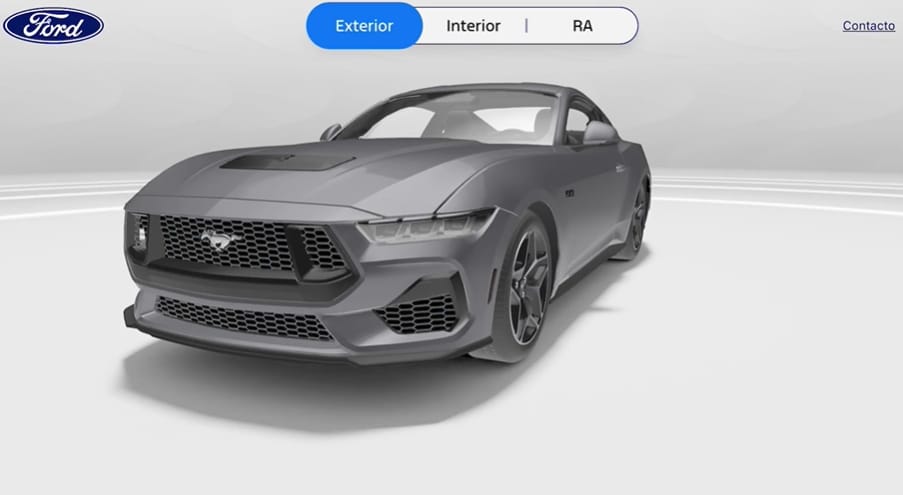
Ford promoted the Mustang GT Performance with an immersive WebAR experience across 5 Latin American markets. Users could explore the car in 360°, change colors, interact with features, and place it in real-world settings. The average session time of these augmented reality ads reached 2 minutes and 40 seconds, encouraging deeper product exploration.
6. Benefit Cosmetics WebAR Ad

With WebAR technology, Benefit Cosmetics showcased 5 products, allowing customers to visualize, learn about, and virtually try them on before purchase. The augmented reality marketing campaign reached over 15 million customers through its website and social media. Compared with traditional advertising, this campaign improved conversion and click-through rates.
3. Influence Purchase Decisions
By giving consumers a clearer view of products before purchase, AR can reduce uncertainty about quality, size, and fit. Research shows that AR product displays can lower product uncertainty and contribute to more positive product attitudes.
Examples:
7. IKEA Place 3D Product Visualization
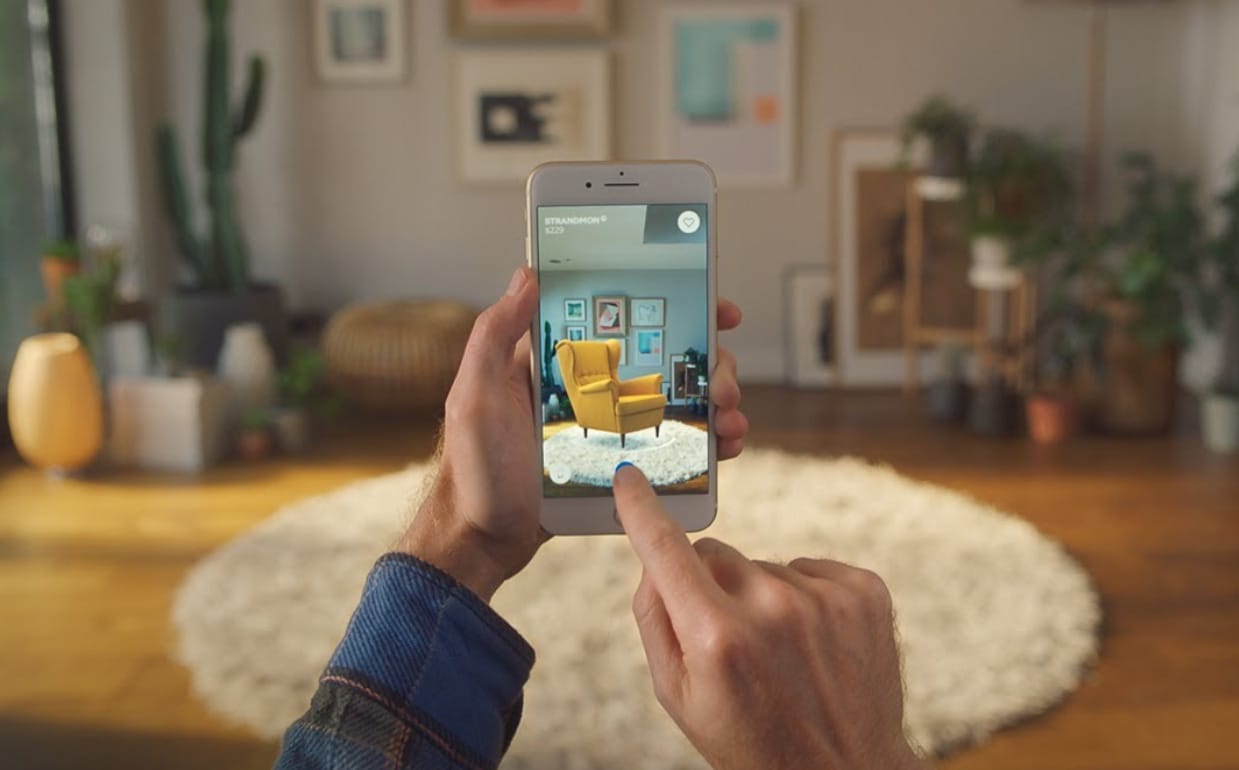
In the IKEA Place app, shoppers can interact with the 3D models of the AR furniture experience in their homes before purchasing. By seeing how products fit their space, customers can reduce uncertainty about size, design, and appearance during the decision-making process.
8. Tarte Cosmetics AR Makeup Try-On
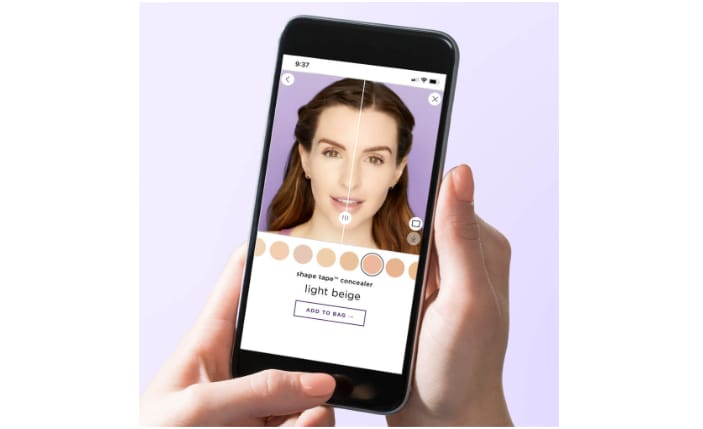
Tarte added an AR makeup try-on experience to its website, allowing shoppers to see how products looked before buying. Customers who used the experience showed a 30% increase in add-to-cart rates.
9. On x POST AR Shoes Try-On
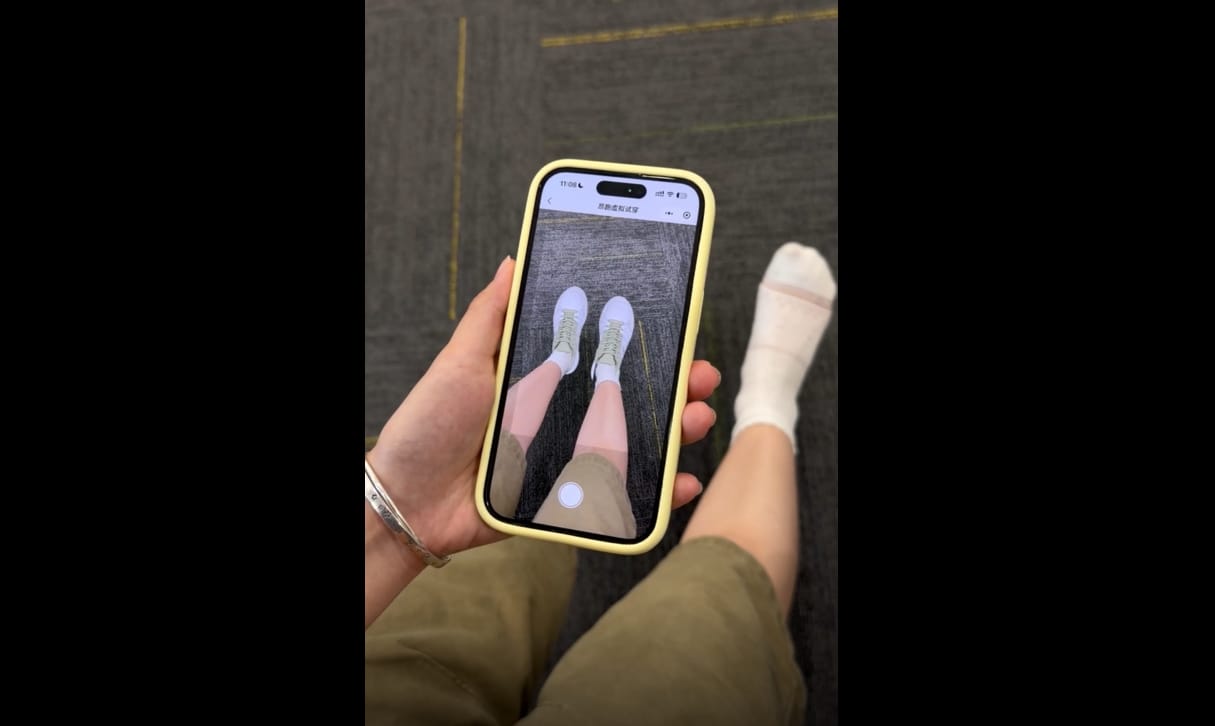
On x POST launched an AR shoe try-on experience created by Kivisense on its mini program. Shoppers could virtually try on different sports shoes on their phones, previewing the design before visiting a store or making a purchase.
4. Increase Customer Engagement
AR advertising creates more opportunities for consumers to interact with branded content through games, virtual try-ons, and social experiences.
Examples:
10. Coca-Cola X Snapchat AR Lens
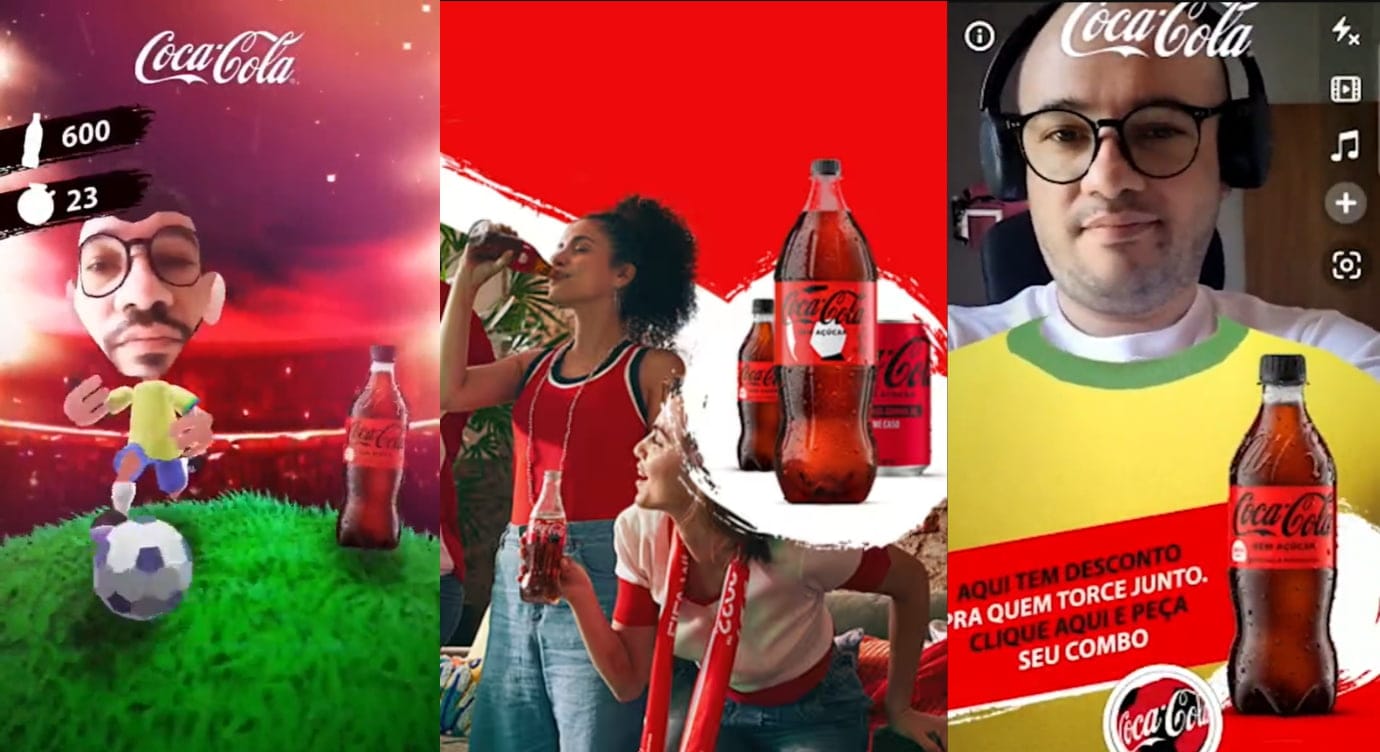
Coca-Cola used two Snapchat AR Lenses during the 2022 World Cup, including a virtual football game where users collected bottles for points. This augmented reality campaign generated 95,020 clicks and an average play time of 16.8 seconds, while ad awareness increased by 21%.
11. Burger King Burn That Ad Campaign
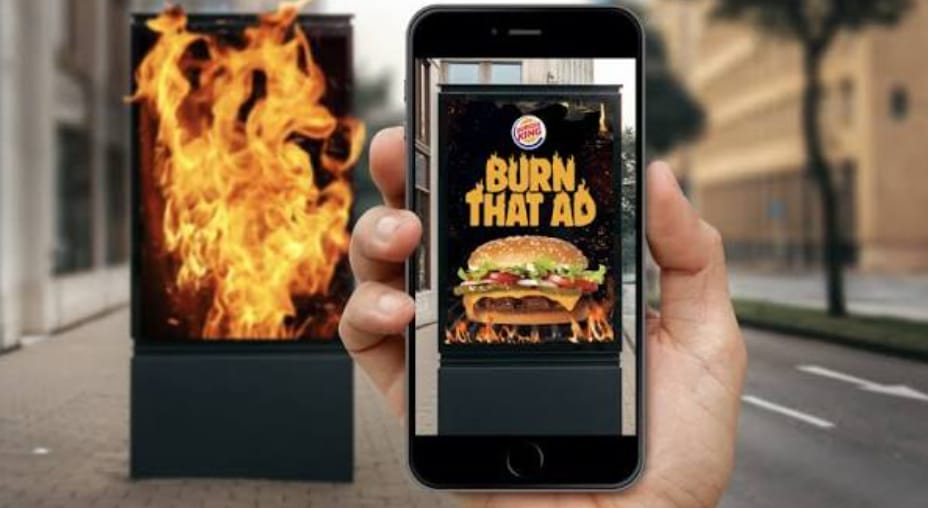
Burger King turned rival ads into an interactive AR ad-burning game in Brazil. Users could point their phones at competitors’ ads and virtually burn them, then receive a free Whopper coupon, creating a playful reason to engage with the brand.
12. Pizza Hut PAC-MAN AR Ad Game
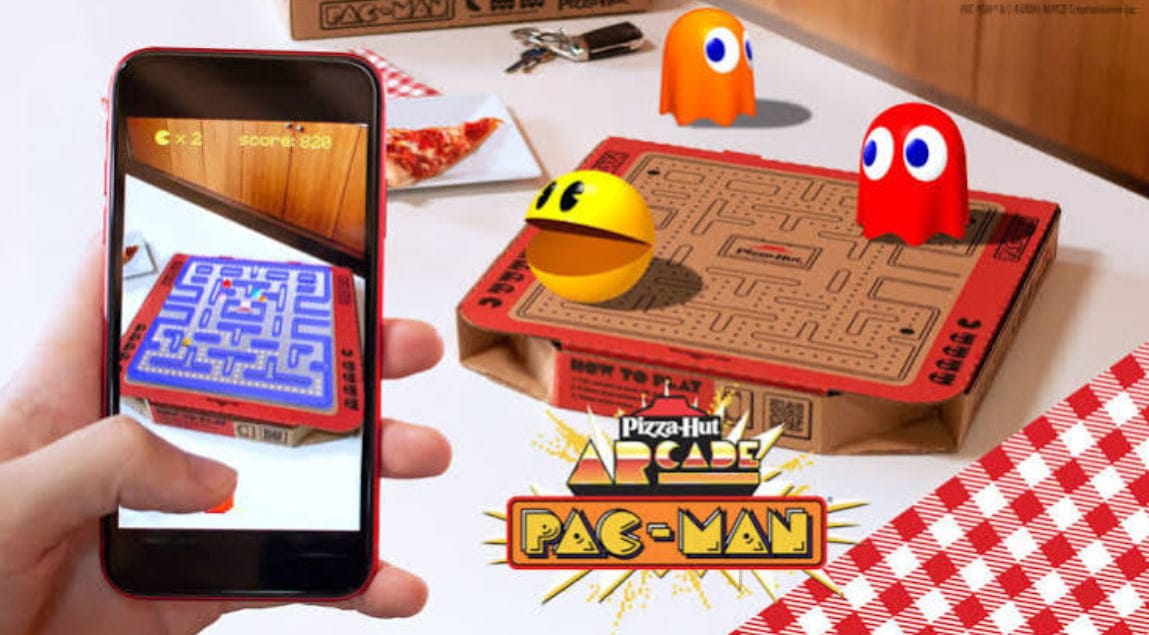
Pizza Hut added digital content to its pizza box, turning it into an AR PAC-MAN game. Customers scanned a QR code to play on their phones, generating 11,260 hours of gameplay and 741 million media impressions.
5. Connect Offline and Online Campaigns
With QR codes, image recognition, and other entry points, AR also connects physical advertising with digital experiences.
Examples:
13. Prime Video De Oost AR Posters
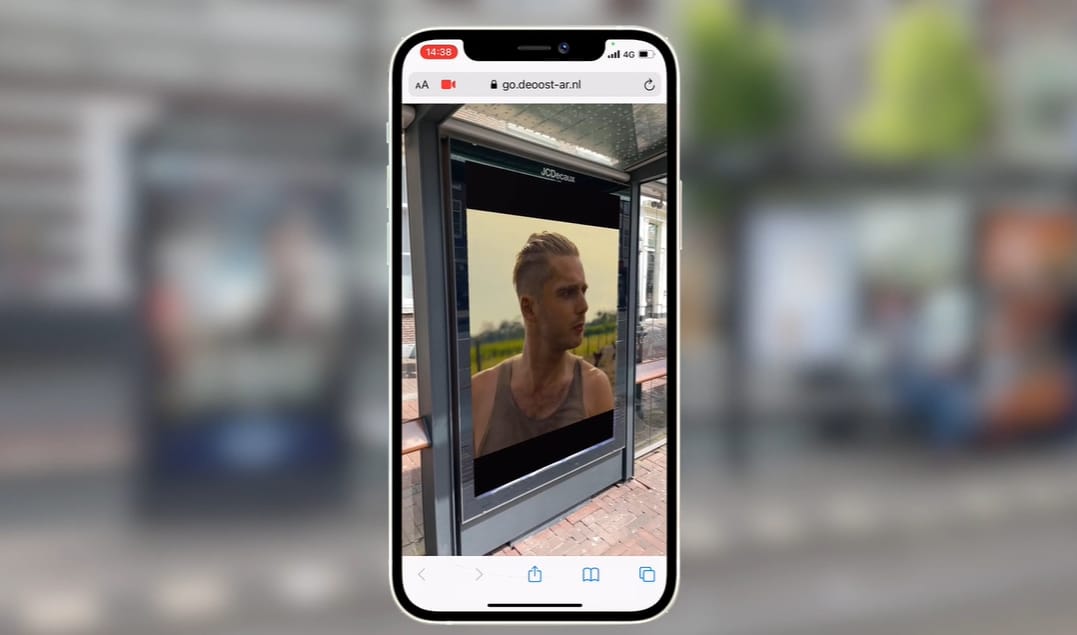
Prime Video turned traditional De Oost movie posters into interactive trailers using WebAR. Users can trigger the experience with a QR code, transforming each static poster into a digital screen without requiring an app.
14. Luckin AR Packaging
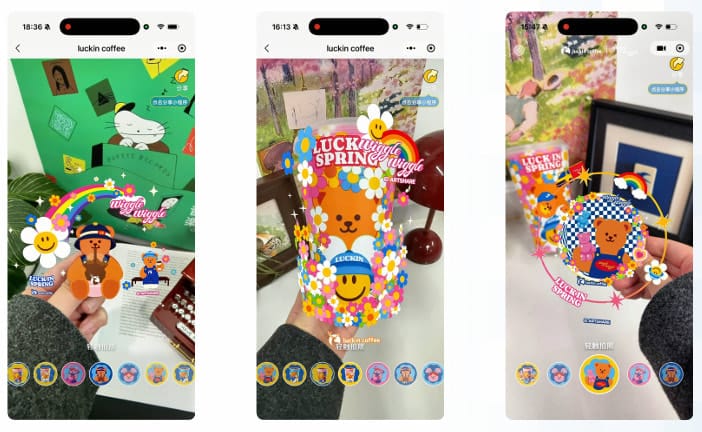
Kivicube, together with Luckin Coffee, created AR packaging that combines packaging materials with interactive experiences. After scanning the package, users could explore digital content overlaid on the physical design, such as stickers and other information.
15. BON V!V AR Vending Machine
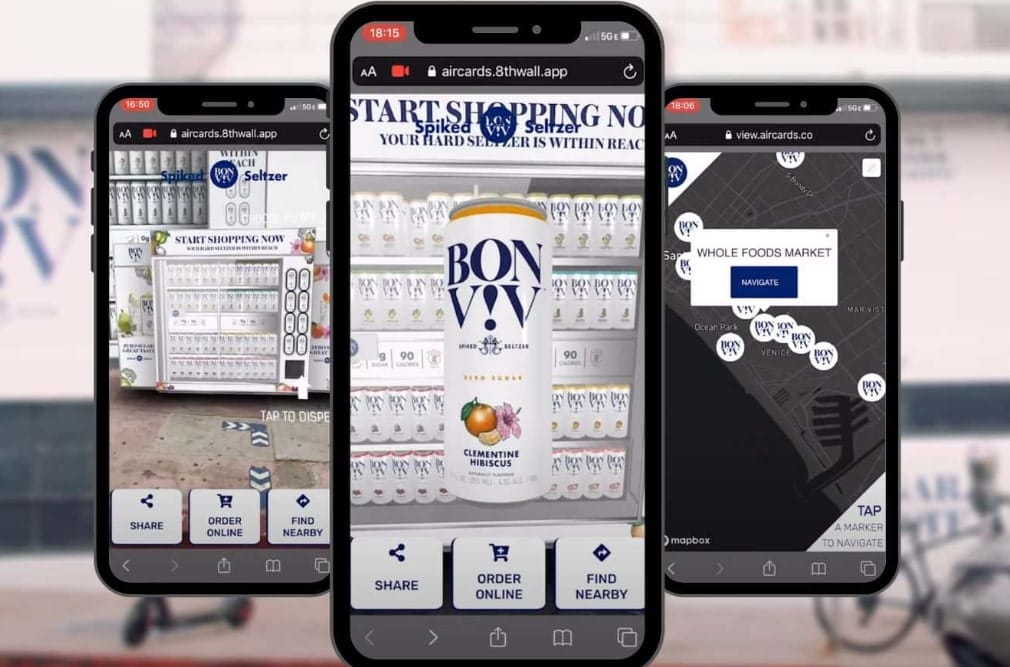
BON V!V transformed OOH murals into interactive AR vending machines that let users explore products, choose a flavor, find nearby stores, or purchase online via Instacart, linking physical advertising to digital commerce.
Tips to Build Up a Viral Augmented Reality Advertisement
To fully unleash the potential of AR advertising, read the tips below. Whether you're bringing your own advertising idea to life or embedding AR technology into existing ads, you'll find these tips helpful.
Tip 1. Choose AR Advertising Format and Medium
When selecting an AR format for your projects, it’s important to differentiate between web-based AR and app AR. App-based AR requires users to download an app, which adds friction to ad interactions. WebAR lets users access it directly through a browser.
Tip 2. Define AR Advertising Goals
A clear objective helps shape the creative concept, customer journey, and success metrics. Define what you want to achieve before starting your AR campaign.
Tip 3. Map Out the User Journey
Before starting the AR advertising campaign, you should determine how your users enter, what they see at this point, and where they should go next. This helps create a clear and intuitive experience for users.
Tip 4. Craft a Strong Creative Hook
Whether it’s a traditional ad or one with an AR experience, creative ideas are essential for augmented reality advertising campaigns. Therefore, please start with one eye-catching concept that gives people a reason to stop, interact, and remember your ad. Consider whether the technology makes the idea more interactive or useful. For example, AR can bring a virtual product try-on to life and turn a package into a game.
Tip 5. Choose the Right Advertising Platform
Also, consider where your audience encounters the ad and how you want them to interact with it. For example, social media platforms work well for campaigns built around filters, lenses, and shareable effects. Websites are more suitable for AR product visualization and virtual try-ons.
Tip 6. Select a Tool to Create an AR Advertisement
Another tip is choosing an AR creation tool based on your project’s complexity and requirements. Simple campaigns may be suitable for no-code AR platforms, while more complex projects may require professional development.
Tip 7. Define How You Will Measure the Campaign
In addition to the tips above, don’t forget to choose metrics that match your goals and track them throughout the campaign. Common metrics include impressions, scans, experience starts, product page visits, conversions, and engagement rates.
How to Create an AR Advertising Experience
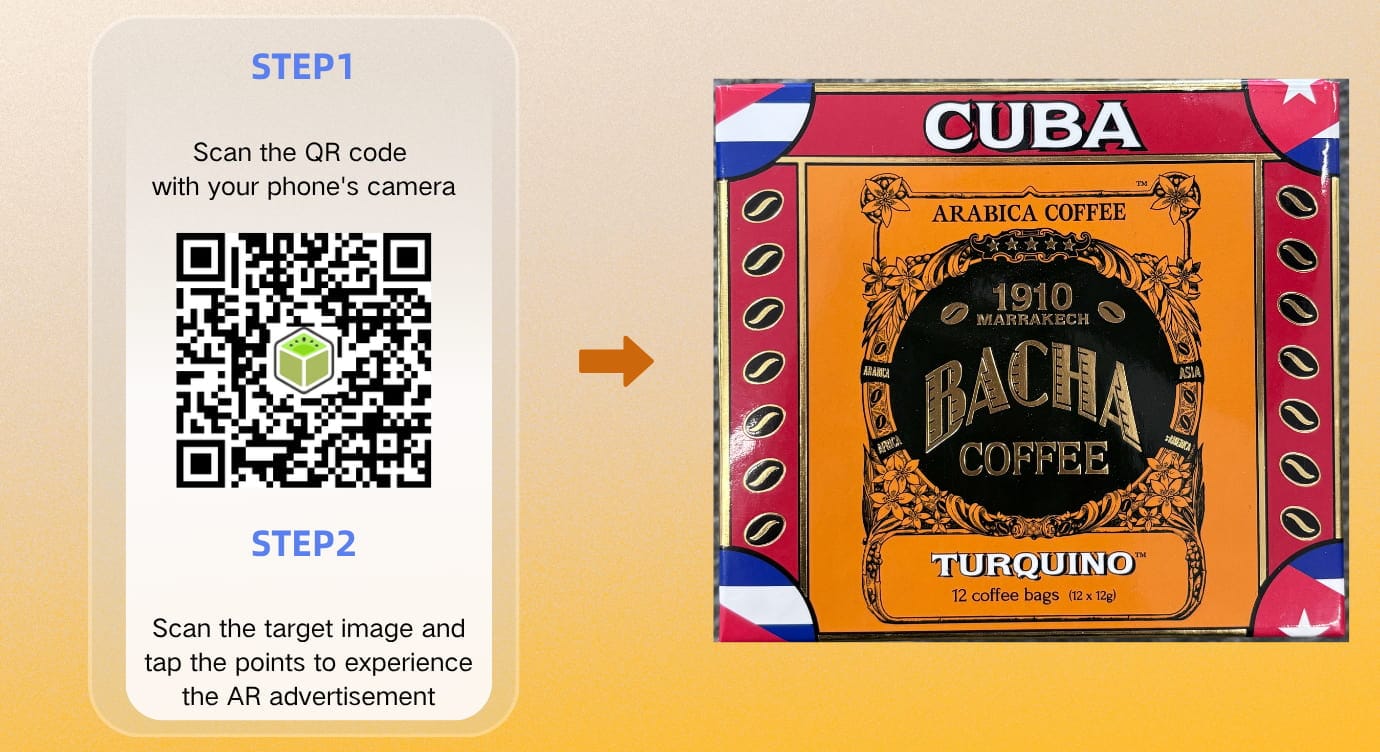
For teams looking for a no-code WebAR solution, Kivicube provides a drag-and-drop editor for creating customized AR advertising experiences. Whether you want to create a personal advertisement or plan a large-scale corporate AR advertising project, you can get the right solution here. Since the experiences are web-based, users can access them without downloading an app, reducing friction during the ad experience.
Why Kivicube:
Extensive AR Template and Asset Library: Multiple types of pre-designed AR templates and assets are available for you to use directly. The pre-designed templates and assets can help teams launch campaigns faster without building an experience from scratch.
Flexible AR Ad Creation: Kivicube supports various tracking types, such as image AR, face AR, and body AR, enabling creators to build diverse interactive advertising experiences. And with the AI AR Agent, creators can also rapidly create interactive AR games and other highly engaging ad experiences from prompts.
Comprehensive customized services: Our experienced team provides end-to-end support, from developing creative concepts and proposals to delivering customized AR projects based on your requirements.
Built-in analytics dashboard: The built-in analytics dashboard helps to monitor metrics such as clicks, scans, and interaction time in real time as users interact with your content. Afterward, you can optimize your AR campaigns and improve engagement with these insights.
Make an AR Ads Experience in 4 Steps
How to add AR technology in advertising with Kivicube? Here are the detailed steps.
Step 1. Open Kivicube and log in. Select an AR template and click “Duplicate”.
Step 2. In the grid editor, upload your assets, then drag and drop them to replace the existing ones.
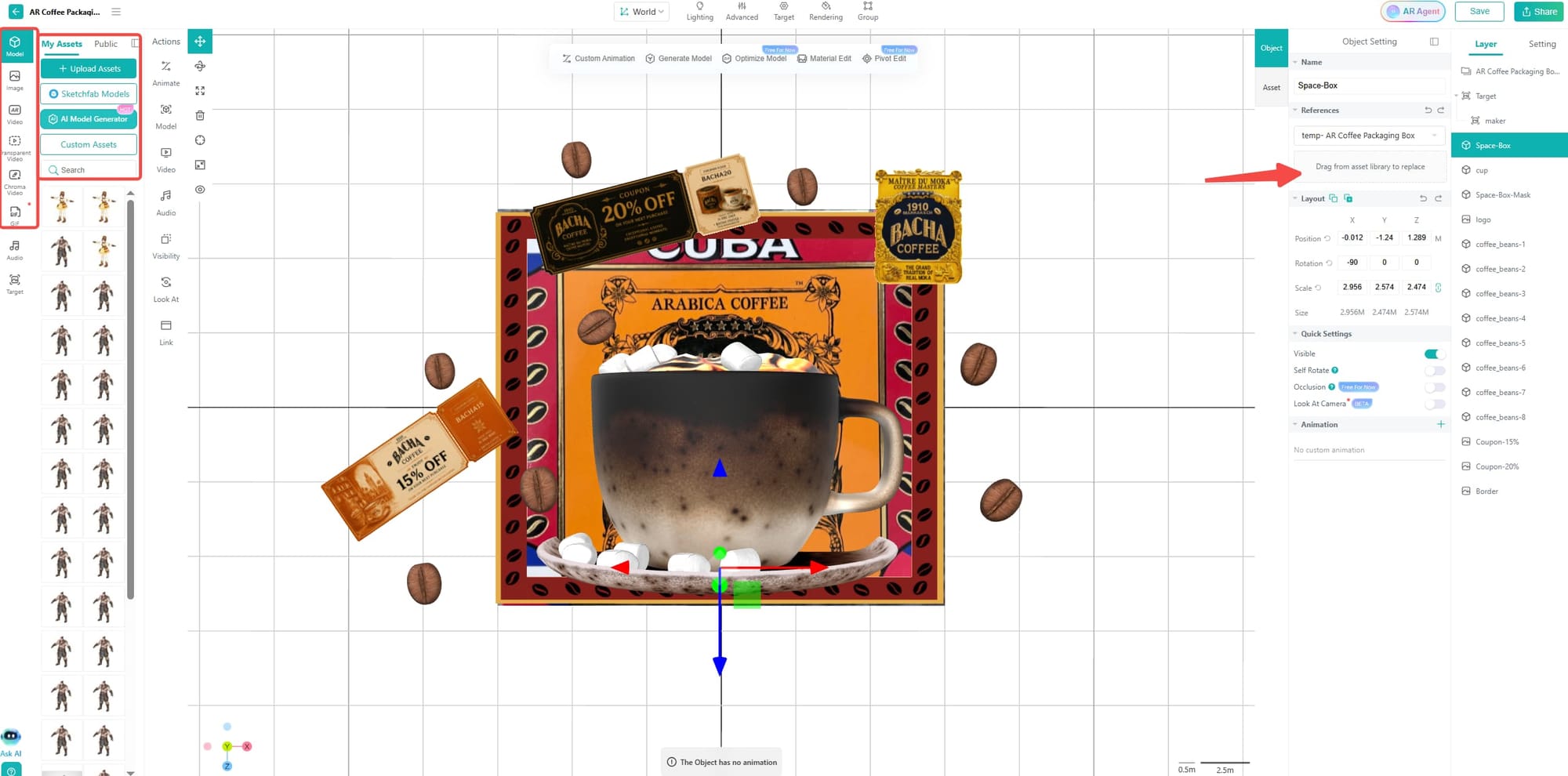
Step 3. Adjust the animation and interactions of the AR scenes according to your requirements.
Step 4. Click “Save” and “Share” to get the QR code for the AR advertising scene. You can then share it across platforms, websites, and more.
FAQs about Augmented Reality in Advertising
What platforms support AR advertising?
Marketers commonly use social media platforms such as Instagram, Facebook, Snapchat, and TikTok, along with WebAR experiences that run directly in mobile browsers.
What are the advantages of AR advertising over static ads?
Unlike static ads, AR advertising allows users to interact directly with digital content, such as virtual products, games, and branded effects.
How much does it cost to create an AR advertisement?
The cost depends on factors such as campaign complexity, development method, required assets, level of customization, and distribution channels. The simpler the WebAR campaign is, the fewer resources you may need.
Can micro and small enterprises create an AR advertisement with a lower budget?
Yes. If you have a limited budget or little coding experience, you can try no-code platforms like Kivicube. The experienced team can customize your AR advertising project at a low cost. Besides, with an intuitive interface, you can also easily create AR advertising experiences yourself.
Final Thought
Augmented reality advertising gives brands a more interactive way to engage audiences. In this post, we explored what AR advertising is, its common use cases, and 15 AR ad campaigns with different goals. We also introduced Kivicube as a no-code option for creating AR advertising experiences and shared tips that are useful for making a viral brand campaign. Ready to create your first AR ad? Try a simple WebAR campaign and see how it fits your marketing goals.