Augmented Reality in Biology: How to Improve Biology Education with AR
Discover how augmented reality in biology improves biology education. Explore a WebAR solution for interactive learning experiences.
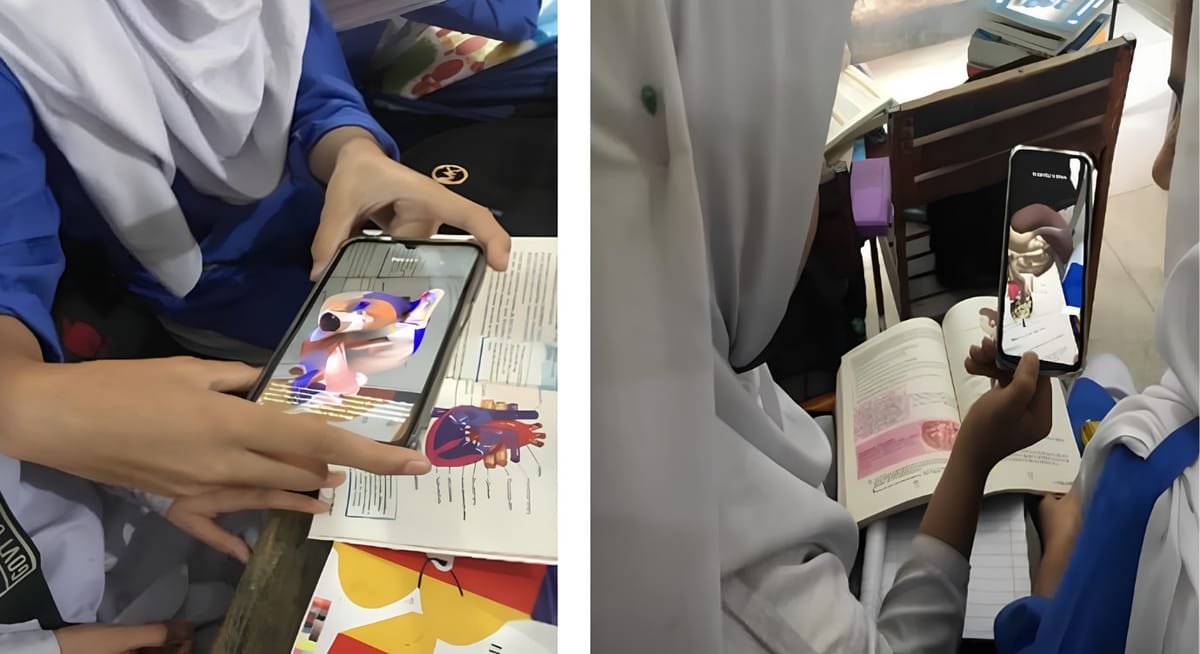
Today, AR technology has proven effective in enhancing learning through interactive content, and biology is one of the educational fields where AR delivers the greatest impact. A study from MDPI indicated that AR improves understanding of complex biological concepts by making abstract processes visible and interactive.
So what is augmented reality for biology, and how does it improve education? In this article, you can explore it in depth and learn how to create one with simple clicks. No app, no coding.
What is Augmented Reality Biology?
So how do people benefit from online AR biology education? Just check out the following aspects.
Present invisible biological processes: AR transforms invisible biological processes into interactive models and animations, helping students intuitively understand how biological systems function.
Reduce cognitive load: It can convert 2D diagrams into easy-to-understand 3D structures. With an animated and interactive experience, AR biology helps students better understand spatial relationships between complex biological structures.
Increase learning motivation: Unlike the static information presented in traditional textbooks, AR biology scenes are much more attractive for students with interaction and animation. They can not only spin the 3D models for further observation, but also explore internal biological structures in detail.
What Can AR Be Used for in Biology?
Augmented reality in biology comes with simple and interactive 3D demonstrations to boost biology education. How can AR be used in biology? Here you can get some ideas.
- Popular Science on Animals and Plants
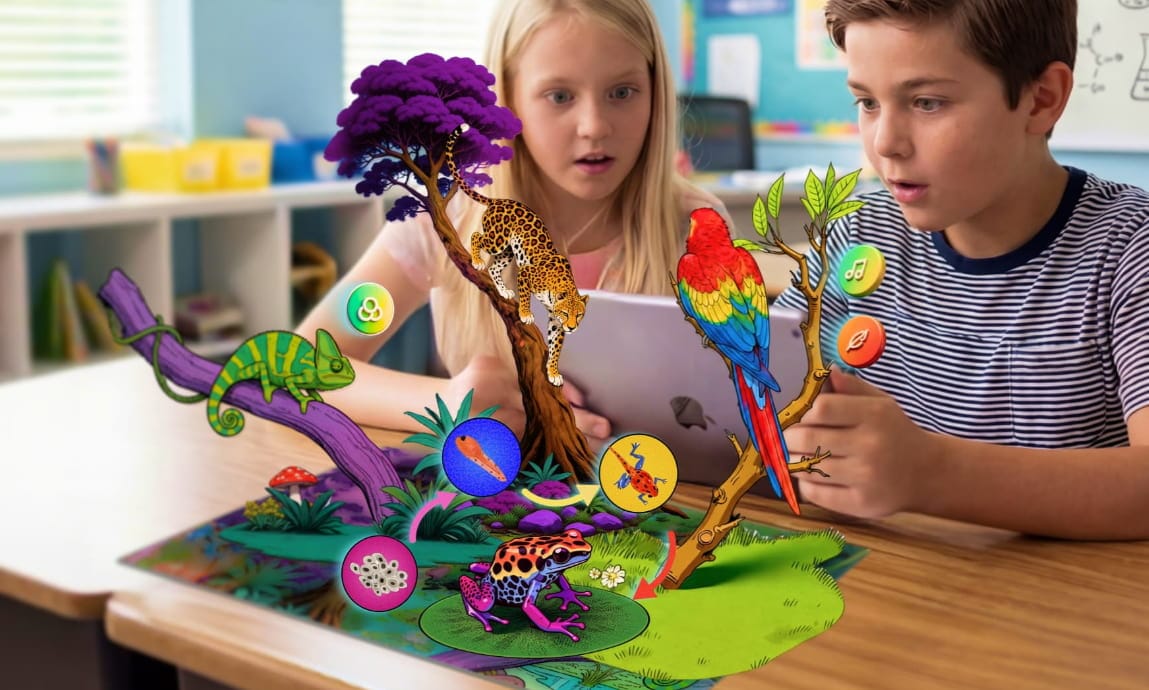
AR biology storybooks are popular among children because they provide an immersive reading experience. They transform passive reading into an active and multisensory learning experience, improving children’s learning motivation and comprehension.
If you want to learn more about AR storybooks, this post can be helpful:
 summer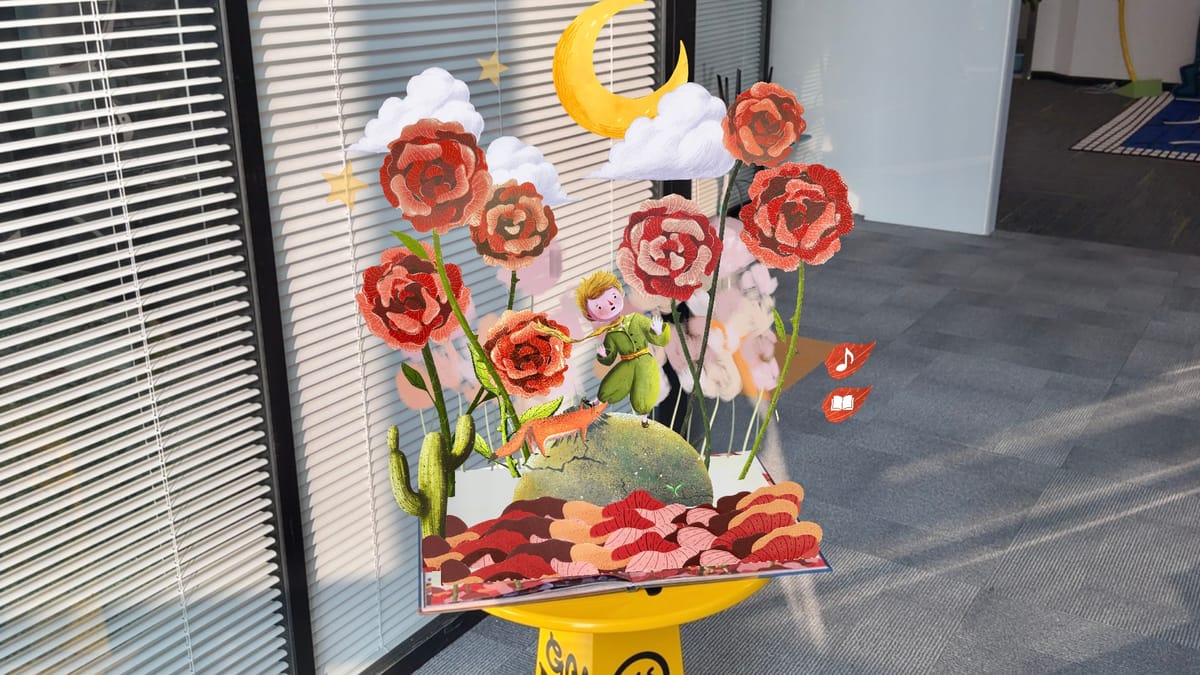
- Anatomy Visualization
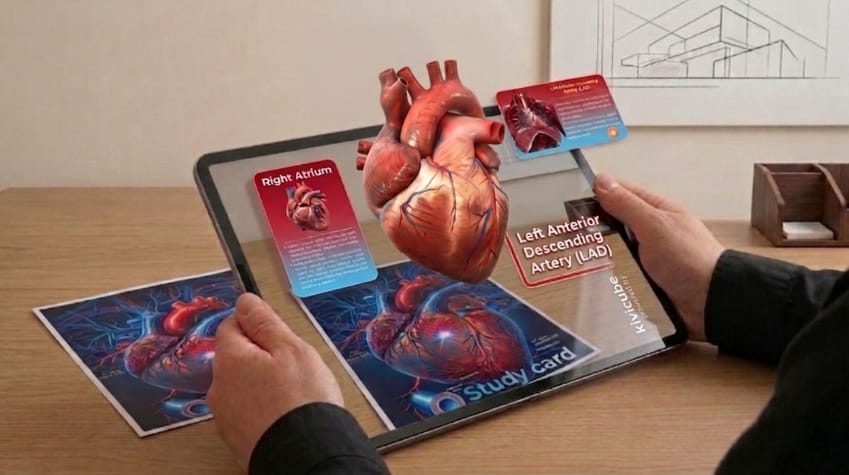
Anatomy is one of the most complex subjects in biological and medical education. Traditional anatomy education often relies on cadavers and complex theoretical knowledge, which can create learning barriers for students. AR anatomy applications can simulate clinical environments and provide detailed visualizations of human anatomy. AR anatomy tools provide a student-friendly learning environment, encouraging more active and self-directed learning.
- Cell Biology & Microscopic Systems in AR
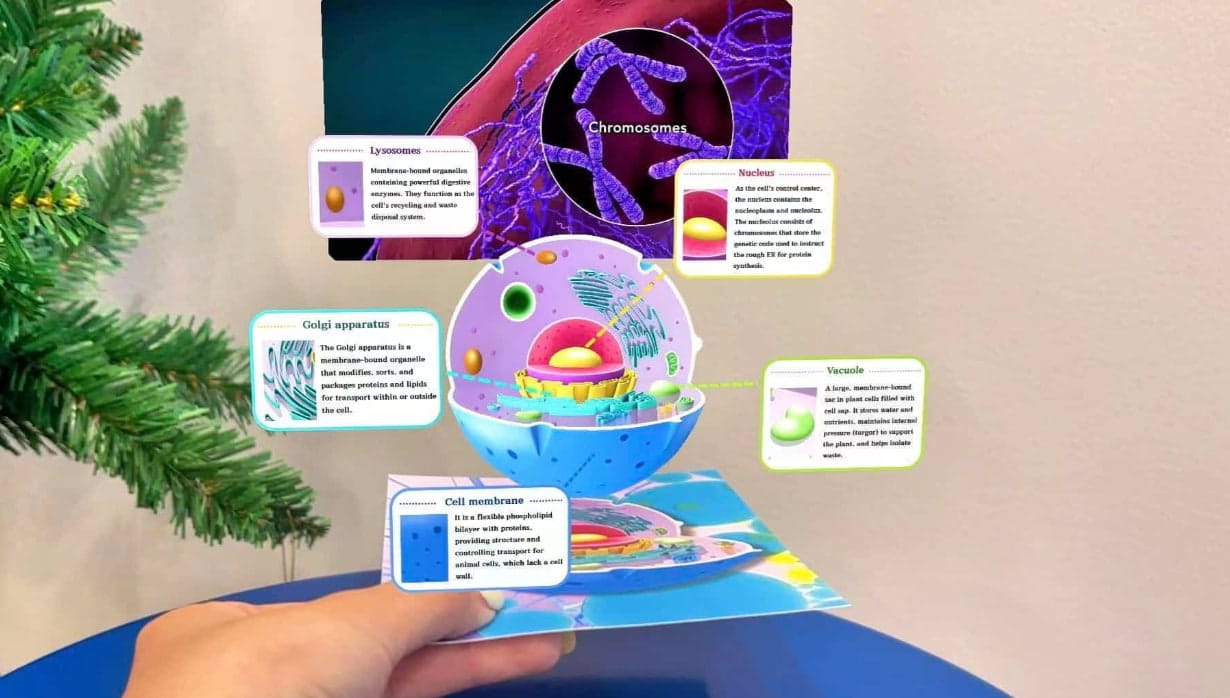
Teachers use AR to bring microscopic biological systems to life for students without microscopes. The advanced augmented reality technology in education enables students to visualize extremely tiny things, including cells and molecules that are too small to be observed directly with the naked eye.
- Ecology & Ecosystem Simulation
In addition to traditional field trips, augmented reality overlays long-term ecological processes, such as climate change and invasive species introduction, on the local environment. Therefore, students can observe invisible processes in real time, wherever they are.
- Neuroscience & Body Systems Interaction
Instead of memorizing isolated diagrams, students can observe how organ systems work together in the human body. Besides, augmented reality combines abstract concepts with experiential learning, allowing students to visualize dynamic processes that cannot be presented in textbooks and 2D screens.
How to Create an Engaging Augmented Reality Biology Scene for Education
Adding interactive digital content to your biology education no longer requires complicated codes. For educators interested in creating their own AR biology experiences, platforms such as Kivicube offer a no-code approach to WebAR development.
Without any app, it supports online biology augmented reality creation and experience in a browser. Each account can create up to two AR scenes for free, with no credit card required.
Video Intro of Kivicube
Simple visual editor: In an intuitive editor, simply drag and drop assets, add triggers and animations, and preview the created AR scene in real time.
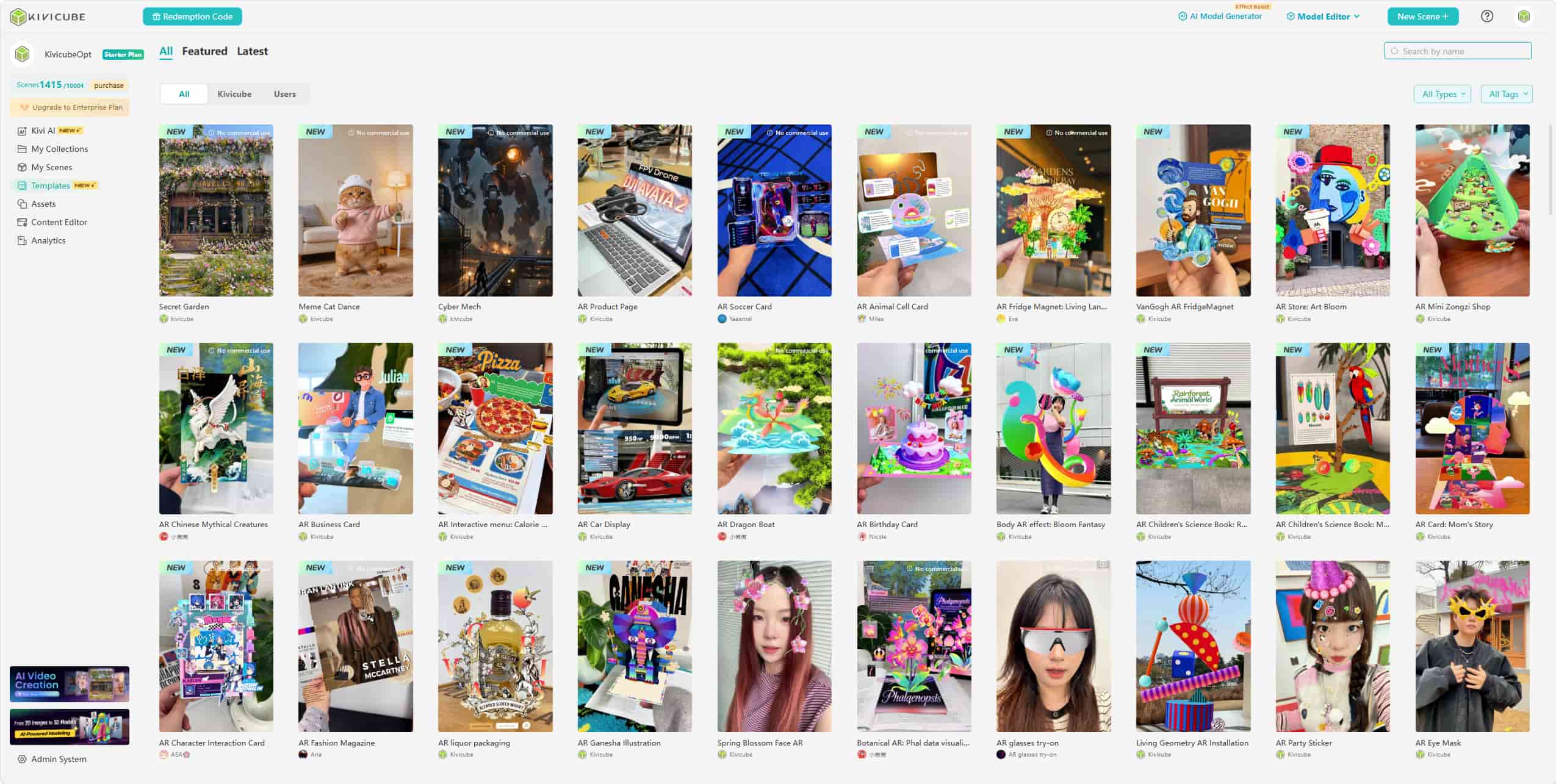
Massive exclusive AR education templates: If you don’t know how to start with your creation. Multiple templates for various education and learning scenarios are available here, including biology, history, and art. Just select a pre-designed template you’d like. You can also add 3D models and 2D images from our built-in asset library.
Powerful AR functions: The advanced AR tracking algorithms ensure a stable and consistent augmented reality biology education experience.
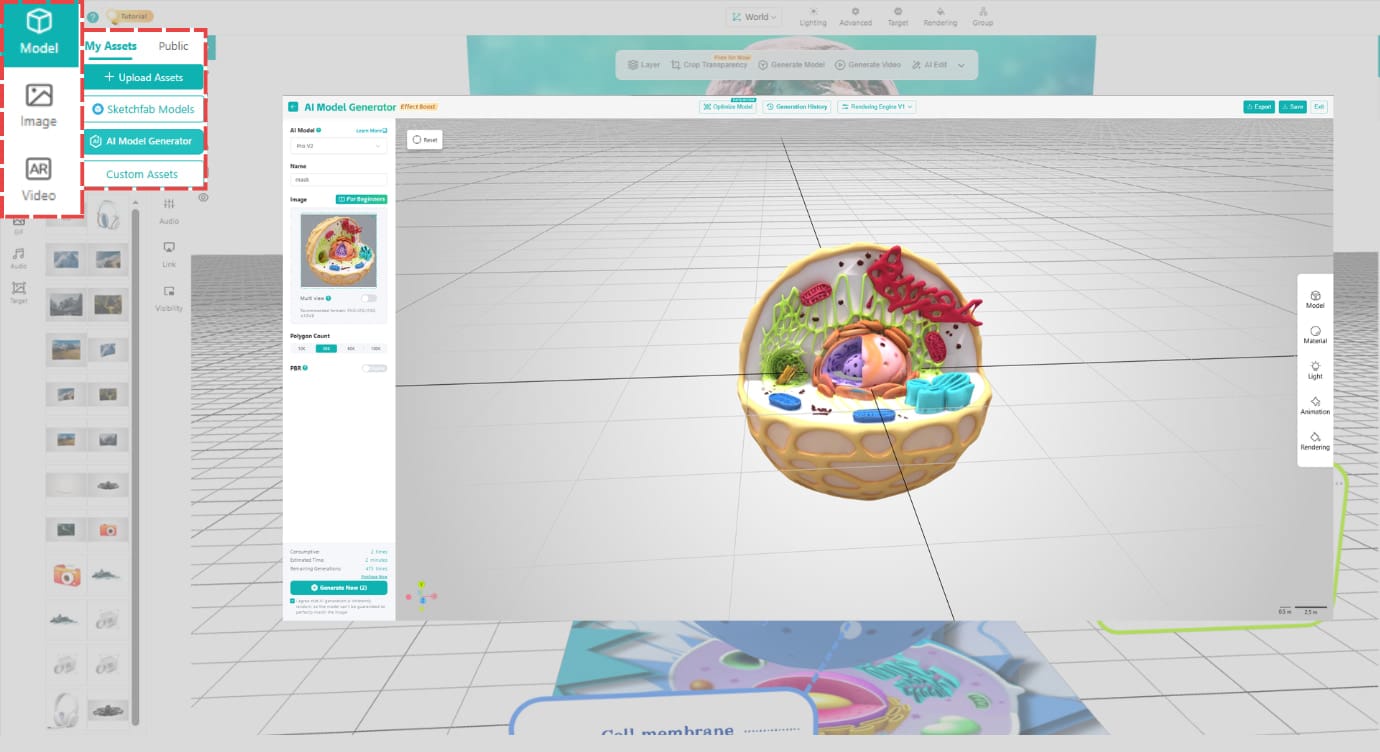
Efficient assisted tools: The platform integrates a series of practical editing tools, so you can adjust your AR biology creation in detail. In addition, Gen AI tools help users create images, 3D models, and videos more efficiently.
High-quality AR visuals: It delivers highly impactful visuals in the AR biology scenes. With high-definition models and smooth animation, it is attractive and engaging enough for the students.
Step-by-Step Guide for an AR Biology Scene with Ease
Using a cell as an example, here’s a 4-step workflow for creating an augmented reality biological scene.
Step 1. Sign up for your account and search for an AR biological scene. Click "Duplicate" to create a new AR scene, and name it in the pop-up window.
Step 2. Upload your own assets to the editor. You can also try to generate a new asset with Kivi AI.
Step 3. Select the target asset, then drag and drop the biological asset to replace it. Please make sure the format of the assets is consistent.
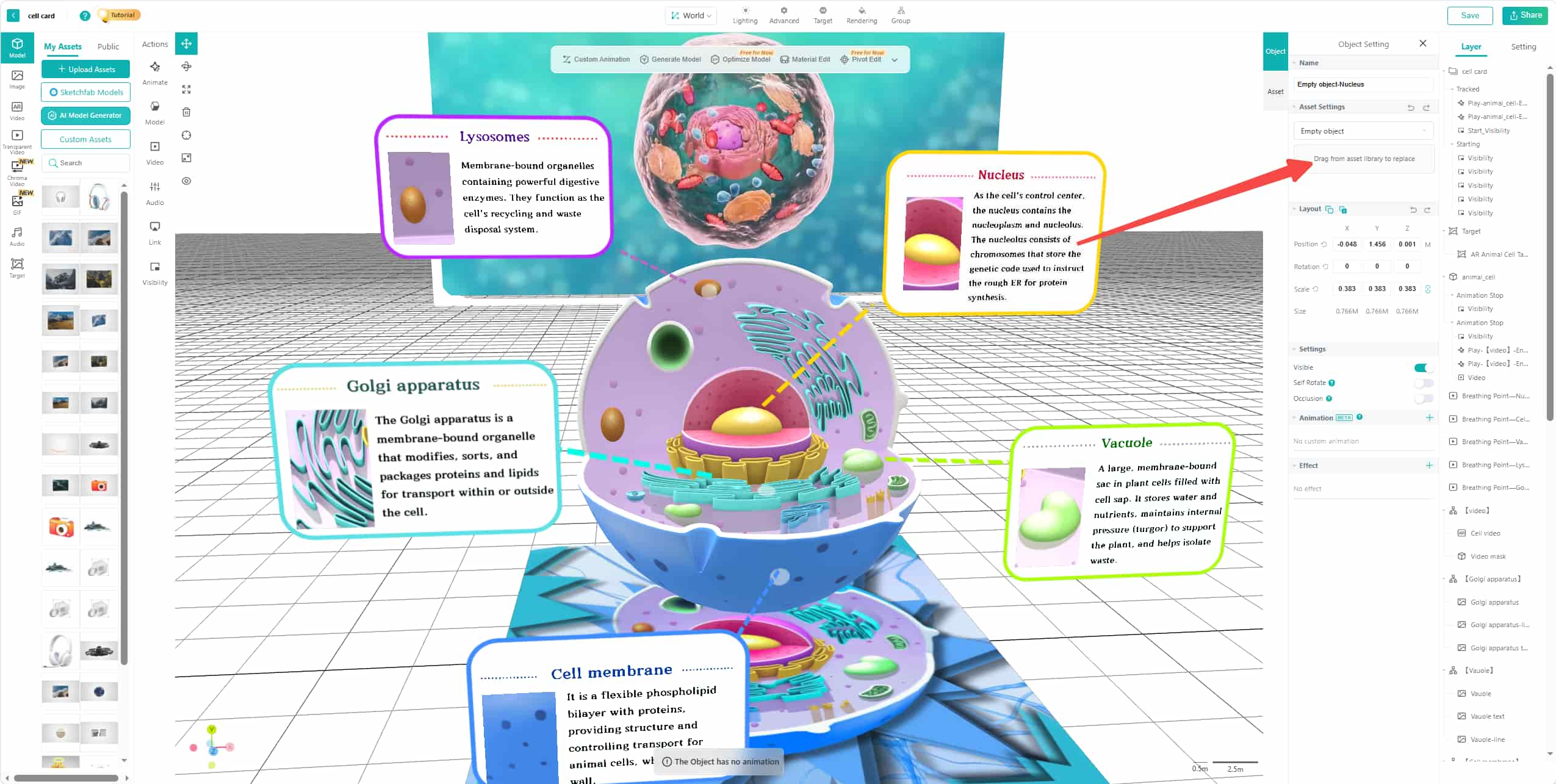
Step 4. Save the new AR biology scene and share it using the generated QR code or link.
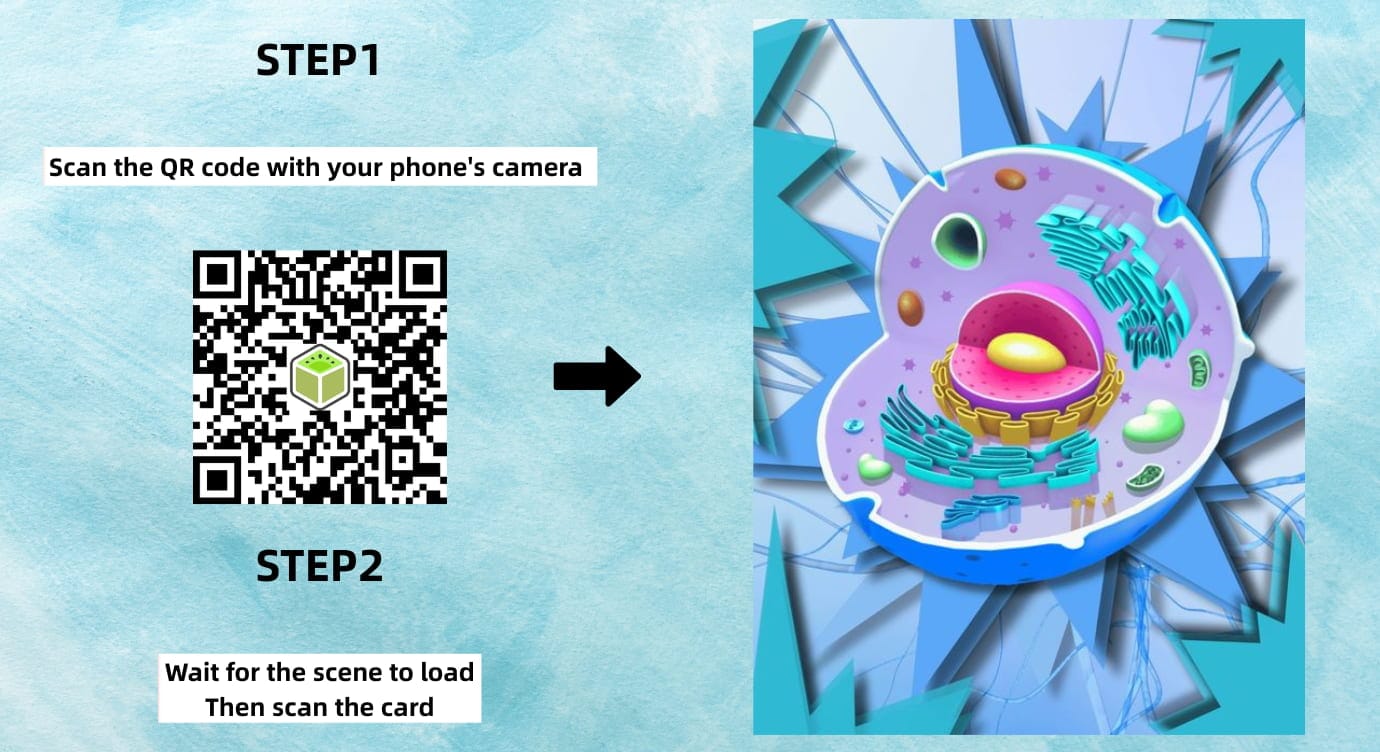
In most cases, educators can build a basic AR biology experience in less than an hour.
4 Real-World Augmented Reality Biology Examples
Let’s look at 4 real examples of augmented reality in biology education.
- Visible Body AR Human Anatomy Models
Visible Body launched 100+ 3D AR human anatomy models on May 07, 2019. Users can visualize human body structures in real space with mobile browsers and AR-compatible phones and tablets. Just tap the AR anatomy model, such as the heart and the bones of the skull, and the users can rotate it to view it from all aspects and zoom in for more details. The AR anatomy model experience significantly improves students’ motivation and spatial understanding in anatomy learning.

- Froggipedia Biology App for Frog 3D Anatomy Visualization
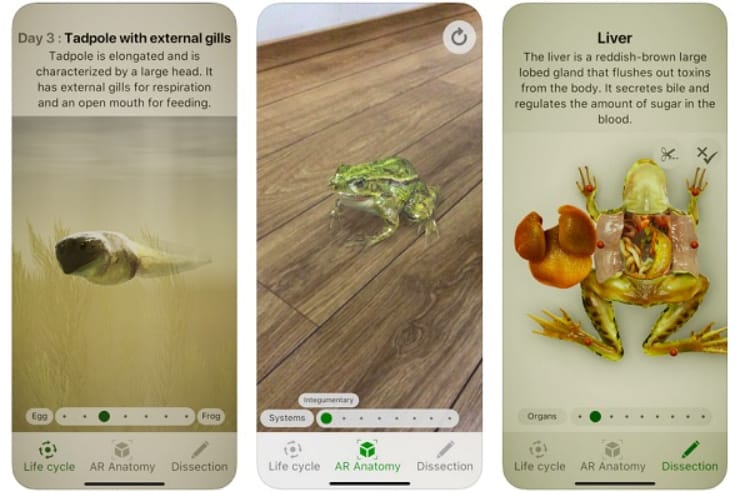
Froggipedia biology AR app lets users explore the life cycle and complex anatomical details of frogs. With the immersive AR biology experience, it clearly presents each stage of the frog’s life. Besides, the app supports users in further observing and dissecting individual organ systems using the Apple Pencil or fingers on iOS devices.
- EPAM AR Molecular Visualization
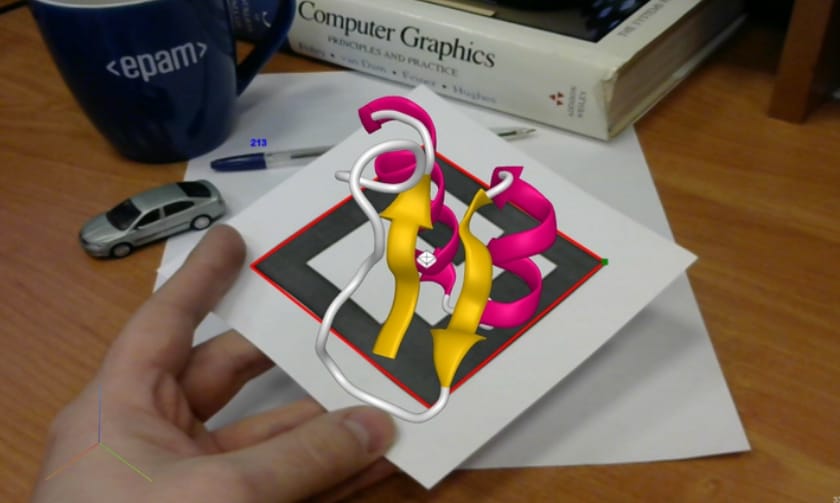
The team at EPAM Life Sciences developed and launched an AR molecular viewer that deploys biology augmented reality, providing a much more convenient and engaging way for studying complex molecular structures. It sets a QR code as the trigger for virtual content, so when people scan the QR code, they can visualize a molecule in a realistic environment.
- Merge Cube Handheld Biology Learning
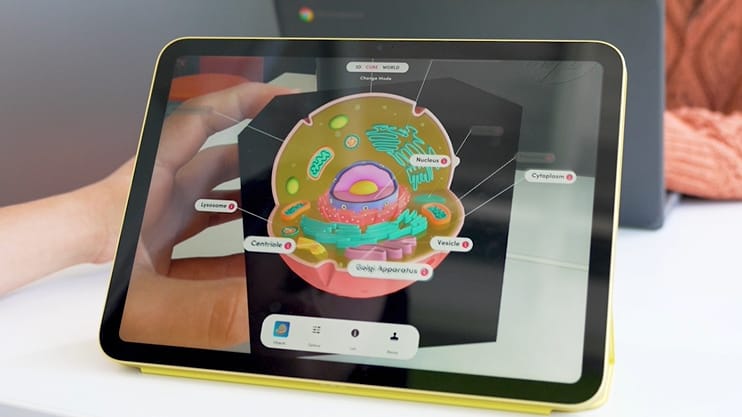
Merge Cube helps teachers deliver more engaging biology lessons about cell types. With the Merge Explore app, Merge Cube, and their devices, students can explore plant cells in detail by rotating the cube, zooming in, and even tapping the labels for detailed cell information.
This AR tool has achieved success in biology teaching. According to research from MDPI, Merge Cube has a significant positive impact on learning motivation, school self-efficacy, and academic improvement for middle school students.
FAQs about Augmented Reality Biology
Q: Is augmented reality better than traditional biology learning?
AR is widely regarded as a more engaging way to support biology education. However, it is not developed to replace traditional biology education, but rather as a supplemental technology that can be combined with traditional education for an effective hybrid approach.
Q: What biology topics can be taught with AR?
Many biology topics work particularly well with AR, such as human anatomy, cell structure and organelles, DNA replication and genetics, molecular biology, circulatory and respiratory systems, neuroscience, etc.
Q: Can augmented reality be used for virtual biology labs?
Yes. AR technology is highly effective for virtual biology labs. By overlaying virtual biological models onto the real world, this advanced technology allows students to run complex experiments without expensive physical equipment.
Q: What devices are required for augmented reality biology education?
Most AR biology educational experiences can be accessed with mobile phones, tablets, and AR-enabled devices. Besides, webAR platforms such as Kivicube enable people to create and experience AR educational materials directly using a web browser, with no augmented reality biology app required.
Conclusion
Augmented reality biology helps turn complex, abstract biological concepts into intuitive experiences, enhancing students’ comprehension and engagement in biology education. With a practical WebAR platform such as Kivicube, adding AR to your biology lesson plan is simple and fast. Let’s combine your biology education with AR.